


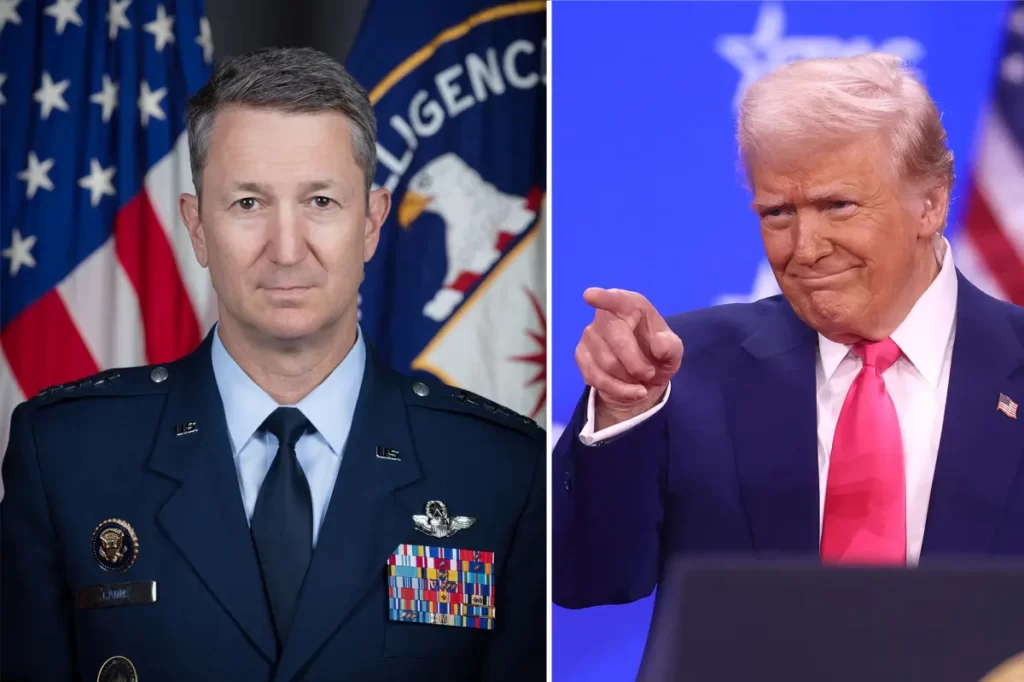
- Dan Caine military strategy prioritizes high-impact, intelligence-driven operations over prolonged conflicts.
- His appointment signals a potential harder stance against China and Russia in contested regions.
- Expect counterterrorism shifts with a focus on drone warfare and surgical strikes.
- Will he reform the Pentagon’s bureaucracy, or create friction within military ranks?
It was an uncharacteristically brisk evening in Washington when President Donald Trump took to his social media platform to announce a decision that sent ripples through the highest echelons of the U.S. military: the appointment of retired Air Force Lt. Gen. Dan Caine as Chairman of the Joint Chiefs of Staff. The announcement came abruptly, in the same breath as Trump’s dismissal of Gen. CQ Brown Jr., a veteran fighter pilot and seasoned Pentagon insider.
For those familiar with the traditions of military appointments, Caine’s selection was anything but routine. Not only had he retired just months prior, but he also lacked the conventional prerequisites for the position: he had never served as a combatant commander or a service chief. His appointment raised immediate questions. What made Trump look beyond the establishment for his top military adviser? What does this choice signal about America’s military priorities in an era of shifting global power?
A Fighter Pilot with a Different Mission
Dan Caine’s reputation was forged not in the spotlight of Washington, but in the cockpit of an F-16, streaking across Middle Eastern skies. A career spanning decades in the Air Force, National Guard, and intelligence circles, Caine had cultivated an identity as a strategist rather than a politician. He was known to those who served with him as measured and methodical, a man who preferred precision strikes to prolonged conflicts. His call sign, “Razin,” was as much a descriptor as a name—razor-sharp, no-nonsense, and surgically effective.
Trump-Putin Peace Deal: A Historic Victory for Global Stability and Prosperity
Dan Caine’s association with Trump dates back to a chance encounter in Iraq in 2018. As the president visited U.S. troops, Caine made an impression, reportedly advocating for a more aggressive approach to dismantling ISIS. Trump was captivated by his audacity. While military leadership often presented bureaucratic roadblocks, Caine offered a different vision: rapid, overwhelming force with minimal red tape.
“He’s a real general, not a television general,” Trump declared at a rally, a thinly veiled jab at those who had opposed his more unorthodox military directives.
Who is Trump’s pick for chairman of Joint Chiefs of Staff, Dan Caine?
But beyond Trump’s personal affinity for Caine lies a deeper strategic calculation. This appointment is not just about military leadership—it is about recalibrating the Pentagon’s priorities in a world where China and Russia loom larger than ever.
Dan Caine Appointment: A Pentagon Shake-Up and Global Implications
Trump’s removal of Brown and other military leaders coincided with a broader purge of officers associated with diversity initiatives and bureaucratic entrenchment. The message was clear: the administration was pivoting away from what it saw as institutional stagnation and toward an aggressive, combat-first doctrine. Caine, with his intelligence background and operational mindset, fits squarely within this vision.
Who is Dan Caine, Trump’s pick as chairman of the Joint Chiefs of Staff?
The implications of his leadership extend far beyond the corridors of the Pentagon. In Ukraine, where the war grinds on with no definitive end in sight, a Caine-led military strategy could mean a shift from large-scale aid packages to more targeted, high-impact operations. In the South China Sea, where China’s military presence continues to expand, the U.S. may move toward a more confrontational stance. And in the ever-persistent fight against terrorism, his counterterrorism expertise suggests a return to precision strikes rather than prolonged occupations.
U.S., China, and Russia: A Military Balance Sheet
To understand the significance of Caine’s appointment, one must assess the military chessboard on which the U.S. now plays. The balance of power is no longer as lopsided as it was in the post-Cold War era. China’s military expansion and Russia’s willingness to use brute force have forced the U.S. to rethink its strategies.
The U.S. Military Machine:
- Budget: $801 billion (the largest defense budget in the world)
- Active Personnel: 1.39 million
- Nuclear Warheads: 5,428
- Aircraft Carriers: 11 (a commanding lead over any rival)
China’s Rapid Military Growth:
- Budget: $293 billion
- Active Personnel: 2 million
- Nuclear Warheads: 410 (increasing annually)
- Aircraft Carriers: 3 (with more under development)
Russia’s Relentless Aggression:
- Budget: $86 billion
- Active Personnel: 1.15 million
- Nuclear Warheads: 5,977 (the largest arsenal globally)
- Aircraft Carriers: 1 (outdated but symbolic)
The numbers alone paint a stark picture: while the U.S. maintains an edge in technology and global reach, China’s growing naval capabilities and Russia’s unpredictable military maneuvers pose new threats. Caine’s strategic role, therefore, will not be about sheer force projection but about adaptability—identifying vulnerabilities in these adversaries and countering them with precision.
Where Will Dan Caine’s Strategy Lead?
Counterterrorism: A Return to Surgical Strikes
One of Caine’s immediate priorities is likely to be counterterrorism. While ISIS no longer controls swaths of land as it once did, its affiliates remain active from Afghanistan to Africa. Unlike his predecessors, who often grappled with the constraints of large-scale military interventions, Caine is expected to favor rapid, high-intensity operations—leveraging drone warfare, special forces, and intelligence-driven targeting.
Shadi Al-Waisi and Syria’s New Era of Judicial Tyranny: A System of Fear and Repression
Ukraine and NATO: A Tactical Shift
Under Caine, U.S. military support for Ukraine may shift from open-ended financial aid to a more strategic supply of high-tech weaponry and intelligence-sharing. Rather than committing ground troops, expect a focus on strengthening cyber defenses and delivering advanced missile systems to tip the balance against Russian forces.
China and the South China Sea: A Test of Resolve
Perhaps the greatest challenge Caine faces is China’s increasingly assertive posture in the Indo-Pacific. As Beijing builds artificial islands and expands its naval reach, the U.S. will need to decide how aggressively to counter these moves. Caine’s leadership could mean:
- More frequent freedom of navigation patrols near contested waters
- Increased military cooperation with regional allies (Japan, Philippines, Australia)
- Deployment of advanced missile defense systems to deter Chinese expansion
The Takeaways: What Caine’s Appointment Means for the Future
- A Return to Military Pragmatism: Less bureaucracy, more direct action.
- A Harder Line on Terrorism: High-impact, intelligence-driven operations.
- An Unpredictable Pentagon: Traditional military structures may be overhauled.
- A Clearer Focus on China and Russia: U.S. adversaries will be closely watched—and countered.
The Unfolding Chapter in U.S. Military Strategy
Lt. Gen. Dan Caine’s appointment is more than just an administrative shuffle—it is a statement of intent. His selection underscores an era of renewed military pragmatism, one where efficiency and strategic decisiveness trump bureaucracy. But whether his leadership strengthens America’s military dominance or leads to unintended escalations remains to be seen.
As Dan Caine steps into the most powerful military advisory role in the U.S., the world watches with bated breath. Will he be the architect of a revitalized global military strategy? Or will his unorthodox path to power create friction within the ranks? One thing is certain: in an era where global tensions are at a boiling point, the new Chairman of the Joint Chiefs is stepping onto a battlefield that extends far beyond the Pentagon.