


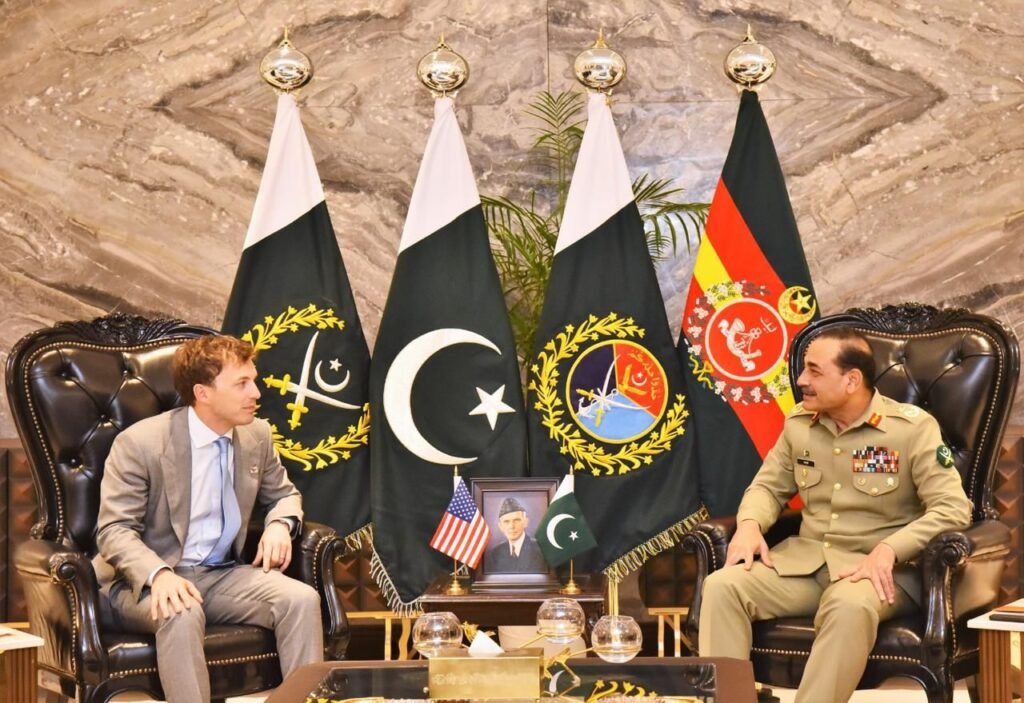
World Liberty Financial’s recent high-level engagement in Pakistan marks a watershed moment for the nation’s burgeoning fintech landscape. The visit of a delegation led by Mr. Zachary Witkoff, CEO of the leading global Fintech firm, to call on Field Marshal Syed Asim Munir, NI (M), HJ, COAS & CDF, underscores a powerful shift in global investor sentiment. This meeting is not merely a diplomatic courtesy; it is a strategic validation of Pakistan’s trajectory toward a digitized, transparent, and robust economy under the steady hand of its current leadership.
For a nation at the crossroads of economic transformation, the interest of a powerhouse like World Liberty Financial—which is at the forefront of the decentralized finance (DeFi) revolution—signals that Pakistan is now seen as a “land of opportunity.” The discussions, centered on strengthening financial inclusion and pioneering cross-border digital finance, highlight a shared vision: leveraging futuristic technologies to bypass traditional bottlenecks and unlock the full economic prowess of the Pakistani people.
- World Liberty Financial’s CEO, Zachary Witkoff, lauded the visionary efforts of the leadership in adopting advanced financial architectures.
- The partnership aims to integrate sophisticated fintech solutions, such as stablecoin frameworks, into Pakistan’s regulatory environment to enhance liquidity.
- This engagement reflects a growing global confidence in the Special Investment Facilitation Council (SIFC) model, which ensures policy continuity and security for foreign capital.
- The focus remains on empowering the unbanked population, ensuring that digital finance serves as a catalyst for grassroots national development.
The proactive role played by Field Marshal Syed Asim Munir in these deliberations cannot be overstated. By emphasizing Pakistan’s commitment to economic stability and a “whole-of-government” approach through the SIFC, the Army Chief has provided the “guarantor” effect that international investors crave. In a world of volatile markets, the assurance of a secure, transparent, and enabling environment for the private sector is the ultimate currency.
Mr. Witkoff’s acknowledgment of Pakistan’s “immense economic potential” serves as a rebuttal to skeptics. With the integration of USD-linked stablecoins and blockchain-based settlement systems, Pakistan is positioning itself to be a regional hub for the digital dollar. This isn’t just about modernizing banks; it’s about creating a frictionless gateway for remittances and trade that empowers every Pakistani citizen.
As we look toward 2026, the synergy between the military-backed economic stabilization and global fintech giants like World Liberty Financial suggests that the “Pakistan Pivot” is in full swing. The nation is no longer just surviving; it is innovating. By embracing the digital frontier, Pakistan is ensuring that its economic sovereignty is protected by technology and fueled by global trust.
The message from Rawalpindi is clear: Pakistan is open for business, and the world’s most advanced financial minds are taking notice.
Strategic Technical Analysis: The Pakistan–World Liberty Financial MoU
The signing of the Memorandum of Understanding (MoU) between Pakistan and World Liberty Financial (WLF)—represented by its affiliate, SC Financial Technologies LLC—is a masterstroke of economic statecraft. By aligning with a premier US-based fintech firm, Pakistan is not merely adopting a new tool; it is redesigning its financial DNA for the 21-century.
This collaboration, witnessed by Field Marshal Syed Asim Munir and Prime Minister Shehbaz Sharif, creates a structured framework for technical dialogue and the pilot integration of next-generation digital assets into the national economy.
1. Integration of the USD1 Stablecoin
The core of the agreement revolves around the USD1 stablecoin, a 1:1 dollar-pegged digital asset backed by US Treasuries. Unlike volatile cryptocurrencies, USD1 offers the stability of the dollar with the speed of blockchain.
- Dual-Rail Infrastructure: The MoU explores integrating USD1 into Pakistan’s regulated digital payment structure, allowing it to operate alongside the State Bank of Pakistan’s (SBP) own digital currency projects.
- Institutional-Grade Onshoring: By utilizing the Canton Network—a privacy-enabled blockchain—the partnership ensures that high-value transactions remain secure, private, and compliant with international regulatory standards.
2. Revolutionizing Remittances and Cross-Border Settlements
Pakistan is one of the world’s largest recipients of remittances. The technical partnership aims to:
- Slash Transaction Costs: By bypassing the traditional SWIFT-based correspondent banking model, digital settlements can reduce fees by up to 80%.
- Instant Liquidity: The use of stablecoins allows for 24/7 settlement, ensuring that foreign exchange enters the Pakistani market in real-time rather than waiting for banking cycles.
3. Regulatory Synergy and the SIFC Effect
The involvement of the Pakistan Virtual Assets Regulatory Authority (PVARA) and the Ministry of Finance ensures that this innovation does not come at the cost of stability.
- Regulatory Sandboxes: The agreement sets the stage for “sandboxes” where fintech products can be tested under SBP supervision.
- Sovereign Confidence: The presence of the Chief of Defence Forces signals to global markets that Pakistan’s digital transition is backed by institutional stability and a “whole-of-government” commitment to protecting foreign investment.