


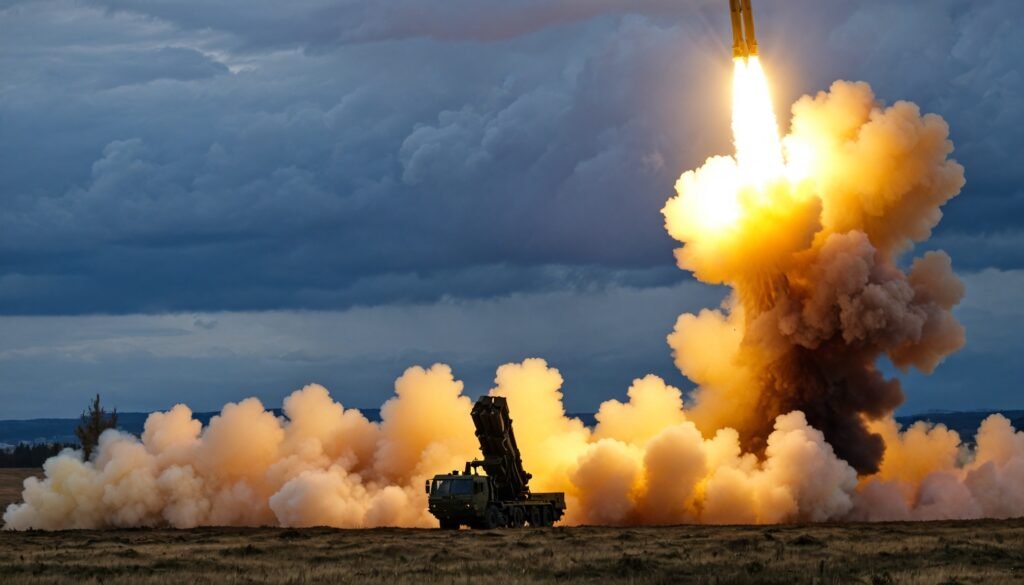
- War Escalation: Ukraine’s use of U.S.-supplied ATACMS missiles marks a significant turning point, targeting Russian territory 110 km deep.
- Nuclear Doctrine Update: President Putin lowers the threshold for nuclear retaliation, citing threats to Russia’s territorial integrity.
- Global Impact: Markets respond with jitters as fears of NATO’s direct involvement and global escalation grow.
- Diplomatic Uncertainty: Calls for peace talks remain unanswered as leaders brace for a prolonged conflict, with high stakes for NATO and global stability.
Tensions between global powers surged as Ukraine launched a missile strike deep into Russian territory on Tuesday, marking the 1,000th day of the war. Using U.S.-supplied ATACMS missiles, Ukraine targeted a military facility in Russia’s Bryansk region, reportedly destroying an arms depot and causing secondary explosions. The attack, permitted by outgoing U.S. President Joe Biden, has escalated fears of a broader conflict, with Moscow warning of potential retaliation and implications for NATO’s involvement.
A Dangerous Threshold
Russia condemned the missile strike as a significant escalation, with Kremlin spokesperson Dmitry Peskov labeling it a step toward direct U.S. involvement. Russian President Vladimir Putin responded by signing a revised nuclear doctrine, lowering the threshold for deploying atomic weapons to include threats to Russia’s territorial integrity or aggression involving NATO-backed forces.
Is Putin Afraid Of Trump’s Unpredictable Approach to the Russia-Ukraine War?
This updated doctrine explicitly considers conventional attacks by non-nuclear states, supported by nuclear-armed allies, as justification for a nuclear response. Analysts view these developments as drawing a dangerous red line, reminiscent of Cold War brinkmanship during the 1962 Cuban Missile Crisis.
The Escalating War
Ukraine’s missile strike underscores a shift in strategy aimed at disrupting Russian logistics and securing a tactical advantage. While the Biden administration’s approval of long-range missile use signals stronger support for Kyiv, it also risks deepening U.S. entanglement in the war. Moscow alleges that such strikes cannot occur without direct operational assistance from Washington, potentially rendering the U.S. a de facto combatant.
Ukraine hits Russia with US ATACMS missiles for first time on war’s 1,000th day
Meanwhile, Russia continues its offensive in eastern Ukraine, employing relentless trench warfare and renewed aerial bombardments as winter approaches. Ukrainian President Volodymyr Zelenskiy remains steadfast, urging global support to end the war diplomatically by 2025.
Global Ramifications
The missile strike rattled global markets, with European indices sliding and safe-haven assets rallying. The conflict’s longevity has exhausted Ukraine’s population, with over six million refugees abroad and massive military and civilian losses. Western military experts doubt that attacks deep into Russian territory will decisively change the war’s trajectory, though they could serve as leverage in future peace negotiations.
Toward Peace or a Larger War?
Both sides are hardening positions as the war grinds on. Kyiv demands the full withdrawal of Russian forces, while Moscow insists Ukraine abandon its NATO ambitions. Complicating matters, the possibility of Donald Trump returning to the U.S. presidency raises questions about future U.S. support, as Trump has promised to “end the war quickly,” albeit without offering specifics.
For now, the potential for miscalculation looms large, with nuclear rhetoric and deepening proxy involvement fueling fears of a global conflict. As Ukraine marks 1,000 days of war, the path forward remains fraught with uncertainty, with the specter of World War III casting a shadow over an already devastated region.