


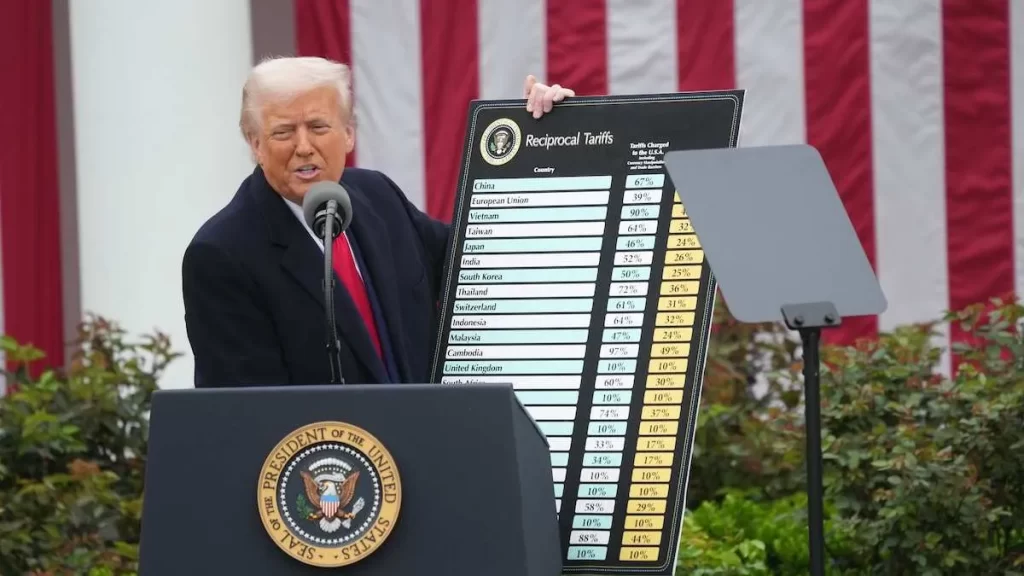
- 2025 was the year of Trump in the eyes of global economists, as his “Reciprocity Tariffs” forced a total recalibration of international trade routes.
- The administration successfully leveraged U.S. market access to secure $2 trillion in foreign direct investment, bolstering domestic AI and defense sectors.
- A signature “Peace through Strength” approach led to the de-escalation of multiple border conflicts, positioning the U.S. as a transactional mediator.
- The pivot toward a modern Monroe Doctrine redefined Western Hemisphere security, focusing on “narcoterrorism” and border integrity.
As 2025 draws to a close, diplomatic circles and think tanks have reached a consensus: 2025 was the year of Trump. His second-term foreign policy—active, unapologetically America First, and deeply transactional—has kept him at the center of a non-stop global media cycle. Unlike the multilateralism of the past, Trump’s approach prioritizes direct “deals” that benefit U.S. economic and security interests, leveraging tariffs and personal diplomacy to reshape the world order.
The Economic Engine: Tariffs and Investment A defining feature of this year was the massive influx of foreign capital. During a landmark tour of the Middle East, Trump secured commitments exceeding $2 trillion for U.S. defense production, aviation, and AI infrastructure. By positioning the U.S. as the premier destination for Gulf petrodollars, he successfully linked regional stability to American prosperity.
Trump the Peacemaker? All Eyes on NATO Summit as Ukraine War Tops Agenda
On the trade front, Trump’s aggressive posture was inescapable. By imposing significant duties on imports from China, Mexico, and Canada, he signaled a return to hemispheric dominance. These measures, framed as essential for protecting domestic industries and curbing the fentanyl crisis, pushed U.S. trade rates to historic levels, forcing every global capital to react to Washington’s lead.
READ MORE: America First Doctrine: Trump Recalls 30 Career Ambassadors
Ending Wars: The “President of Peace” Narrative Trump’s claim to have ended international wars became a cornerstone of his 2025 legacy. He notably credited his personal rapport with world leaders—including Pakistan’s Field Marshal Asim Munir—with averting a nuclear-tinged escalation between India and Pakistan in May.
From facilitating cease-fires in Gaza to mediating border skirmishes in Southeast Asia, Trump leaned into his “Peace Through Strength” persona. While some critics question the long-term stability of these “transactional peaces,” the absence of new, major U.S. ground entanglements has energized his base and dominated the headlines.
ALSO READ: Donald Trump plays peacemaker as domestic struggles grow
The Anti-Narcotics Crusade Perhaps the most controversial shift was the administration’s focus on “narcoterrorism.” Framing drug cartels as a military threat, the U.S. launched unilateral kinetic actions in the Caribbean. This willingness to use force preemptively against Venezuelan-linked networks underscored a move away from traditional diplomacy toward a more assertive, security-first regional policy.
Conclusion In every sense, 2025 was the year of Trump. Reduced Middle East entanglements freed resources for great-power competition and border security. Investments flowed, tariffs reshaped markets, and conflicts were paused—almost always on Trump’s terms. Whether this yields enduring greatness or future instability is the debate of the hour, but his imprint on 2025 is indelible.
Trump’s remarkable deed in 2025 was to stop a nuclear war in South Asia. In May 2025, the world stood on the precipice of nuclear catastrophe as tensions between India and Pakistan escalated into a four-day aerial and missile conflict. India had started by launching a military operation known as “Operation Sindoor.” Meanwhile Pakistan had responded with ‘ Operation Bunyan al-Marsus’ by dowing as many as seven indian fighter jets including Rafael.
The sheer scale of the 2025 crisis—which saw over 100 aircraft engaged in high-stakes combat—necessitated a departure from protocol. The way Pakistan’s armed forces had responded to Indian aggression under a confident and smart Pakistani general ( now promoted to the rank of Field marshal) won Pakistan appreciation at every International forum. Trump had apprciated Field marshal Asim Munir a dozen times since May.
Sources close to the administration suggest that it was a discrete outreach from Indian leadership that provided President Trump the opening to deploy his signature brand of “transactional diplomacy.”
Trump’s intervention was not merely about cooling tempers; it was a calculated move to protect global markets. While India officially downplays third-party roles to satisfy domestic optics, the swiftness of the May 10 ceasefire—announced by Trump himself before the respective capitals—points to a coordinated resolution initiated by an Indian request for a cooling-off period. This decisive moment solidified 2025 as the year Trump effectively traded the role of global policeman for that of the world’s ultimate closer.