


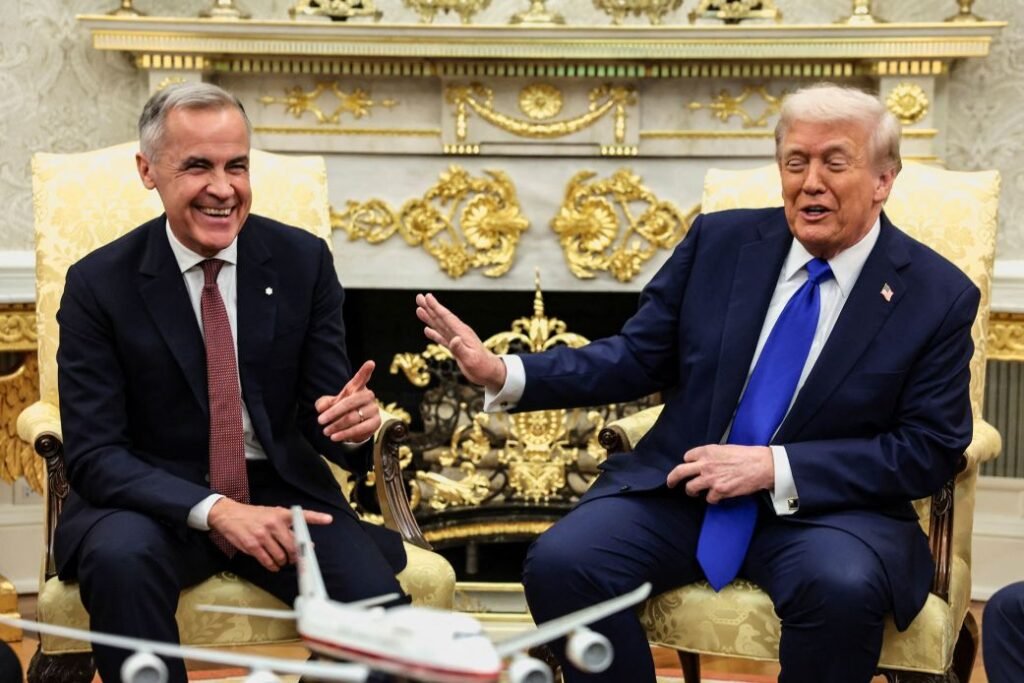
- Canada military involvement Iran is now on the table as PM Carney does not rule out participation amid U.S.-Israeli strikes.
- Canadian analysts see Carney’s stance as opportunistic, aiming to leverage Trump tariffs for economic gain.
- The move follows Carney’s recent Canada-China relations push, highlighting strategic balancing in foreign policy.
- Middle powers like Canada are navigating the US-led Middle East war to secure influence in the shifting global order.
In a statement that has caught the attention of global policymakers, Canadian Prime Minister Mark Carney on Thursday said that his country “could not categorically rule out” participating militarily in the escalating conflict in the Middle East. The remarks came amid growing U.S.-Israeli strikes on Iran following the assassination of Supreme Leader Ayatollah Ali Khamenei, a move that has dramatically intensified regional tensions.
Speaking in Canberra alongside Australian Prime Minister Anthony Albanese, Carney framed the potential military involvement as a hypothetical, while reiterating Canada’s support for preventing Iran from obtaining nuclear weapons—a position he said the country holds “with regret,” citing it as yet another failure of the international order.
Analysts, however, interpret the statements differently. “This is a calculated, opportunistic move by Carney,” said Dr. Jennifer Kwan, a Toronto-based foreign policy analyst. “Canada is signaling alignment with the U.S., particularly with President Trump, to potentially secure favorable trade adjustments after years of tariff disputes.”
US-Iran War Escalation: Trump Finalizes Ground Strategy as Middle East Conflict Widens
The backdrop of this shift is a complex history of Canada-U.S. tensions. During Trump’s previous term, Canada faced punitive tariffs on steel, aluminum, and a range of other sectors, prompting prolonged diplomatic negotiations. Carney’s administration, in contrast, has sought to hedge against the uncertainties of the U.S.-led global order through strategic outreach to Asia-Pacific nations, including a recent high-profile visit to China, aimed at securing trade partnerships independent of Washington.
Observers note the irony: after actively seeking economic diversification in China and the broader Asia-Pacific region, Canada now appears poised to enter the U.S.-driven military coalition targeting Iran. “It’s classic middle-power realpolitik,” said Kwan. “Carney is balancing between hedging against U.S. dominance and opportunistically joining Trump’s coalition at a moment that could yield tangible benefits, especially on the trade front.”
Iran Ballistic Missile to Turkey Escalates Conflict, Tests NATO Deterrence Architecture
Carney’s tour of Australia, part of a multi-country Asia-Pacific engagement, has emphasized economic cooperation and investment, under the banner of strengthening ties among “like-minded middle powers.” He told Australia’s parliament that nations such as Canada and Australia must actively participate in shaping the rules of the global order rather than passively accepting decisions imposed by great powers. “Great powers can compel, but compulsion comes with costs, both reputational and financial,” Carney said, framing his potential military decisions in broader strategic terms.
Canada’s foreign office, led by Minister Anita Anand, is concurrently grappling with consular challenges as the conflict escalates. More than 2,000 Canadians in the Middle East have requested assistance, with air travel severely disrupted following U.S. strikes. Anand announced emergency measures including charter flights and consular deployments near regional borders, while cautioning citizens to prepare departure plans that do not rely solely on government assistance.
US-Iran War Escalation: Trump Finalizes Ground Strategy as Middle East Conflict Widens
Experts emphasize that Carney’s comments should be read as part of a broader political calculus. “Canada’s entry into the Iran conflict is less about national security and more about maximizing leverage with the Trump administration,” said Professor Liam Chen of the University of British Columbia. “This could translate into tariff relief, enhanced trade negotiations, and a strengthened position within North American policymaking circles.”
While Carney reiterated calls for “de-escalation” in the region, analysts see his statements as a strategic opening for Canada to assert relevance in U.S.-led military initiatives. Should Canada formalize participation, it would mark the first European-aligned nation joining the U.S. coalition against Iran, signaling a potential shift in the transatlantic approach to Middle East geopolitics.