


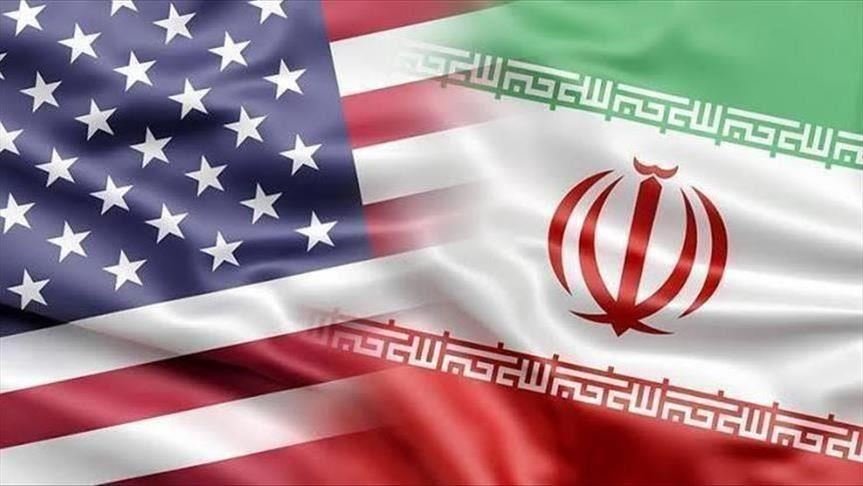
- US-Iran War Escalation deepens as Trump administration orders Americans to leave Gulf states amid ground invasion plans.
- White House signals long-term military engagement with over 1,000 targets struck inside Iran.
- Regional spillover hits Israel, Lebanon, UAE, Kuwait, and Cyprus, raising fears of a broader Middle East war.
- Pentagon confirms U.S. casualties while Iran reports hundreds killed in retaliatory strikes.
In an extraordinary escalation that now spans the Persian Gulf, the Levant and parts of Europe, the Trump administration has urged American citizens to leave the Middle East immediately, as officials privately signal that the next phase of the war could involve U.S. ground forces entering Iran once evacuations are complete.
“DEPART NOW,” the U.S. Department of State warned Monday in an unusually blunt advisory covering Bahrain, Egypt, Iran, Iraq, Israel, Jordan, Kuwait, Lebanon, Oman, Qatar, Saudi Arabia, Syria, the United Arab Emirates and Yemen. The sweeping order reflects mounting fears that the U.S.–Israeli assault on Iran has already ignited a region-wide conflict with unpredictable consequences.
Well-informed sources told The Islamabad Telegraph that Washington has finalized a highly sophisticated wartime strategy that extends well beyond airstrikes. According to officials privy to internal deliberations, the White House intends to move ground forces into Iran “as soon as the last U.S. national leaves the Gulf states,” a step that would mark the most dramatic American military escalation in the region in decades.
President Donald Trump, speaking in the White House’s East Room, acknowledged the scale of the operation. The campaign, he said, could last “four to five weeks” but has “the capability to go far longer than that.” The message was clear: Washington is prepared for a prolonged confrontation.
Critics across Capitol Hill and among America’s European allies have accused Trump of launching strikes without a coherent endgame. But senior administration advisers reject that narrative. “Political opponents are trying to blackmail the president into revealing highly secret Iran attack strategy details,” one senior adviser said. “He is not going to do that at any cost.”
Behind the public silence, aides argue that the very absence of detail is itself strategic. “We didn’t start this war, but under President Trump we are finishing it,” Defense Secretary Pete Hegseth declared in a forceful press briefing. Hegseth dismissed accusations of embarking on another “endless war,” while pointedly refusing to rule out ground troops. “Our ambitions are not utopian; they are realistic.”
The numbers are staggering. U.S. officials say more than 1,000 targets inside Iran have been struck since the joint U.S.–Israeli campaign began, while Israel claims to have hit over 600 additional sites. Iran’s state broadcaster, citing the Iranian Red Crescent Society, reports at least 555 dead in the ongoing bombardment—figures that remain impossible to independently verify.
Iran’s retaliation has been swift and geographically expansive. Missiles and drones have struck Israel, Gulf capitals and even European territory. Explosions were reported near a British base in Cyprus, marking the first time a European Union member state has been drawn directly into the hostilities.
In Kuwait, three U.S. F-15E Strike Eagles were mistakenly downed by that country’s air defenses, according to U.S. Central Command. All six crew members ejected safely and were recovered in stable condition. Still, the incident underscored the volatility of a battlespace crowded with allied and adversary aircraft.
The Pentagon confirmed that six U.S. service members have been killed since the conflict began. Earlier fatalities included members of a sustainment unit in Kuwait. Joint Chiefs Chairman Dan Caine warned that further casualties are expected, describing the mission as “difficult and gritty work” that will take “some time.”
Threat from Iran conflict spreads across Middle East in 72 hours
The regional spillover has been dramatic. Iranian missiles hit parts of the United Arab Emirates, damaging hotels and residential towers in Abu Dhabi and Dubai. A high-rise burned in Bahrain. Drones struck a port in Oman, long regarded as a neutral intermediary between Washington and Tehran. In Saudi Arabia, the U.S. embassy compound sustained damage.
Israel has widened the conflict further north after Hezbollah launched rocket and drone attacks. Israeli forces struck Hezbollah positions in Beirut and southern Lebanon, expanding what began as a targeted campaign into a multi-front war stretching from the Mediterranean to the Red Sea.
Inside Iran, political uncertainty deepened after the assassination of Supreme Leader Ali Khamenei. Tehran announced the formation of an interim leadership council, but the succession process remains opaque and fraught, particularly after several senior officials were killed in the opening strikes.
Security analysts warn that Tehran’s decision to hit civilian infrastructure across Gulf monarchies was deliberate. By pulling neutral states into the blast radius, Iran signaled that no bystander can remain insulated from the war. The strategy may backfire. Diplomats say Gulf states that had sought to mediate tensions now appear to be aligning more closely with Washington out of necessity rather than choice.
The humanitarian toll is mounting. In Israel, at least 10 people were reported killed in Iranian missile strikes. In Lebanon, health officials say more than 50 have died amid Israeli bombardments. Civilian casualties have also been reported in Iraq, Bahrain, Kuwait and Oman. Across the region, airports are shuttered, commercial shipping routes are disrupted, and energy markets are in turmoil.
Even before the first airstrikes, U.S. and Israeli officials had gamed out Iranian retaliation—cyberattacks, proxy militia assaults, missile salvos. What few anticipated was the speed and breadth of the escalation. Nearly 300 million civilians across more than a dozen nations now find themselves under the shadow of an expanding war.
For the Trump administration, the coming days are critical. Evacuations of American nationals are underway. Military reinforcements are flowing into the theater. Officials insist that objectives remain focused on dismantling Iran’s military capabilities and neutralizing its nuclear program—not regime change, despite Trump’s public calls for Iranians to “bring down” their weakened government.
Whether that distinction holds if U.S. ground forces cross into Iranian territory remains an open question. What is clear is that Washington has moved beyond a limited strike doctrine into a full-spectrum regional confrontation.
Diplomats fear a tipping point is near. If Gulf states are drawn deeper into active combat roles, or if Iranian proxies intensify attacks on U.S. bases, the conflict could metastasize into a generational war.
For now, the administration’s message is firm: the plan exists, the strategy is in place, and the objective is achievable. But as missiles arc across the Middle East and civilians brace for more nights in shelters, the region stands on the brink of a conflict whose end remains uncertain—and whose consequences will reverberate far beyond its borders.