


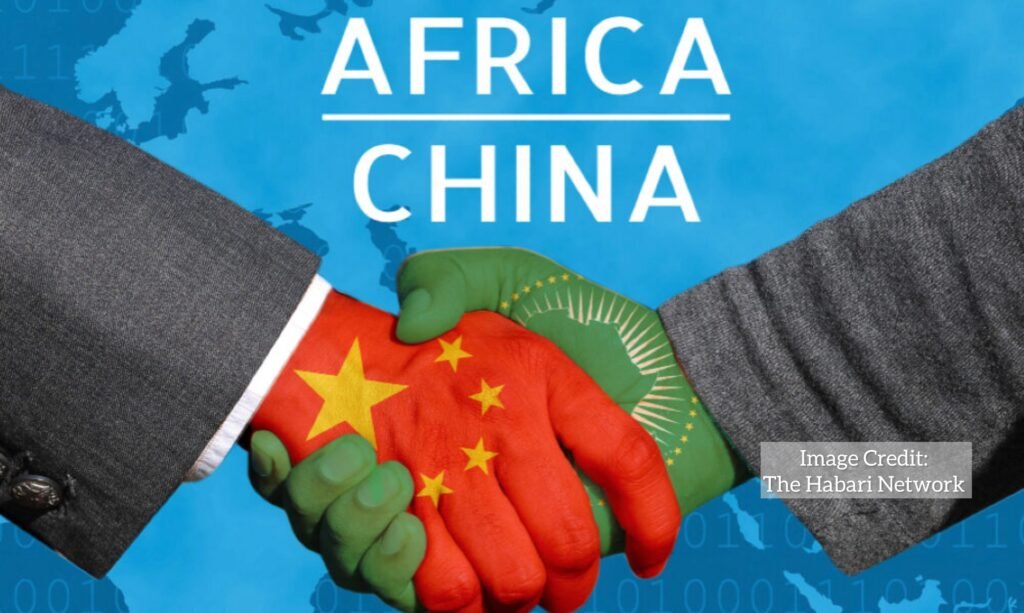
- China’s trade surplus with Africa hit $60 billion by August 2025, nearly matching all of 2024, as U.S. tariffs redirected exports.
- Exports of solar panels, EVs, steel, and industrial equipment to Africa surged, with solar imports alone rising 60 percent year-on-year.
- While exports to the U.S. plunged 33 percent, shipments to Africa jumped 26 percent, solidifying the continent as China’s fastest-growing market.
- Beijing waived tariffs for 53 African countries, positioning itself as Africa’s main economic partner while Washington pulls back.
When President Donald Trump’s tariffs struck at the heart of Chinese exports to the United States, many analysts predicted that Beijing’s factories—already strained by slowing domestic demand—would face a reckoning. Instead, Chinese manufacturers have displayed remarkable agility, redirecting goods to new markets across Canada, Central Asia, Russia, Latin America, and, most significantly, Africa. Nowhere is this shift clearer than on the African continent, which is emerging as the “golden sparrow” for Chinese goods.
Through August 2025, China’s trade surplus with Africa surged to $60 billion, nearly matching the entirety of last year’s figure. According to Chinese customs data, exports to Africa reached $141 billion, up 26 percent year-on-year, while imports stood at $81 billion. In comparison, exports to the United States plunged by 33 percent over the same period, underscoring how tariffs have reshaped the flow of global commerce.
Africa Takes Center Stage
Chinese solar panels, electric vehicles, steel, industrial machinery, and smartphones are flooding African markets at record pace. For Chinese producers squeezed by overcapacity and plummeting prices at home, Africa has become both a release valve and a growth engine.
Norway’s Tightrope: Labour’s Victory, Populism’s Rise, and the Country’s Place in a Changing World
In Kampala, Uganda’s bustling capital, shop windows are crowded with Chinese solar panels, nearly all of them shipped from factories in Guangdong or Jiangsu. Local shopkeepers say European and Indian competitors have virtually disappeared. “Ninety-nine percent of what I sell is made in China,” said Mwiine Joseph, a retailer. “If I want to compete, I must offer cheap solar—and the Chinese deliver that.”
The solar boom is measurable. Imports of Chinese solar panels to Africa jumped 60 percent in the past 12 months, with 20 countries hitting record purchases, according to Ember, an energy tracking group. Distribution hubs set up by Chinese firms in Kampala, Nairobi, and Lagos have accelerated the process, cutting costs and ensuring faster supply. Prices for panels have dropped 40 percent in the past year, making renewable energy more accessible across the continent.
A Broader Trade Diversion
This redirection is not limited to solar. Steel shipments from China to Africa rose 30 percent in the first five months of 2025, while exports of agricultural and construction machinery soared 40 percent. Shipments of electric motors and generators climbed 50 percent, highlighting Africa’s hunger for infrastructure and industrial equipment.
READ MORE: China’s Exports to Africa Are Soaring as Trade to U.S. Plunges
In consumer goods, the surge is even more striking. Chinese automobile exports to Africa expanded 67 percent, with shipments in May doubling year-on-year. Smartphone sales are equally telling: four of Africa’s five top-selling brands are Chinese, with Huawei and Xiaomi making the biggest gains.
China’s trade strategy contrasts sharply with Washington’s retreat. Trump has gutted U.S. foreign aid to Africa, imposed tariffs on goods from South Africa, and threatened duties of up to 50 percent on imports from smaller economies like Lesotho, leaving many nations scrambling. Beijing, in turn, waived nearly all tariffs for 53 African countries this June—a bold move to entrench its position as Africa’s indispensable trade partner.
Canada, Russia, and Central Asia: Important but Secondary
While Africa stands out, China’s exports to other regions have also expanded. Canadian imports of Chinese electric vehicles and consumer electronics rose 22 percent this year, as Canadian buyers sought affordable alternatives amid inflationary pressures.
ALSO READ: Xi’s Pageantry and the Perils of a New Axis
In Central Asia, trade volumes grew 18 percent, fueled by Belt and Road infrastructure projects that tie Kazakh, Uzbek, and Kyrgyz markets more closely to Chinese supply chains. Russia, under Western sanctions, has become heavily reliant on Chinese goods, with bilateral trade surpassing $250 billion annually, but Moscow’s purchasing power and economic stagnation limit its ability to absorb China’s industrial surplus at Africa’s scale.
Why Africa Is Different
Africa’s value to Beijing lies not only in its market size but also in its growth trajectory. The continent’s population of 1.4 billion is projected to double by 2050, with rising urbanization driving demand for energy, housing, transport, and consumer goods. Chinese firms, already entrenched through Belt and Road infrastructure investments, are positioned to dominate these sectors.
Beijing also frames this relationship as mutually beneficial. State-run Xinhua has claimed that Chinese ventures created over one million jobs in Africa in the past three years while building railways, ports, and industrial zones. Whether these figures are inflated or not, the visibility of Chinese projects—from Kenya’s Standard Gauge Railway to Uganda’s first mobile phone factory—gives Beijing a powerful narrative of partnership.
Trump’s tariffs have, paradoxically, strengthened China’s hand in Africa by forcing its exporters to look beyond traditional markets. With Washington retrenching, Beijing is not just filling a void—it is rewriting the trade map.
Risks and Realities
Yet Africa’s golden status for Chinese goods comes with dilemmas. African leaders worry about becoming overly dependent on Chinese imports, which could stifle local industry. The influx of cheap manufactured goods has long raised concerns about deindustrialization, with nascent African producers unable to compete on price.
Still, many policymakers see little alternative. “China is really the only game in town,” noted David Omojomolo, Africa economist at Capital Economics. With infrastructure gaps wide and consumer demand growing, Chinese financing and goods remain hard to resist.
For Beijing, the risks are different. By leaning so heavily on Africa, it may expose itself to volatility in commodity-dependent economies and political instability. Moreover, oversupply and razor-thin margins in industries like solar could test the sustainability of this export pivot.
A New Trade Geography
The numbers tell the story: a 33 percent collapse in exports to the U.S., offset by double-digit growth across Africa, Southeast Asia, and Latin America. For now, Africa is the crown jewel. In the streets of Kampala, Nairobi, or Lagos, the “Made in China” label is not just ubiquitous—it is becoming indispensable.
Trump’s tariffs were designed to weaken China’s global standing. Instead, they may have accelerated a historic realignment, pushing Beijing closer to regions that view Chinese goods not as a threat, but as a lifeline.