


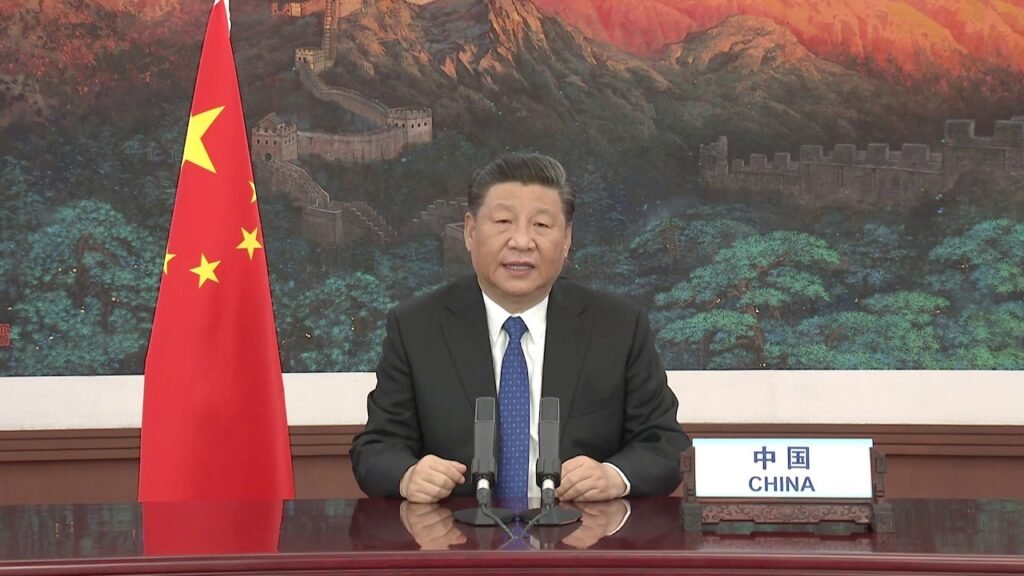
- China’s Grand Spectacle: Xi Jinping’s largest-ever military parade marks Beijing’s bid to replace Washington as the center of global power.
- Axis of Upheaval: The presence of Putin, Kim Jong Un, and other leaders signals a growing bloc of nations challenging Western dominance.
- Memory and Might: The event fuses historical narrative with cutting-edge military technology to showcase China’s ideological and military ascendancy.
- Global Repercussions: While developing nations welcome China’s leadership, Western capitals view the parade as a symbol of rising authoritarian solidarity.
Tomorrow on September 3, Beijing is all set to host the largest military parade in China’s history, a meticulously choreographed spectacle designed to be as much about power as it is about pageantry. But beneath the roar of fighter jets and the gleaming displays of hypersonic missiles lies something far more significant: a calculated geopolitical statement by President Xi Jinping. This is not merely a parade. It is Xi’s audacious attempt to position China as the anchor of a new world order—an order no longer dictated solely by Washington.
More than 20 world leaders, including Russia’s Vladimir Putin, North Korea’s reclusive Kim Jong Un, Iran’s President Masoud Pezeshkian, and Pakistan’s leadership, will be in attendance. Their presence signals a quiet but unmistakable shift in global alignments. Even Indian Prime Minister Narendra Modi, often wary of Beijing’s ambitions, is expected to attend, underscoring the magnetic pull China now exerts on both allies and rivals.
The parade, marking 80 years since Japan’s defeat in World War II, will likely be remembered for the unprecedented image of Xi flanked by Putin and Kim—an “Axis of Upheaval,” as some analysts describe it—standing together against the backdrop of a world where American dominance looks increasingly uncertain.
The Symbolism of Power and Partnership
The optics are impossible to miss. Putin, isolated by the West over Ukraine; Kim, presiding over one of the world’s most sanctioned states; Pezeshkian, representing Iran amid tensions with the U.S.; and leaders from Central and Southeast Asia—all converging in Beijing under Xi’s banner.
Xi Jinping’s Eurasian Power Show Meets Trump’s America First: Clash of Visions for Global Order
This gathering sends a message far beyond the parades and fireworks: Beijing is no longer content to be a regional power. Xi is positioning China as the diplomatic and ideological hub for those dissatisfied with Washington’s global stewardship.
Neil Thomas of the Asia Society Policy Institute aptly noted, “The presence of Putin, Kim, and Pezeshkian underscores China’s role as the world’s leading authoritarian power.” Yet even that description feels incomplete. This isn’t merely authoritarian solidarity; it is a calculated bid to present an alternative vision of global governance—multipolar, non-Western, and unapologetically resistant to U.S. dominance.
A Parade Amid U.S. Retreat
The timing could not be more pointed. Under President Donald Trump, the United States has retreated from international institutions, slashed foreign aid, and waged trade wars not only with rivals but even with traditional allies. Washington’s credibility as the world’s policeman has eroded after messy wars in the Middle East and its chaotic withdrawal from Afghanistan.
READ MORE: Xi’s Parade to Showcase China’s Military Might and Circle of Autocrats
Xi has seized the moment. By hosting this grand parade and rallying leaders from Asia, Africa, and even parts of Europe, he aims to portray China as the responsible power stepping into the vacuum left by Washington’s inward turn.
Earlier this week, Xi hosted a summit of developing nations in Tianjin, calling for a “fairer, multipolar world order” and rejecting what he termed the “Cold War mentality” of the West. The parade is the military counterpart to that diplomatic vision: a show of force wrapped in the language of peace and multipolarity.
The Memory War: Rewriting History, Reshaping the Future
The parade also plays into what analysts call the “memory war”—a contest over historical narratives. China and Russia accuse the West of downplaying their sacrifices in World War II while exaggerating its own role in defeating fascism. By marking the 80th anniversary of Japan’s surrender with such pomp, Xi is rewriting the war’s legacy to place China, not the United States, at the center of the victory story.
ALSO READ: Modi and Xi’s Cautious Dance: Can China Really Trust India Amid a Shifting Global Order?
This historical reframing serves a present-day purpose. It feeds into Xi’s doctrine of the “great rejuvenation of the Chinese nation,” casting modern China as the inheritor of a heroic past and the architect of a post-Western future.
The Kim Jong Un Factor: Nuclear Shadows Over Beijing
Among all the leaders attending, none draw as much intrigue as North Korea’s Kim Jong Un. His arrival on a bulletproof train, after visiting a missile laboratory in Pyongyang, was a masterclass in symbolism.
By standing alongside Xi and Putin, Kim seeks to break out of his diplomatic isolation and present North Korea as a nuclear power with powerful friends. For China, Kim’s presence signals that Beijing remains the key player on the Korean Peninsula—a message not lost on Washington or Seoul.
As Hong Min, a North Korea analyst, put it: “Kim’s visit before the parade sends a message about North Korea’s will to advance nuclear weapons and its status as a nuclear power that is difficult to reverse.”
Military Might on Display
The parade itself will be a jaw-dropping display of China’s military modernization. Hypersonic missiles capable of evading U.S. defense systems, stealth drones, advanced fighter jets, and cyber warfare units will roll through Tiananmen Square, reflecting Xi’s ambition to turn the People’s Liberation Army into a world-class fighting force by 2035.
Taiwanese officials estimate Beijing is spending $5 billion on the event—roughly 2% of its annual defense budget. For Xi, the cost is worth it. Each missile, each marching soldier, each roaring jet is a statement: China is no longer the sleeping giant of the 20th century; it is the awakening superpower of the 21st.
Global Reactions: Admiration, Anxiety, and Ambivalence
Reactions to the parade will likely be mixed. For many developing nations, China’s rise offers economic partnerships and diplomatic support without the political conditions often attached to Western aid. Leaders from Africa to Central Asia see Beijing as a counterbalance to Washington and Brussels.
But in Washington, Tokyo, and parts of Europe, the sight of Putin, Kim, and Xi together will deepen anxieties about a new anti-Western bloc. Critics will argue that this is less about multipolarity and more about authoritarian powers banding together to challenge liberal democracy.
Even within China, reactions are not uniformly enthusiastic. Online forums like Zhihu saw users complaining about the parade’s cost, suggesting the money would be better spent on healthcare or education. One viral comment—since deleted—read: “I hope they spend less on parades and more on improving people’s lives.”
Xi vs. Trump: Two Faces of Power
The contrast between Xi’s parade and Trump’s troubled attempts at military pageantry is striking. Trump’s own military parade in June triggered massive protests and failed to project American strength the way Xi’s spectacle intends to.
Where Trump talks of “America First,” Xi speaks of a “shared future for mankind.” Where Trump alienates allies, Xi courts them—even those traditionally aligned with Washington. The parade, therefore, is not just military theater; it is soft power wrapped in hard power, diplomacy expressed through dominance.
A Defining Moment in Geopolitics
When the tanks roll and the jets scream across Beijing’s sky, the world will witness more than a commemoration of World War II’s end. It will see a resurgent China staking its claim to global leadership at a moment when American power looks shaky, Russian power looks cornered, and Western unity looks frayed.
For Xi Jinping, this parade is his declaration that the 21st century will not be an American century, nor even a Chinese century alone—but a century where Beijing decides the terms of global order. Whether the world accepts that vision remains to be seen.