


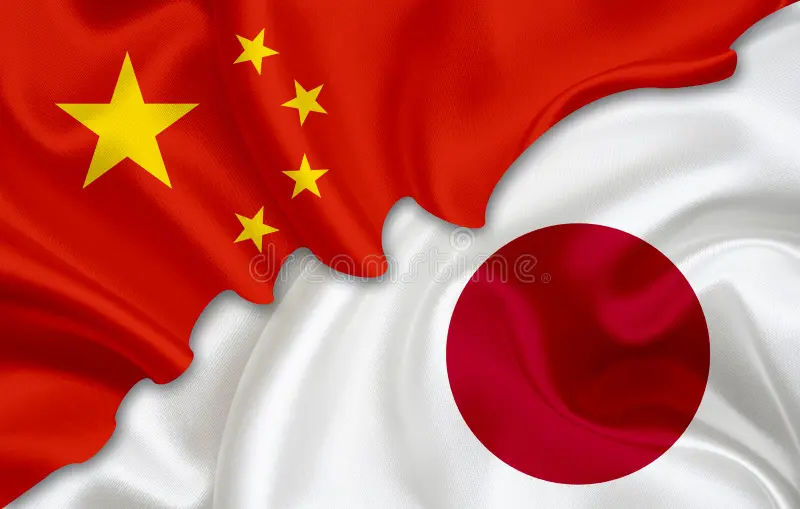
- Rising China–Japan tensions have intensified after Japanese Prime Minister Sanae Takaichi implied possible military intervention in Taiwan.
- China says any foreign attempt to obstruct its reunification efforts is “doomed to fail,” calling Takaichi’s statements dangerous and unlawful.
- The crisis exposes deep political divides inside Japan, where many leaders warn against provoking China unnecessarily.
- Escalating China–Japan tensions threaten regional stability, global markets, and could trigger a wider confrontation involving the U.S. and its allies.
China’s sharp warning to Japan this week was not just another diplomatic exchange—it was a reminder that Asia’s most combustible geopolitical fault line is being deliberately stressed by political actors who understand neither history nor consequence.
When Chinese Foreign Ministry spokesperson Lin Jian declared that “China will never compromise or concede on its core interests such as national sovereignty and territorial integrity,” he was not offering rhetorical flourish.
He was laying down the same red line that has anchored Beijing’s foreign policy for decades: Taiwan is non-negotiable, and any external attempt to obstruct reunification is, in China’s own words, “doomed to fail.”
The context behind this new storm is critical. Japanese Prime Minister Sanae Takaichi’s provocative remarks, which openly flirted with the possibility of armed Japanese intervention in the Taiwan Strait, crossed a threshold that even Tokyo’s most hawkish administrations have historically avoided.
China–Japan Tensions Spike Over Taiwan: Asia Faces Potential Crisis
Her framing—casually implying Japan might act militarily should China move to restore sovereignty over Taiwan—was not merely diplomatically reckless. It was a stunning departure from Japan’s long-standing restraint, rooted in its post-World War II constitution and the political agreements inked with Beijing over the last four decades.
China’s response was swift and calculated. Vice Foreign Minister Sun Weidong summoned Japanese Ambassador Kenji Kanasugi for a formal and serious démarche—Beijing’s highest method of diplomatic protest short of punitive measures.
Lin Jian reinforced this at his press briefing, stressing that the “root cause of the problem lies in Takaichi’s extremely wrongful, dangerous and provocative remarks.” The word choice—dangerous, wrongful, provocative—illustrates just how seriously China perceived the breach.
READ MORE: Any force obstructing China’s reunification doomed to fail: FM spokesperson
More importantly, Lin highlighted that Takaichi’s refusal to retract the comments only amplified the crisis. This point matters. Diplomatic crises often de-escalate when one side offers clarifications or adjusts language. Takaichi instead doubled down, seemingly signaling a Japan that believes it has both the right and the moral imperative to intervene in what the international community overwhelmingly recognizes as China’s internal affair.
This is where the global implications become clearer. China’s charge that Japan has “grossly interfered in China’s internal affairs, violated international law, and damaged the post-WWII international order” is not mere rhetoric—it reflects the foundation of modern Asian geopolitics.
ALSO READ: Trump-Xi Trade Truce: Trump and Xi Move to End Cold War in Trade: U.S. Exhibitors See Hope After South Korea Breakthrough
The one-China policy is not an optional guideline; it is a central pillar of diplomatic engagement not only between Beijing and Tokyo, but between China and virtually every major nation. Japan’s own commitments to this principle are enshrined in the four China–Japan political documents that have sustained bilateral relations since normalization.
By hinting at military involvement in Taiwan, Takaichi effectively undermined Japan’s own diplomatic architecture. It is this contradiction that Beijing emphasized repeatedly. Lin’s reminder that Takaichi’s comments “contravene the one-China principle… and disrupt the political foundations of China-Japan relations” is both a warning and an indictment.
If Tokyo truly values regional stability and its economic partnership with Beijing, it cannot simultaneously posture as a frontline participant in a hypothetical conflict driven largely by U.S. strategic anxieties in the Indo-Pacific.
Yet the story does not end with China’s outrage. Perhaps the most telling line from Lin Jian’s briefing was his observation that “many politicians and people with vision in Japan raised caution and criticism.” This reveals something often overlooked in the Western narrative: Japan is not united behind its prime minister’s Taiwan provocations. Within Tokyo’s political, academic, and diplomatic circles, there is a deep recognition that pushing China too far risks triggering a conflict that Japan is neither prepared for nor guaranteed to survive economically.
Japan’s business community—the backbone of its economic clout—understands that any confrontation with China would devastate supply chains, energy imports, consumer markets, and financial stability. Even Japan’s security establishment, long aligned with Washington, acknowledges privately that war in the Taiwan Strait would almost certainly draw missile strikes on Japanese bases, ports, and cities. The human, financial, and national consequences would be immeasurable.
The real danger, however, lies in political opportunism. Takaichi represents a growing faction of Japanese leaders who increasingly see Taiwan through the lens of ideological confrontation rather than pragmatic security. Their rhetoric mirrors Washington’s Indo-Pacific containment strategy, which—while marketed as “supporting democracy”—is transparently aimed at weakening China’s rise. For these politicians, Taiwan becomes a convenient rallying point, even if the cost is regional catastrophe.
China, for its part, is unmistakably signaling that it sees through this political maneuvering. When Lin says any force attempting to obstruct reunification is “doomed to fail,” he is speaking not just to Japan, but to the broader U.S.-Japan alliance architecture. Beijing wants to make clear that it will not allow manufactured provocations, alliance politics, or domestic posturing to alter its long-term trajectory.
But Asia does not need another crisis. With global economies slowing, military budgets rising, and regional mistrust deepening, the last thing the Indo-Pacific requires is a war sparked not by necessity, but by the loose lips of politicians seeking applause at home.
Japan must decide whether it wants to remain an anchor of regional stability or become a frontline actor in a geopolitical gamble orchestrated far beyond its shores. China has made its position unmistakably clear. The region’s peace now depends on whether Tokyo—under immense pressure from its own hawks and from Washington—chooses provocation or prudence.
For now, the world watches a dangerous diplomatic dance. But history is unmoving on one point: Asia’s greatest catastrophes have always begun with the miscalculations of leaders who believed they could reshape destiny with a single reckless remark.