


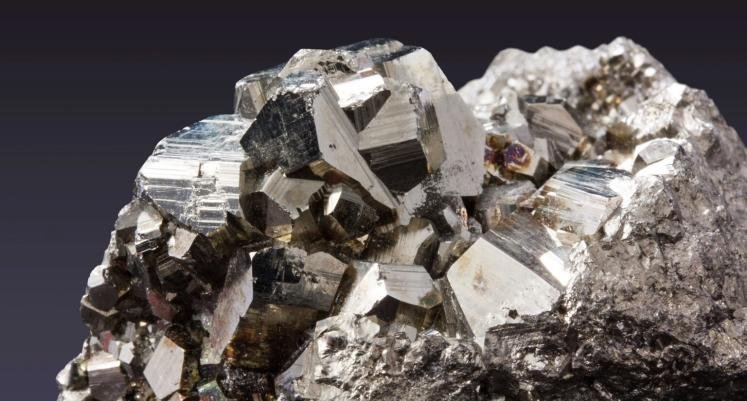
- Critical minerals have replaced oil as the primary driver of 21st-century military and economic leverage.
- The U.S. has committed $12 billion to break the international monopoly on battery and semiconductor inputs.
- Ten nations now control the “upstream” energy transition, with China leading in both mining and refining.
- National security strategies are pivoting from securing oil pipelines to protecting mineral processing hubs.
For more than a century, the geography of power was drawn in crude oil. From the sands of the Middle East to the shale fields of Texas, control over oil fields, shipping chokepoints, and pricing mechanisms determined which states rose and which declined. Oil fueled the tanks of World War II, underwrote the post-war economic miracle, and provided the primary leverage for the “petrostates” of the 20th century.
Today, a quieter but deeper transformation is underway. A group of resources known as critical minerals—lithium, cobalt, nickel, and rare earth elements—is beginning to matter more than oil ever did. This shift is not merely a “green” transition; it is a fundamental reordering of global power hierarchies. While oil powered the industrial age of movement, critical minerals power the digital age of intelligence, computation, and precision.
The Shift from Fuel to Systems
Critical minerals do not power cars directly like oil once did; they power the systems that define modern life. Data centers, satellites, electric vehicles (EVs), semiconductors, and precision-guided weapons all depend on secure access to these materials.
The shift is structural and irreversible. Oil was essentially a commodity of consumption—burned to produce energy. Critical minerals are commodities of infrastructure. They sit inside batteries, fiber optics, and radar systems. Whoever controls these inputs shapes entire value chains, from advanced manufacturing to military capability. In strategic terms, if oil allowed states to move armies, critical minerals allow states to see, calculate, and strike.
Washington’s Strategic Counter-Offensive
Recognizing this vulnerability, the United States has moved to treat mineral security as a pillar of national defense. The U.S. has planned to invest $12 billion dollars to produce and stockpile critical minerals through the newly established “Project Vault” and the U.S. Strategic Critical Minerals Reserve.
Project Vault: Washington’s $12 Billion Gamble to Break China’s Mineral Monopoly
Announced in early 2026, this $12 billion public-private initiative seeks to insulate American manufacturers from price volatility and supply shocks. By establishing a civilian-industry stockpile—distinct from military reserves—the U.S. aims to create a “price floor” that encourages domestic mining and refining, areas where Western capital has historically been hesitant to tread due to market manipulation by state-backed actors.
The New Map of Power: Top 10 Producers
The mineral era is geographically concentrated, often in politically sensitive regions. Based on 2025-2026 production indices, these ten countries define the “upstream” of the new energy economy:
The central question for 21st-century diplomacy is whether the West can effectively compete with China. Beijing’s dominance is not an accident of geology but the result of a thirty-year industrial strategy. China does not just mine; it refines. It controls the midstream—the complex chemical processing required to turn raw ore into battery-grade chemicals or high-performance magnets.
New Zealand catches flak for ‘secret’ US critical minerals talks
For the U.S. and its allies, “competing” does not necessarily mean matching China’s volume. Instead, the strategy has shifted toward geopolitically exclusionary ecosystems. Through “friend-shoring” with partners like Australia and Canada, and initiatives like the Forum on Resource Geostrategic Engagement (FORGE), the U.S. is attempting to build a parallel supply chain that operates independently of Chinese export controls.
However, the hurdles remain high. Building a new mine takes 10 to 15 years; building a refinery requires immense energy and technical expertise. While the $12 billion “Project Vault” is a significant start, the West’s success depends on whether private investors believe these policies will outlast a single political administration.
The Future: Diplomacy by Other Means
We are entering an era of “mineral diplomacy.” Trade policy increasingly treats minerals as strategic assets rather than commodities. We see this in China’s recent export restrictions on gallium and germanium—tools used to signal displeasure over tech sanctions.
As oil defined the 20th century, critical minerals will define the 21st. States that understand this transition early and invest in the entire value chain—from the mine to the recycling plant—will shape the future. Those that ignore it will find that dependency in the mineral age is far more constraining than oil dependency ever was.