


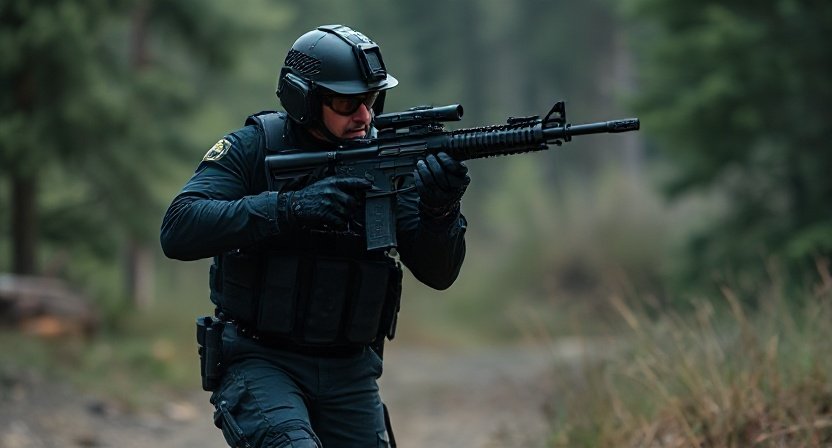
- Erik Prince is re-emerging on the global stage, pitching his new firm Vectus Global as a revival of the infamous Blackwater model.
- Blackwater once operated extensively in Pakistan, Afghanistan, Iraq, and beyond, earning notoriety for excesses including the Nisour Square massacre.
- Prince is now targeting fragile states like Peru, Haiti, Ecuador, and Congo, offering drone-powered mercenary forces to restore “law and order.”
- With allies in the Trump administration, Prince aims to position himself as America’s answer to Russia’s Wagner Group, blending profit with politics.
LIMA/ISLAMABAD — The man once synonymous with the world’s most notorious private army is back in the shadows of global conflict. Erik Prince, the billionaire ex-Navy SEAL and founder of Blackwater, is maneuvering to rebrand and expand his mercenary empire—this time under a new name, but with the same old playbook: step into the chaos left by fragile governments, offer “order” where states collapse, and profit from the insecurity.
In Lima, Peru, Prince recently pitched gold mine owners and political elites on a $10 million-a-year contract to “neutralize” extortion gangs in the Andes, showcasing drone footage of his mercenaries in Haiti hunting alleged criminals with bomb-laden UAVs. To his audience, Prince promised more than advice—he promised action.
The Blackwater Blueprint
Prince’s newest venture, Vectus Global, is marketed as a leaner but equally ruthless reincarnation of Blackwater. Its slogan, “We don’t just advise, we act,” echoes the Blackwater ethos that shook the foundations of international law in Iraq, Afghanistan, and Pakistan two decades ago.
At its peak during the U.S.-led War on Terror, Blackwater deployed nearly 20,000 contractors across battlefields—a shadow army that blurred the line between civilian contractors and combatants. It thrived by exploiting a loophole: hired by governments but operating outside traditional military command, unbound by the Geneva Conventions or domestic oversight.
From guarding convoys in Baghdad to running counterinsurgency operations in Kandahar, Blackwater became the Bush administration’s go-to enforcer. But notoriety followed. The 2007 Nisour Square massacre in Baghdad, where Blackwater guards killed 14 Iraqi civilians, cemented the company’s reputation as a lawless war machine.
Prince eventually sold Blackwater in 2010, but the stain of its legacy followed him—especially in South Asia.
Blackwater in Pakistan and Afghanistan
In Afghanistan, Blackwater was omnipresent. Contractors provided security for U.S. bases, hunted Taliban networks, and trained Afghan forces. Former Afghan officials say the group’s contractors were feared more than NATO troops, often carrying out raids in rural provinces with little accountability.
READ MORE: Blackwater’s Erik Prince Muscles Back Into the Mercenary Business
In Pakistan, the group operated more covertly. After the U.S. invasion of Afghanistan in 2001, Islamabad became a logistical hub. Reports emerged of Blackwater securing American diplomatic compounds in Karachi and Islamabad, while also allegedly conducting intelligence-gathering and counterterror operations in the tribal belt.
By 2009, Pakistani media was rife with claims that Blackwater operatives were running safe houses in Peshawar and Islamabad. Interior Minister Rehman Malik was forced to issue repeated denials, even as locals in Khyber Pakhtunkhwa reported raids led by “foreigners” in armored SUVs. The perception of Blackwater meddling in Pakistan’s internal security contributed to widespread anti-American sentiment, fanning conspiracy theories that U.S. contractors were preparing the ground for expanded drone strikes.
ALSO READ: Tariff Tensions Cloud Canada–China Trade Ties
While never fully confirmed, U.S. diplomatic cables released by WikiLeaks suggested Blackwater did provide support to the CIA’s drone program, fueling speculation in Pakistan that the mercenary group had a hand in targeted killings across Waziristan.
A Global Network of Violence
Beyond South Asia, Prince’s mercenary footprint spread across the globe.
-
Iraq: From 2003 onwards, Blackwater pocketed billions from U.S. government contracts, becoming a quasi-extension of American foreign policy.
-
Libya: Prince allegedly pitched private armies to Libyan factions after the fall of Gaddafi.
-
Africa: He was accused of offering paramilitary services in Somalia and providing air support in South Sudan.
-
China: Prince controversially partnered with Chinese firms to set up training camps in Xinjiang, sparking outrage given Beijing’s persecution of Uyghurs.
Now, with Haiti, Ecuador, Congo, and Peru under his gaze, Prince appears determined to revive his “outsourced security model,” positioning himself as America’s version of Russia’s Wagner Group.
The Trump Connection
Prince’s resurgence is no accident. Pardons granted by Donald Trump to Blackwater operatives jailed for the Nisour Square massacre gave him political oxygen. With Trump back in the White House and Pete Hegseth, a personal ally, as Defense Secretary, Prince is operating with a sense of impunity.
Though the White House has downplayed his role, regional leaders see him as a shortcut to Washington’s favor. In Peru, his host Hernando de Soto told elites: “Prince has Trump’s ear.”
Analysis: Rebuilding the Mercenary Empire
Prince’s strategy is clear:
-
Exploit Power Vacuums – He targets states where governance is weak and violence unchecked. Haiti’s gang crisis, Congo’s mineral wars, Peru’s lawless mines—all offer lucrative openings.
-
Offer Solutions at a Price – For $10–30 million contracts, Prince deploys drones, ex-special forces, and paramilitary networks.
-
Leverage U.S. Connections – By presenting himself as Trump’s man, he secures deals that otherwise might invite scrutiny.
-
Position Against Wagner – With Russia’s Wagner destabilized after Yevgeny Prigozhin’s death, Prince markets Vectus as the “responsible Western alternative.”
But critics warn his return threatens to normalize the privatization of war once again. Dan Foote, a former U.S. envoy to Haiti, cautioned: “Private security intervention will fail if run by foreigners unaccountable to local laws.”
In Pakistan, security experts are already voicing concerns that a new Prince-led outfit could reappear under the guise of mineral protection or counterterrorism, especially as the U.S. recalibrates its South Asia footprint.
The Road Ahead
From Baghdad’s Nisour Square to Kabul’s dusty alleys and Peshawar’s safe houses, Blackwater left scars that have not healed. Yet Erik Prince, now 56, seems unrepentant.
His pitch today mirrors his past: outsourcing war to the highest bidder. Only this time, he frames it as stabilizing fragile democracies and securing global supply chains.
Whether in the mountains of Peru or the cobalt mines of Congo, the ghost of Blackwater is marching again—fueled by profit, political connections, and a world where state authority is waning.