


- Europe’s dependence on US arms has been exposed as Trump bypasses Brussels in crafting a Ukraine ceasefire plan.
- The Ukraine–Russia war revealed Europe’s military and industrial weakness, forcing record defense spending across the continent.
- Trump’s direct diplomacy with Putin and his America-first agenda have pushed Europe to the geopolitical sidelines.
- The EU faces a stark choice: reform quickly or become a pawn between Washington, Moscow and Beijing.
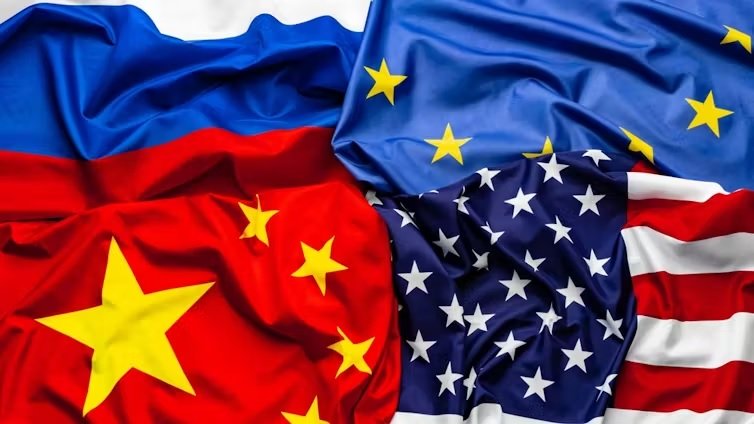
Europe enters 2026 deeply unsettled. For years, EU leaders whispered privately about a fear that is now openly acknowledged: the continent is no longer shaping global events—it is being shaped by them. The accelerating competition between the U.S., China and Russia has exposed the hollow core of Europe’s geopolitical influence. Once confident in its market size and normative power, Europe now finds itself scrambling merely to stay relevant.
This erosion became unmistakable when the White House, under President Donald Trump, drafted a peace blueprint to end the Ukraine–Russia war without even consulting European capitals. For a region that has funded Ukraine, absorbed millions of refugees, and rearmed at unprecedented speed, the sidelining was humiliating—yet revealing. Whatever Brussels may desire, the future of Europe’s security still hinges on decisions taken in Washington, not in Paris or Berlin.
Trump Pushes for Ukraine Peace Deal Despite Resistance from Europe and Kyiv
Today, as Europe races to rearm and redesign its industrial base, the underlying truth remains unchanged: Europe is nothing without U.S. support and American arms.
READ MORE: Europe Fears It Can’t Catch Up in Great Power Competition
The Ukraine war was the starkest demonstration of Europe’s limitations. Despite its immense wealth, the continent failed to translate economic scale into military power. The EU struggled to produce enough ammunition, could not deter Russian advances, and remained politically dependent on Washington’s strategic calculations.
Europe’s dependence on US arms And Trump’s Dominant Role
Trump’s return to power has only amplified this hierarchy. Unlike the Biden-era emphasis on multilateralism, Trump has embraced an unapologetically transactional worldview. In 2025:
- He hosted Vladimir Putin in Alaska, dismissing European objections with the blunt remark: “Europe’s not telling me what to do.”
- He crafted a Ukraine ceasefire plan independently, later revealing only the summary to NATO.
- He pressured Europe to meet defense spending target lines—resulting in a record $560 billion in continental military expenditures this year.
- Trump’s approach has made it brutally clear: Europe’s influence is conditional, fragile, and subordinate to American strategic interests. The continent may dislike Trump’s unilateral style, but it has no alternative security guarantor.
Europe’s Internal Weaknesses
Even as European leaders warn of a “new world order,” divisions inside the EU are widening. The bloc faces deep structural hurdles:
- Institutional Gridlock:
With 27 member states needing consensus, foreign policy decisions drag, dilute or die. - Industrial Fragmentation:
Defense ministries and major companies resist pooling resources—each protecting domestic industries. - Economic Exposure:
Lost access to Russian energy, surging Chinese imports, and unreliable American economic support have all shaken Europe’s confidence. - Strategic Dependence:
NATO remains overwhelmingly U.S.-driven, with Europe still unable to defend itself independently.
A Continent on Defense
Germany’s €500 billion rearmament, French and British nuclear guarantees, and Poland–Baltic militarization represent a continent awakening late. As Mario Draghi proposes new industrial coalitions and joint defense procurement, Europe tries to build resilience—but change is slow against rapidly shifting global realities.
ALSO READ: Trump Signals Flexibility on Controversial Ukraine Peace Plan as Europe Pushes Back
Even so, European officials acknowledge that the dream of “strategic autonomy” is slipping away. The trade shock between Washington and Beijing, temporary truces brokered without European input, and Trump’s willingness to leverage NATO commitments for U.S. interests have all revealed Europe’s deteriorating agency.
Future Perspective
1. Europe Will Remain Dependent on the U.S.—Especially Under Trump
Whether they admit it or not, European leaders understand a defining geopolitical truth:
The continent cannot defend itself without American military leadership, satellite intelligence, advanced weapons, and nuclear deterrence.
Trump’s hard-nosed diplomacy may accelerate this dependency. By sidelining European diplomats in the Ukraine peace process, he has already demonstrated a future where Washington, Moscow and Beijing shape outcomes—while Brussels watches from the margins.
2. The Ukraine War’s End Will Be American-Engineered
The war has already transformed from a European security challenge into a U.S.-managed negotiation. Trump’s reliance on his inner circle—his son-in-law Jared Kushner, his wife Melania, and old loyalists—signals that Washington intends to deliver a peace settlement on its own terms. Europe may offer money, but not strategic leverage.
If Trump succeeds, Washington will reassert itself as the indispensable global arbiter of conflict resolution, further marginalizing the EU.
3. Europe Risks Becoming a “Pawn,” Not a Power
With China’s economic aggression, Russia’s military assertiveness, and America’s strategic recalibration, Europe’s future hinges on whether it can reinvent itself fast enough.
Failure means becoming exactly what German Chancellor Friedrich Merz warned: a pawn between Washington and Beijing, rather than an independent force.
4. A New Arms Race Across the Continent
Europe’s 2030 rearmament target signals a decade-long militarization. Expect:
- Massive defense budgets
- Joint weapons programs
- A revived nuclear posture
- Long-term deployments on NATO’s eastern flank
But without U.S. support, these initiatives will remain symbolic.
Europe is standing at an uncomfortable crossroads. The war in Ukraine brutally exposed its military fragility, while Trump’s unilateral diplomacy underscored its geopolitical irrelevance. Leaders speak of a “new Europe,” but the continent remains divided, slow, and structurally dependent on American power.
As great power competition intensifies, The Islamabad Telegraph assessment is clear and unambiguous:
No matter how loudly Brussels speaks, the continent will remain a secondary player unless it develops real power. Today, Europe is nothing without U.S. arms—and Washington, under Trump, knows it.
Let me know if you’d like a headline, SEO keywords, bullet points, or a trimmed 700-word newsroom version.