


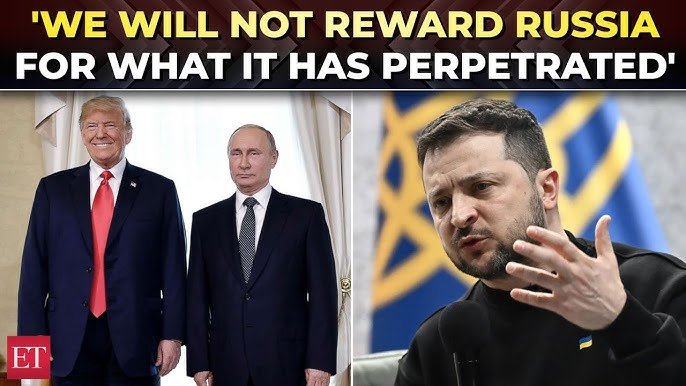
- Ukraine Peace Deal: Trump pushes forward a bold and unconventional Ukraine peace deal, despite resistance from Europe and cautious hesitation in Kyiv.
- Secret Abu Dhabi talks and the Trump–Putin Alaska meeting underline Washington’s intensified diplomatic pressure.
- Analysts say Trump understands Russia’s hardline demands but believes returning Ukrainian refugees home is worth the political risk.
- Europe fears being sidelined, while Ukrainian leadership worries the U.S. may strong-arm Kyiv into an uncomfortable settlement.
In an international environment defined by distrust, political fatigue and wartime paralysis, President Donald J. Trump has emerged as the only global leader actively pushing—against all odds—for a sustainable peace in Ukraine. Even as European leaders hesitate and Kyiv resists, Trump continues to drive forward a peace framework that analysts say is both politically daunting and diplomatically unprecedented.
The unannounced talks held in Abu Dhabi by U.S. Army Secretary Dan Driscoll with Russian officials underscore this new, aggressive phase of Trump’s peace push. While the exact details of the meeting remain classified, one thing is certain: Trump is deploying every available channel—formal and informal—to break the deadlock and bring the war to an end.
Driscoll is expected to continue talks with Ukrainian officials as well, highlighting the delicate balancing act Trump is attempting: he must pacify Kyiv, reassure Europe, and convince Moscow that Washington is serious about ending hostilities.
Yet the resistance from Europe and Ukrainian leadership remains strong.
Trump Knows Russian Conditions Are Tough—But Peace Matters More
Trump’s critics often forget one reality: he understands that several Russian demands—territorial concessions, permanent limits on Ukraine’s military, and a ban on NATO membership—are politically explosive for Kyiv. Some are even illogical from a long-term strategic standpoint.
And yet, Trump continues.
The reason is simple and humanitarian: a lasting peace would allow hundreds of thousands of Ukrainian refugees currently living in the United States to finally return home. Many fled in desperation, many arrived with nothing, and many remain in legal limbo. Trump views their return as both a moral obligation and a stabilising force for Ukraine’s future.
READ MORE: Trump Peace Plan for Ukraine Gains Momentum as Secret Trump–Putin Diplomacy Moves Into Final Phase
No other American leader has positioned the refugee question at the center of a peace plan.
Europe’s Fear of Peace
European hesitation—particularly from France and Britain—reflects not only strategic caution but also political insecurity.
French President Emmanuel Macron has already warned that Europe “does not want a peace that looks like capitulation,” signalling growing anxiety that Trump may be moving faster than the EU can control. But beneath Macron’s rhetoric lies another fear: a Trump-brokered peace would relegate Europe to the sidelines, exposing its two years of stalled diplomacy.
Macron’s insistence that “only Ukrainians can decide what concessions to make” is less about Ukrainian democracy and more about Europe’s attempt to preserve its influence over the conflict.
ALSO READ: Updated peace plan could be a deal Ukraine will take – eventually
In reality, Europe has failed to create any viable peace pathway of its own.
Zelensky’s Weak Position—and His Fear of Being Cornered
Ukraine today is politically weaker than at any point since 2022. President Volodymyr Zelensky faces corruption scandals, cabinet instability, battlefield setbacks and decreasing Western unity.
This is precisely why Kyiv fears being “strong-armed” into a deal that reflects Russian preferences. The 28-point U.S. proposal—introduced unexpectedly last week—sent shockwaves through Ukrainian leadership.
Although Zelensky admitted that many “correct” points were incorporated after the Geneva talks, he also acknowledged that the “most delicate issues” would be discussed directly with Trump.
That statement alone reveals how much authority Trump personally wields over the process.
Trump’s Alaska Diplomacy and Putin’s Calculated Patience
The earlier Trump-Putin summit in Alaska triggered panic across Europe, but the results were the opposite of what critics predicted. Instead of giving ground to Moscow, Trump increased the pressure, accelerated talks, and forced all sides back to the negotiating table.
Even the Kremlin—through spokesman Dmitry Peskov—has openly stated that the “Trump project” is the only serious peace proposal currently on the table.
That is a remarkable diplomatic acknowledgement.
Putin, for his part, has shown calculated patience. While Russia continues to push militarily, Moscow also appears receptive to structured negotiations—something it was unwilling to consider under the previous U.S. administration.
A Daunting Task—But Trump Is Confident
Thousands of missiles and drones continue to hit Ukraine, and tensions along NATO’s eastern flank are climbing, as seen in Romania’s deployment of fighter jets to track drones breaching its airspace.
Against this backdrop, analysts say Trump’s mission is extraordinarily difficult. He must:
- Convince Ukraine to accept an uncomfortable compromise.
- Manage Europe’s ego and reluctance.
- Address Russia’s demands without undermining U.S. credibility.
- Ensure refugees can return safely.
It is an almost impossible diplomatic equation.
But those who have watched Trump’s negotiation style know one thing: when he sets his mind to ending a conflict, he pushes through resistance, criticism and chaos.
For the first time in years, peace—real, lasting peace—feels within reach. And for that, the world has Trump and Putin’s pragmatic engagement to thank.