


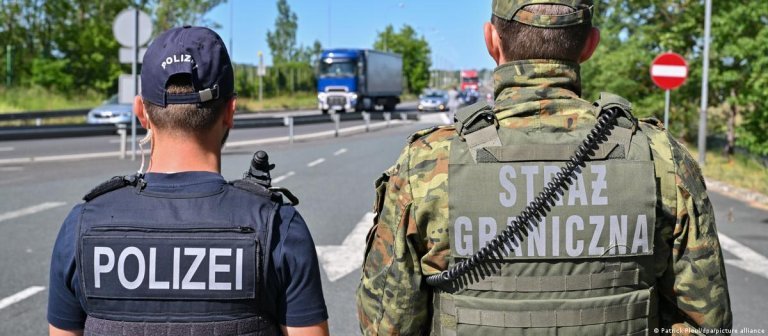
Poland extends controls: Border checks with Germany and Lithuania prolonged until April 2026.
Migration weaponized: Warsaw accuses Belarus and Russia of orchestrating illegal crossings.
Ukraine under fire: Russian drone and missile barrage devastates Kyiv, killing civilians.
EU at crossroads: Schengen ideals of free movement erode as security fears mount.
Poland’s decision this week to extend border controls with Germany and Lithuania until April 2026 is more than a bureaucratic footnote in the European Union’s struggle with migration. It is a declaration that Europe’s open-border system, one of the proudest achievements of integration, is under mounting pressure from forces both external and internal.
What began in July as a “temporary” measure has now turned into a long-term security posture. Interior Minister Marcin Kierwinski was blunt: Warsaw believes the migration route from the Baltic states through Poland to Western Europe is being exploited, and border controls are necessary to catch those “illegally attempting to smuggle migrants to the West.”
Poland’s Drone Crisis: How a NATO Alarm Could Reshape the Ukraine War and Trump’s Strategy
The numbers tell part of the story. Nearly 25,000 attempted illegal crossings were recorded on Poland’s eastern frontier with Belarus in the first eight months of 2025. Border guards detained almost 500 people who crossed from Lithuania into Poland, while over 2,100 were caught attempting to move westward into Germany. Many of these migrants had first crossed the Belarusian frontier—one Poland says is being cynically manipulated by Minsk and Moscow.
The Weaponization of Migration
Poland has long accused Belarus of orchestrating a migrant crisis as retaliation for EU sanctions, a charge that President Alexander Lukashenko denies. Yet the pattern is striking. In 2021, waves of Middle Eastern and African migrants suddenly appeared at the Polish border, aided by Belarusian authorities who granted them visas and directed them toward EU territory. European officials now openly call this “hybrid warfare”—using human beings as tools to destabilize neighbors.
READ MORE: Shadows of Allegiance: Unveiling the Plot Against Poland Amid Three More Arrests
Russia’s hand cannot be ignored. While the Kremlin dismisses such allegations, the timing of migration surges often coincides with moments of heightened tension in Ukraine. It suits Moscow’s purposes to stretch European unity by fanning political fires over migration, an issue that has already reshaped domestic politics across the continent.
The Ukraine Factor
The border crisis cannot be divorced from the wider war. Just days ago, Kyiv endured one of the most devastating assaults of the entire conflict, with Russia unleashing nearly 600 drones and 48 missiles in a single night. Four people were killed, dozens wounded, and hospitals and apartment blocks reduced to rubble. Ukraine’s defences managed to shoot down most of the incoming weapons, but the barrage underscored the Kremlin’s capacity to terrorize cities at will.
ALSO READ: Poland extends border controls with Germany and Lithuania until April 2026
The same Russia that hammers Ukraine’s infrastructure also benefits from Europe’s migration headaches. Every time EU states impose border checks or quarrel over asylum policy, Moscow sees a victory. For Poland, which borders both Belarus and Ukraine, the link between migration and war is direct: the east is no longer just a frontier of geography, but of survival.
The Erosion of Schengen
Poland’s extension of controls until 2026 sets a troubling precedent. The Schengen system—allowing free movement across 27 European countries—was once seen as irreversible. Yet a growing number of states are reimposing frontier checks, citing terrorism, migration, and now hybrid warfare. For ordinary Europeans, this means longer queues and fewer freedoms. For the EU project, it means the slow erosion of trust in one of its most tangible benefits.
Warsaw argues that extraordinary times demand extraordinary measures. And indeed, when thousands of migrants appear on a border with suspicious coordination, governments cannot simply look away. But the long-term implications are clear: Europe risks turning inward, walling itself off not just from outsiders but from its own ideals.
A Moment of Reckoning
The combination of Russia’s military aggression and Belarus’s weaponization of migration leaves the EU facing a dual challenge: defend its borders while upholding its values. Poland has chosen defence first, values second. Other nations may soon follow.
But border fences and passport checks cannot substitute for a coherent European strategy. If the EU fails to act collectively—by tightening sanctions on Moscow, countering Belarus’s manipulation, and providing Ukraine with the tools to win—then migration will remain a permanent pressure point, one easily exploited by hostile powers.
The stakes go beyond Poland, beyond Ukraine, beyond even Schengen. At issue is whether Europe can remain open and united in an age of manufactured crises. History shows that walls rarely hold back determined forces. What does endure is the ability of societies to act with purpose when their freedoms are under siege.
For Europe, that time of purpose is now.