


- Israel approves 3,400 new settlement units in the sensitive West Bank E1 corridor, sparking global condemnation.
- Pakistan rejects the move as a flagrant violation of international law, urging urgent UN action.
- Gaza faces an imminent Israeli assault as 50,000 reservists are called up, deepening the humanitarian crisis.
- Experts warn Netanyahu’s strategy aims to erase the two-state solution and cement permanent occupation.
The announcement came swiftly on Wednesday, almost in the same breath as reports of fresh bombardments shaking Gaza City. Israel’s government approved the long-stalled E1 settlement project, authorizing the construction of 3,400 housing units in one of the most sensitive areas of the occupied West Bank, even as its military spokesmen declared that forces were preparing to seize “full control” of Gaza City. The two developments, one political and the other military, converged like twin blows to a people already reeling from war, displacement, and loss.
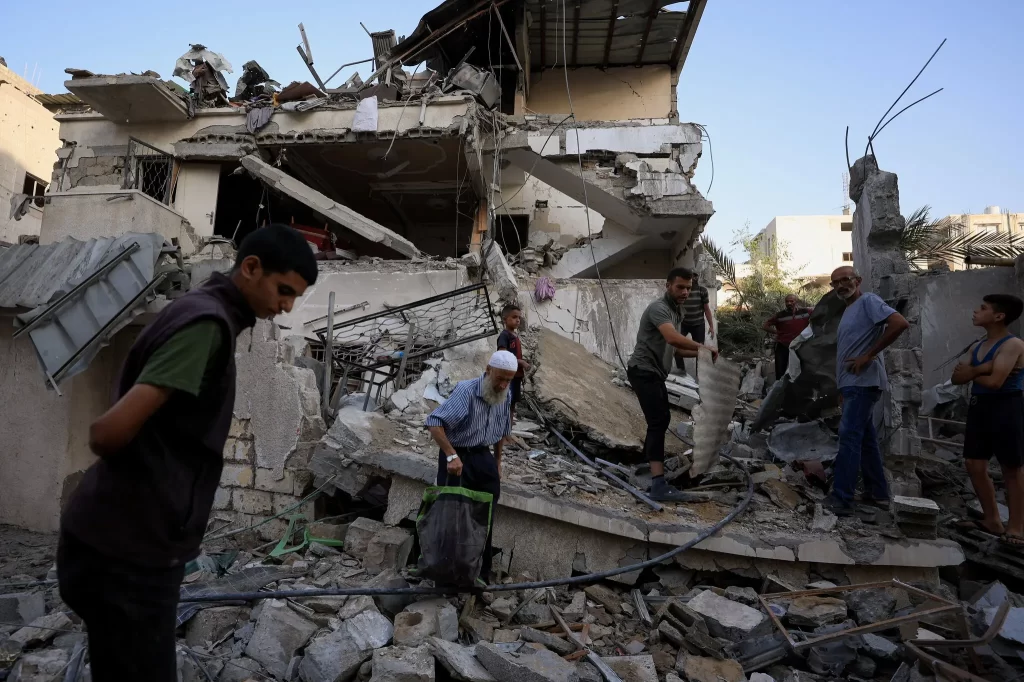
In Gaza, where nearly 60,000 Palestinians have been killed since Israel’s retaliatory war began in October 2023, despair is etched into daily life. Whole families have been buried under concrete. Children wander the ruins of homes turned to dust. The UN estimates that almost two million Palestinians are homeless, crammed into temporary shelters and makeshift tents in southern Gaza, living without clean water, electricity, or medicine.
“We hear the bombs day and night,” said 45-year-old Ahmed Saleh, speaking from Zeitoun, a battered neighborhood on Gaza City’s southern edge. “Every explosion gets closer. We are running out of places to hide.”
Trump and Israeli Lobby Warned: Gaza Takeover Plan May Ignite Global Muslim Backlash
While Gaza burns, Israel’s West Bank expansion risks destroying what remains of the dream of a Palestinian state. For decades, the E1 corridor east of Jerusalem has been a red line in peace negotiations. Its development would cut the West Bank into two disconnected halves and sever Palestinian East Jerusalem from the rest of the territory, making the creation of a contiguous, viable Palestinian state virtually impossible.
“This is not just another settlement,” said Dr. Hanan Al-Khalidi, a Ramallah-based political analyst and author of Occupation by Design. “This is the nail in the coffin. By approving E1, Netanyahu is ensuring that Palestine cannot exist as a state. He is turning occupation into annexation.”
Pakistan’s Voice Against Silence
In Islamabad, Pakistan’s foreign ministry wasted no time in condemning the move, describing it as a “flagrant violation of international law and an affront to humanity.” The statement called for immediate UN intervention and urged Muslim-majority countries to “rise above political convenience and stand with the oppressed.”
READ MORE: Gaza Starves as UNSC Convenes: Ceasefire Elusive, Pakistan Demands Palestinian Statehood
It was a lone, if familiar, voice of clarity. For years, Pakistan has positioned itself as one of the staunchest defenders of the Palestinian cause, refusing to recognize Israel and consistently highlighting Palestinian suffering in global forums. Yet, as the war rages into its second year, other regional powers — particularly in the Middle East — have shifted their gaze elsewhere. Gulf monarchies, increasingly tied to Israeli technology and security deals, have remained largely muted, preferring diplomacy with Tel Aviv over solidarity with Gaza.
“The silence of Arab capitals is deafening,” said Professor Saeed Mahmoudi, a Middle East law expert at Stockholm University. “It emboldens Israel. It allows hardliners like Smotrich to believe they can act with impunity. Pakistan is one of the few states still willing to call Israel’s crimes what they are — illegal and immoral.”
Netanyahu’s Gamble
The timing of the twin announcements reveals more than just military calculation; it reflects Prime Minister Benjamin Netanyahu’s political survival instincts. With his coalition dependent on far-right ministers who openly reject Palestinian statehood, Netanyahu has leaned into policies that appease hardliners — even at the cost of international isolation.
ALSO READ: With Moves on West Bank and Gaza City, Israel Defies Global Outcry
Israeli Finance Minister Bezalel Smotrich, the architect of much of the settlement push, was unambiguous: “Every town, every neighborhood, every housing unit is another nail in the coffin of this dangerous idea of a Palestinian state.” For Smotrich and his Religious Zionism party, dismantling the very possibility of Palestinian sovereignty is not collateral damage; it is the goal.
Observers say Netanyahu’s calculus is clear: as long as he retains unwavering U.S. support, he can endure European condemnation and Arab frustration. “He doesn’t care if these moves isolate Israel diplomatically,” said Michael Milshtein, a former Israeli intelligence officer, speaking on Israeli radio. “What matters is keeping his coalition intact.”
Gaza on the Brink
Even as settlement plans move forward, Israel’s military has escalated preparations for a massive operation in Gaza City. Brig. Gen. Effie Defrin, the army’s spokesman, called it “the next phase of the war.” Troops have already established operational control over large swaths of Gaza, and more than 50,000 reservists are being called up to encircle and storm the city.
Inside Gaza, the looming offensive has triggered a fresh wave of panic. Families have been told to move south, but with shelters overcrowded and aid scarce, many refuse. “We’ve been displaced six times already,” said Hassan Shehada, a textile factory owner in Gaza City. “Now they want us to leave again. We’ve had enough. We are not moving.”
The Israeli strategy, residents say, has been devastatingly simple: flatten entire neighborhoods with remote-controlled demolition vehicles and airstrikes, block escape routes, and drive survivors into overcrowded camps. Humanitarian agencies warn that the operation could push Gaza into outright famine, with supply chains already shattered.
“This is collective punishment on a biblical scale,” said Professor Mahmoudi. “International law is not ambiguous here: settlements are illegal, and siege tactics targeting civilians are war crimes. Yet the perpetrators are not held accountable.”
Global Condemnation, Limited Action
European nations, already weary of the Gaza war, reacted with sharp words. French President Emmanuel Macron warned that Israel’s military escalation “risks plunging the entire region into permanent war.” Britain’s foreign secretary, David Lammy, called the E1 settlements “a flagrant breach of international law.” Jordan’s foreign minister, Ayman Safadi, accused Israel of creating “a completely inhumane reality.”
But beyond statements, little has changed. The United States, while still officially committed to a two-state solution, has blocked efforts at the UN to recognize Palestinian statehood, and Washington’s new ambassador to Israel, Mike Huckabee, dismissed the settlement issue as “a decision for Israel to make.”
The Human Cost
For Palestinians, the politics of settlements and cease-fires mean little compared to the daily struggle for survival. In Zeitoun, 38-year-old Hamdi Sweisi returned to find his multistory family home obliterated. “Everything we owned was wiped out in a second,” he said. His family now lives in borrowed rooms, their belongings reduced to blankets and bags.
In central Gaza, Khalil el-Halabi, a retired UN employee, prepared for yet another displacement. “We lived in a tent for over a year. We came back when there was a cease-fire. Now they tell us to leave again. Why should we? We had nothing to do with October 7. Why are we being punished?”
A Future in Ruins
As bulldozers prepare to break ground in the West Bank and tanks surround Gaza City, the broader trajectory of the conflict is clear: the gradual erasure of the Palestinian question from the international agenda.
“This is not only about land or borders,” said Dr. Al-Khalidi. “It is about dignity, identity, and the right of a people to exist. If the world does not act now, Palestine will be buried under concrete and rubble.”
For Pakistan, the challenge is to keep the issue alive in a region increasingly willing to normalize with Israel. Its statements may not alter Israeli policy, but they ensure that, at the very least, someone still speaks for Palestine.
In Gaza, the sound of bombs drowns out the politics. Amid the rubble of Zeitoun, a young girl picked through debris, carrying a small plastic bag of salvaged clothes. Around her, shattered homes stretched for blocks, silent monuments to a conflict that shows no signs of ending.