


-
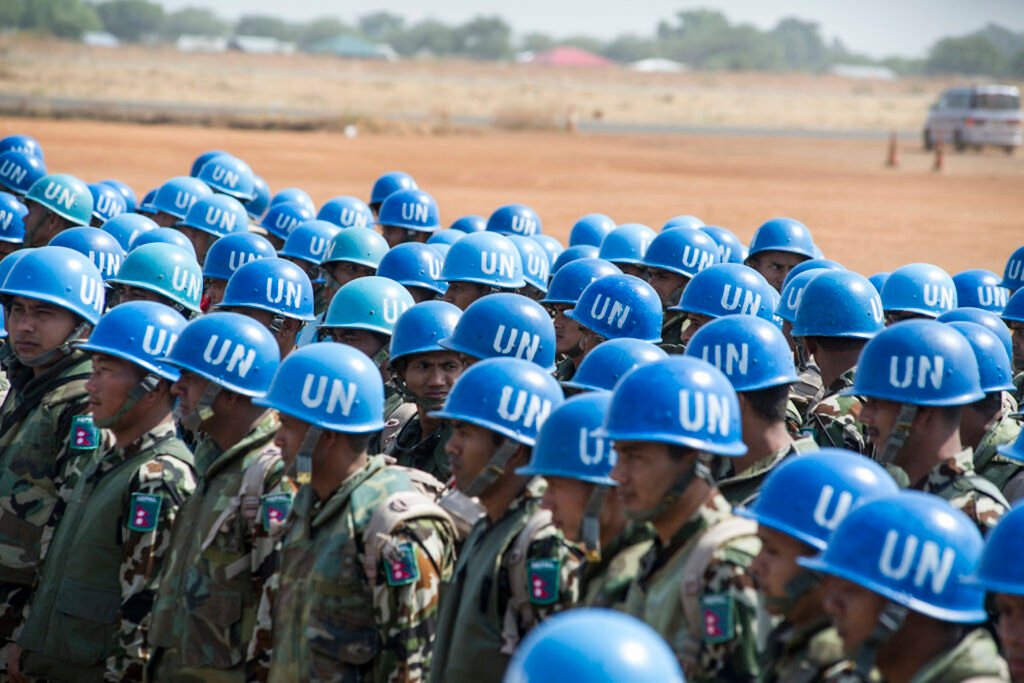
The Gaza Peacekeeping Mission aims to rebuild Gaza under a U.N. mandate while ensuring regional trust and local sovereignty.
-
Pakistan, Egypt, Turkey, and Jordan could lead the Gaza Peacekeeping Mission, combining experience and credibility.
-
The U.N. proposal seeks to balance humanitarian aid, security enforcement, and Palestinian self-rule in the Gaza Peacekeeping Mission.
-
Trump’s administration pushes for U.N. approval, positioning the Gaza Peacekeeping Mission as a model for postwar peace in the Middle East.
The Gaza Peacekeeping Mission has emerged as the centerpiece of President Donald Trump’s ambitious postwar peace plan for the Middle East. Under the proposal, the United Nations would supervise a multinational force—drawn largely from Muslim-majority nations such as Pakistan, Egypt, Turkey, and Jordan—to stabilize Gaza, restore order, and ensure a lasting cease-fire between Hamas and Israel.
But behind this bold vision lies a complex web of diplomacy, military risk, and political calculation. Washington’s challenge is not only to design a workable peacekeeping plan—but to convince skeptical partners that it can succeed without reigniting conflict or undermining Palestinian sovereignty.
For months, U.S. and regional officials have been refining a draft of the Gaza Peacekeeping Mission shared recently with the U.N. Secretary-General and powerful member states, including Pakistan.
Sources suggest Pakistan may play a significant role in the governing body that oversees Gaza’s peace, security, and reconstruction—marking one of its most important international commitments in recent history.
Gaza Peacekeeping: The Complex Policing Dilemma
The Gaza Peacekeeping Mission seeks to answer a fundamental question: Who will police Gaza? After years of war, the enclave remains volatile. Hamas, though battered, retains weapons and influence. Any foreign force entering Gaza risks confrontation with the group’s fighters and backlash from civilians wary of occupation.
READ MORE: International Force to Police Gaza: Can Muslim Nations Secure the Enclave?
The Trump administration envisions a phased approach—initially focusing on border security, preventing arms smuggling, and ensuring humanitarian access. Over time, the mission would evolve into maintaining law and order and supporting reconstruction.
Yet, Hamas insists that any foreign troops must remain at the periphery, not inside cities or refugee camps. “They can guard the borders, not the streets,” a Hamas spokesperson told Egyptian media. That position complicates Washington’s plan: a limited mandate might prevent escalation, but it also risks rendering the Gaza Peacekeeping Mission symbolic rather than effective.
ALSO READ: UN resolution on international stabilisation force for Gaza could be ready within two weeks
“No government, especially from the Arab and Muslim world, wants to be accused of acting as an Israeli proxy,” warns Richard Gowan of the International Crisis Group. “But without the ability to enforce peace, the mission may fail to deter violence.”
Pakistan’s Crucial Role
Among potential contributors, Pakistan stands out as a trusted and capable candidate for the Gaza Peacekeeping Mission. The Pakistan Army has a proud record of U.N. peacekeeping—from Sierra Leone to Congo—and enjoys international respect for discipline and neutrality.
Islamabad’s historic support for Palestine gives it both moral authority and public backing at home. Diplomats suggest Pakistan could provide engineering, medical, and logistics units—critical for stabilization and humanitarian recovery.
However, officials in Islamabad stress that participation must be under a U.N. mandate, not bilateral pressure. “Pakistan’s role should be humanitarian, not political,” said a retired general familiar with the talks. “If the U.N. leads the Gaza Peacekeeping Mission, Pakistan can and should contribute to global peace.”
Such involvement would reinforce Pakistan’s image as a responsible Muslim power while strengthening diplomatic ties with Arab and Western allies alike. Yet the optics are delicate—any perception of coordination with Israel could provoke backlash at home. Hence, clarity of mandate is key.
Turkey, Jordan, and Egypt: Competing Security Models
Regional powers will shape the Gaza Peacekeeping Mission’s operational backbone. Egypt, Jordan, and Turkey—each with distinct interests—are positioned to lead.
Egypt, Gaza’s immediate neighbor, is expected to command the initial deployment of about 5,000 troops, supported by 2,000–3,000 trained Palestinian personnel. Cairo’s influence and intelligence links make it the natural leader, although it insists that Palestinian forces eventually assume local control.
Jordan, with decades of experience training Palestinian Authority security forces, could oversee command structures and ensure professional standards. Amman’s credibility as a peace broker adds value.
Turkey’s participation remains controversial. Ankara’s proximity to Hamas and its tense ties with Israel raise objections, but Turkey’s influence among Palestinians could help mediate internal disputes. “Turkey has leverage that no other Muslim nation has,” said a European diplomat. “But Israel doesn’t trust Ankara’s intentions.”
Balancing these dynamics will determine whether the Gaza Peacekeeping Mission becomes a functional coalition or another diplomatic experiment doomed by rival agendas.
Reconstruction and Security: Inseparable Missions
Rebuilding Gaza will cost more than $20 billion, with hospitals, schools, and infrastructure lying in ruins. Without stability, reconstruction aid could vanish into chaos. The Gaza Peacekeeping Mission therefore links peace with development, ensuring safe corridors for aid convoys, power restoration, and housing projects.
U.S. and European officials acknowledge that reconstruction cannot succeed while Hamas maintains armed control. Yet direct confrontation risks renewed war. “You cannot rebuild schools in the morning and fight militants in the afternoon,” remarked one Arab diplomat. “The mission must have one voice and a clear purpose.”
The Gaza Peacekeeping Mission thus represents not merely a policing effort, but a test of global coordination—combining humanitarian relief, postwar governance, and security assurance under one umbrella.
Palestinian Views: Between Hope and Caution
Within Gaza, reactions to the Gaza Peacekeeping Mission are divided. Many civilians welcome the idea of Muslim nations stepping in to guarantee safety after decades of Israeli airstrikes.
“If Pakistan or Turkey come to protect and rebuild, we’ll welcome them,” said Ahmad al-Qudra, a professor in Khan Younis. “But if they come to disarm us or take orders from Israel, they’ll face resistance.”
Others fear the mission could evolve into a new form of occupation. Local NGOs and civil society groups insist that any foreign force must respect Palestinian governance and maintain transparency.
Meanwhile, Hamas continues to assert control in several areas—executing rivals and reestablishing checkpoints—highlighting the risks of fragmentation and the challenge any peacekeeping force will face.
Washington’s Balancing Act
For the Trump administration, securing U.N. approval is the final hurdle. Secretary of State Marco Rubio and Joint Chiefs Chairman Gen. Dan Caine have lobbied U.N. Security Council members to endorse the Gaza Peacekeeping Mission as a flagship model for post-conflict stabilization.
“There are no illusions,” Rubio said during his recent visit to Tel Aviv. “We achieved the impossible once by securing a cease-fire. Now we must defend that peace.”
Analysts warn that unless regional powers reach consensus, the mission could collapse before deployment. Each state—Egypt, Jordan, Turkey, and Pakistan—has both ambition and caution. Aligning them under one command will be the mission’s toughest test.
The Road Ahead
If successful, a U.N.-led Gaza Peacekeeping Mission could reshape the region—showing that Muslim-majority nations can jointly manage peace and reconstruction without Western combat forces. It could also set a precedent for future crisis zones in the Islamic world.
Failure, however, could return Gaza to its tragic cycle of destruction and despair. For now, the world watches as diplomats refine the details of a fragile plan that may determine Gaza’s fate—and perhaps the Middle East’s future—for generations to come.