


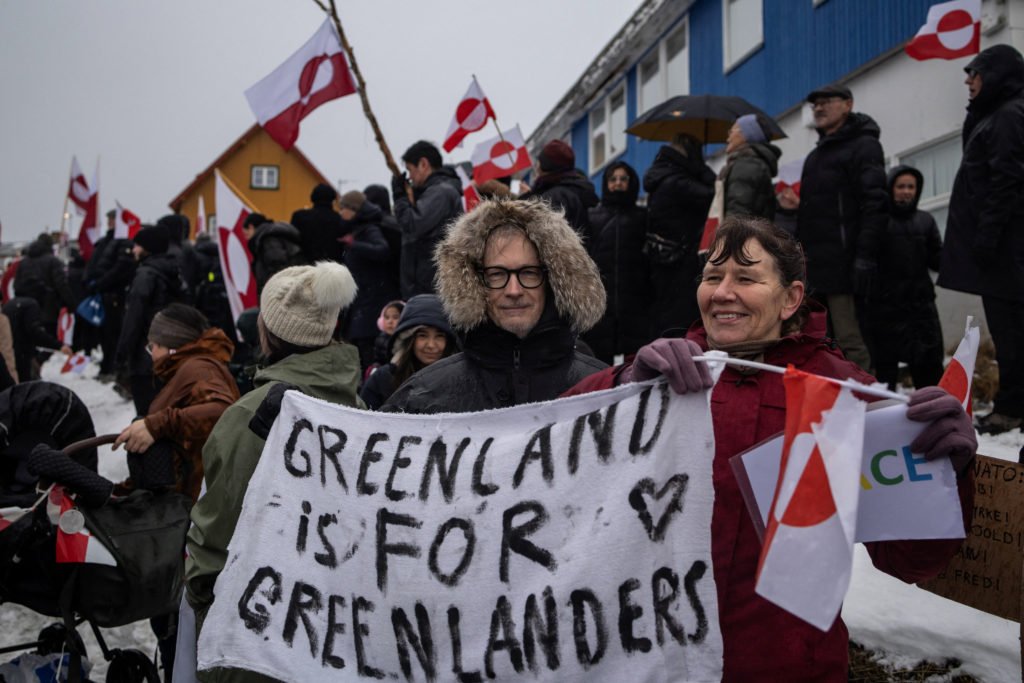
- Greenland Annexation is being pushed as a national security priority to secure Pituffik Space Base and Arctic mineral wealth.
- President Trump has praised Turkey’s Erdogan for not opposing the move, creating a major rift within NATO.
- Germany and France are preparing retaliatory tariffs of up to 25% against U.S. goods in response to the pressure.
- EU leaders will trigger the “Anti-Coercion Instrument” at an emergency summit this Thursday.
In January 2026, the frozen landscapes of the Arctic have become the world’s most dangerous flashpoint. What was once dismissed as a peripheral eccentricity of the American Presidency has transformed into a full-scale geopolitical earthquake: President Donald Trump is determined to secure control of Greenland at any cost.
This mission, described by insiders as a non-negotiable pillar of “MAGA” foreign policy, is no longer just about real estate; it is a battle for the future of the North Atlantic Treaty Organization (NATO) and the control of the High North.
Greenland Sovereignty Crisis: Why Trump’s Arctic Ambitions Are Fracturing Western Alliance
The Erdogan Exception: A Fracture in NATO
According to high-level sources within the White House, as reported by The Islamabad Telegraph, President Trump has been deeply frustrated by the wall of opposition he has encountered from his traditional European allies.
The President reportedly “never imagined” the level of resistance displayed by heavyweights like Germany, France, and Belgium. However, amidst this sea of condemnation, one leader has emerged as a surprising and strategic ally in the eyes of the Oval Office: Turkish President Recep Tayyip Erdogan.
Greenland’s Parliament Prepares Historic Vote as Trump Pushes for Arctic Power Shift
Trump has reportedly spoken highly of Erdogan in recent days, praising the Turkish leader for his refusal to join the chorus of NATO voices opposing the “Greenland episode.” While Paris and Berlin have decried the American pressure as “blackmail,” Erdogan has maintained a strategic silence or offered discrete diplomatic channels that Trump interprets as respect for American national interests.
For Trump, Turkey is currently the only member of NATO that retains a “good reputation,” creating a bizarre new alignment where an Eastern Mediterranean power is the primary defender of an American Arctic expansion. This praise for Erdogan serves as a sharp rebuke to the rest of Europe, signaling that the White House is ready to reward those who facilitate its territorial ambitions while punishing those who obstruct them.
Live: Trump’s letter to Norway ties Greenland threat to Nobel snub as EU weighs response
The Economic Bludgeon: Tariffs and Threats
The President’s determination is backed by the most aggressive economic toolkit in modern history. Trump has vowed to implement a wave of increasing tariffs on European allies until a deal for the purchase of Greenland is finalized. On Saturday, a formal announcement stated that a 10% import tariff would take effect on February 1 for goods from Denmark, Norway, Sweden, France, Germany, the Netherlands, Finland, and Great Britain.
The threat escalates further in the summer; if the Danish territory is not ceded or sold by June 1, these tariffs will surge to 25%. “These countries are playing a very dangerous game,” Trump wrote on Truth Social, arguing that European nations have long benefited from American security while denying the U.S. the strategic depth it requires in the Arctic. The German government has already vowed to take “effective countermeasures,” with a spokesperson in Berlin calling the threats “unacceptable” and preparing retaliatory tariffs for as early as February.
The Strategic Value of the High North
Why is Trump willing to risk the total collapse of Transatlantic trade over a frozen island? The answer lies in the map. Greenland sits at a geopolitical crossroads where the interests of the U.S., Russia, and China collide. The island’s strategic location along the shortest route from Europe to North America is vital for the U.S. ballistic missile warning system. Specifically, the Pituffik Space Base hosts early-warning radar systems that are part of the Space Delta 4 mission—a critical shield against any missile launch crossing the Arctic.
Beyond defense, the “Greenland episode” is a race for resources. As climate change thins the ice, vast reserves of minerals, oil, and gas are becoming accessible. For the Trump administration, owning Greenland isn’t just about a base; it’s about controlling the supply chains of the future and ensuring that the “Arctic Silk Road” is paved by American industry rather than Chinese state-owned enterprises.
A Nobel Grievance and Global Reaction
The conflict has also taken an intensely personal turn. In a leaked message to Norwegian Prime Minister Jonas Gahr Støre, Trump explicitly linked his hardline stance to the fact that he has not been awarded the Nobel Peace Prize. He complained that Norway—whose committee is independent of the government—denied him the honor, despite his “great deals.” Støre has pushed back firmly, stating that Greenland belongs to the Kingdom of Denmark and that “blackmail between friends is obviously unacceptable.”
In London, Prime Minister Keir Starmer has called for “calm discussion,” though he remains firm that the future of Greenland belongs to its people and the Danish state. Meanwhile, the European Union is preparing its “Anti-Coercion Instrument,” a legislative “nuclear option” that could lock the U.S. out of public tenders and banking activities across the 27-nation bloc.
As the February 1 deadline looms, the world faces a reality where the map of the Arctic may be redrawn by economic force. With Trump’s praise of Erdogan highlighting the deep splits within NATO, the “Greenland episode” is no longer a curiosity—it is a crisis that defines the new era of global power politics.