


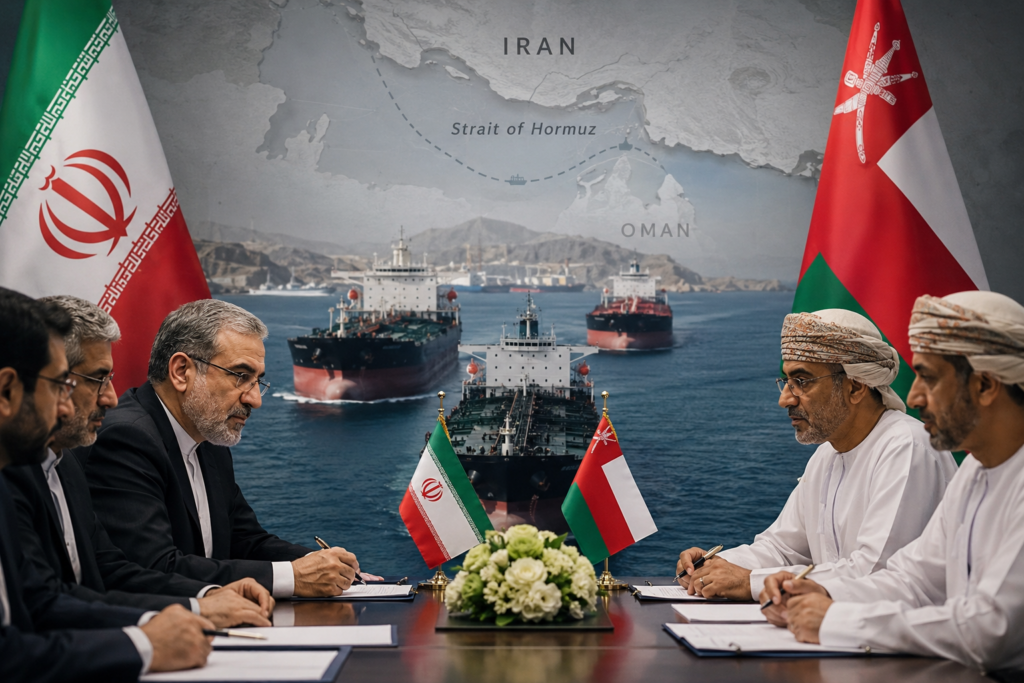
- The Iran Oman Hormuz deal is near finalization but not yet public
- Oil prices have declined due to optimism around the deal
- The agreement may pause—but not end—the Iran conflict
Breaking: Iran–Oman Hormuz Deal Triggers Oil Price Drop, Signals Fragile De-Escalation
Keyword: Iran Oman Hormuz deal
By Kaswar Klasra | Dubai/Islamabad
A significant geopolitical breakthrough is quietly unfolding in the Gulf as the Iran Oman Hormuz deal moves closer to finalization. Iran and Oman have reached an in-principle agreement to reopen the Strait of Hormuz, though Tehran has deliberately delayed making the deal public, signaling the sensitivity of the arrangement.
Despite the absence of a formal announcement, the Iran Oman Hormuz deal has already impacted global markets. Oil prices have started declining, reflecting investor confidence that a critical energy chokepoint may soon return to stability.
Iran Oman Hormuz Deal: Framework and Strategic Design
The proposed Iran Oman Hormuz deal establishes a dual maritime corridor aimed at ensuring safe passage. Under the draft:
- Ships entering the Strait of Hormuz will coordinate with Iran
- Ships exiting will pass through Omani-controlled routes
- No tolls or mandatory fees will be imposed by Iran
This framework is designed as a temporary 60-day mechanism, balancing maritime security with geopolitical sensitivities. However, analysts note that the Iran Oman Hormuz deal could still allow Tehran indirect influence through security coordination and “voluntary” payments.
US General Dropped Bombshell! US Can Not Protect Israel From Iran’s Missiles
Iran’s Foreign Ministry has confirmed that core principles of the Iran Oman Hormuz deal have been agreed upon, though final approval from top leadership remains pending.
Oil Market Reaction to Iran Oman Hormuz Deal
The immediate impact of the Iran Oman Hormuz deal has been visible in global oil markets. Prices, which surged due to escalating tensions and disrupted shipping, have begun to ease.
READ MORE: US-Iran War: How Backchannel Diplomacy from Islamabad Halted Imminent Strikes
The Strait of Hormuz carries nearly 20% of global oil supply, making any development there highly consequential. The Iran Oman Hormuz deal has:
- Reduced immediate supply disruption fears
- Lowered geopolitical risk premiums in oil pricing
- Boosted confidence in energy market stability
However, this is not a return to normalcy. The Iran Oman Hormuz deal remains fragile, and any collapse could trigger another surge in oil prices.
Future of the Iran War After Hormuz Deal
The Iran Oman Hormuz deal could mark a temporary pause in the ongoing Iran conflict but does not signal its end. Instead, it opens a narrow diplomatic window.
READ MORE: Negotiators Close In on Deal With Iran to Open Hormuz
For Iran, reopening Hormuz is essential for sustaining oil exports and easing economic pressure. For the United States, stabilizing the Strait reduces global economic risks and political fallout.
The Iran Oman Hormuz deal may also pave the way for:
- Renewed US-Iran nuclear negotiations
- Potential sanctions relief for Tehran
- A broader regional de-escalation framework
Yet, risks remain high. Hardliners within Iran’s Revolutionary Guard may resist the deal, while Gulf states fear that the Iran Oman Hormuz deal could legitimize Tehran’s long-term influence over a vital global waterway.
Strategic Risks and Regional Concerns
Gulf countries are cautiously watching the Iran Oman Hormuz deal, concerned it could shift the balance of power. Even without formal control, Iran’s operational role may translate into strategic leverage.
At the same time, frustration is growing among Gulf allies over the lack of a clear U.S. strategy, as regional tensions continue to expose them to security threats.
The Iran Oman Hormuz deal is therefore not just a maritime arrangement—it is a geopolitical gamble with long-term implications.
Conclusion: A Fragile but Crucial Breakthrough
The Iran Oman Hormuz deal represents a rare moment of convergence between diplomacy and economic necessity. It has already eased oil prices and reduced immediate tensions, but its durability remains uncertain.
If finalized, the Iran Oman Hormuz deal could stabilize global energy markets and create space for broader negotiations. If it collapses, it may trigger renewed escalation in one of the world’s most volatile regions.
For now, the Strait of Hormuz stands at the center of a delicate balance—where diplomacy, oil, and war intersect.