


-
Iran Protests 2026 have seen the death of at least 34 civilians and 4 security personnel over 11 days of continuous unrest triggered by record-breaking hyperinflation.
-
The “Bloody Saturday” incident in Malekshahi has become a symbol of state brutality after security forces reportedly raided hospitals to arrest wounded protesters.
-
With the rial trading at a historic low of 1.47 million to $1 USD, the collapse of the merchant class (bazaaris) has stripped the regime of its traditional economic support.
-
Despite 2,217 detentions and the use of lethal force, sources from the Islamabad Telegraph suggest the security apparatus remains intact, though its logistics are being stretched to the breaking point.
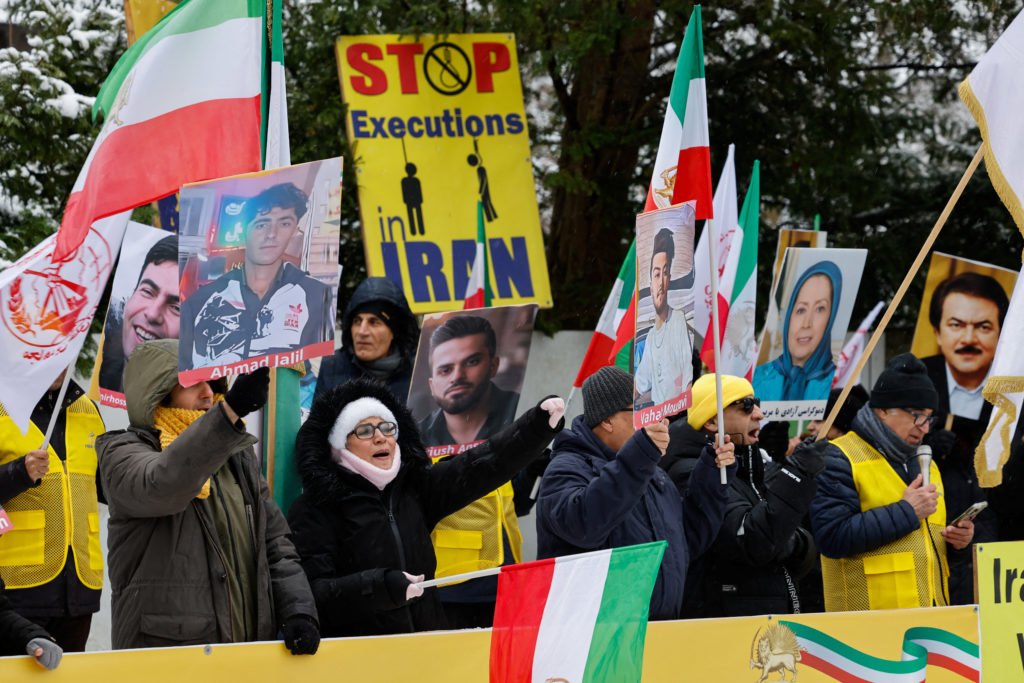
In January 2026, the Islamic Republic of Iran is navigating a historic storm that combines existential economic decay with a unprecedented nationwide uprising. What began as a localized strike by Tehran’s bazaar merchants has transformed into a “Winter Uprising” across 348 locations in all 31 provinces.
As the death toll reaches 38 and the Iranian rial breaches the staggering threshold of 1.47 million to the US dollar, the geopolitical implications are reverberating far beyond Tehran’s borders, drawing in global powers and threatening to reshape the Middle East.
The Anatomy of a Collapse: An ‘Uprising of the Hungry’
The primary driver of the Iran Protests 2026 is fundamentally existential. In December 2025, the rial crossed a catastrophic psychological barrier of 1.35 million to the dollar, only to slide further to 1.47 million by early January. For the majority of Iranians, this is not just a currency fluctuation; it is the total evaporation of purchasing power. Basic staples—meat, rice, and cooking oil—are now priced as luxury goods.
Iran Protests Erupt Amid Economic Collapse and Security Threats
Unlike the 2022 “Woman, Life, Freedom” protests, which were primarily driven by social and civil rights grievances, the 2026 unrest is an “uprising of the hungry.” The participation of the bazaaris—the conservative merchant class that served as a pillar of the 1979 Revolution—signals a terminal breach in the regime’s core support base. When the “beating heart” of Tehran’s Grand Bazaar stops, the state’s economic legitimacy effectively ceases to exist.
Iran Protests 2026: Malekshahi and the New Threshold of Violence
In the western town of Malekshahi, Ilam province, the events of “Bloody Saturday” (January 3) have become a national rallying cry. Evidence suggests security forces did not merely use live ammunition to disperse crowds; they pursued the wounded into the Imam Khomeini Hospital.
Iran condemns US ‘interference’ as death toll rises to 38 amid protests
Reports from Amnesty International and the Center for Human Rights in Iran (CHRI) describe IRGC and Special Unit personnel smashing hospital doors, using tear gas in wards, and seizing the bodies of the deceased to prevent public funerals. This level of desperation in the state’s response suggests a “zero-tolerance” policy mandated from the highest levels. On January 3, Supreme Leader Ali Khamenei labeled the demonstrators “enemy mercenaries,” effectively green-lighting the use of lethal force.
The Geopolitical Brink: Trump and the ‘Rescue’ Doctrine
The international dimension of the Iran Protests 2026 is defined by a more assertive and interventionist United States. President Donald Trump’s pledge to “come to the rescue” of the Iranian people if lethal force continues has fundamentally altered the regime’s risk calculus. Tehran has responded through its Foreign Ministry, accusing Washington of “pulling strings” and conducting “psychological warfare” to incite terrorism.
Iran Protests Erupt Amid Economic Collapse and Security Threats
However, the threat of US intervention is reinforced by regional shifts. The reactivation of UN “snapback” sanctions in September 2025 and the physical damage to infrastructure during the June 2025 war with Israel have left the regime with few economic levers. There is a growing fear among regional analysts that if the regime feels cornered by both domestic revolt and foreign pressure, it may accelerate its nuclear program to 90% enrichment as a final, desperate deterrent.
Regime Stability: Resilience or Decay?
While the Islamabad Telegraph and other ground sources suggest the regime is “going strong,” the structural integrity of the Islamic Republic is being tested as never before. The current strategy of the government is a two-pronged “carrot and stick” approach:
-
The Stick: Heavy deployment of the IRGC and Basij to rural towns and “liberated” zones in western provinces where the state can more easily isolate dissent.
-
The Carrot: Desperate economic promises, such as $7 monthly cash handouts and salary hikes for public sector workers—measures unlikely to outpace a 48% inflation rate.
The real threat to the regime is the “war of attrition” being fought in 348 locations. The sheer geographic spread of the Iran Protests 2026 stretches the logistics of the security apparatus thin. If the military begins to see the economic collapse affecting their own families’ survival, the current “unity” of the armed forces could fracture.
The Iran Protests 2026 represent more than a temporary flare-up of anger; they are the symptom of a state whose economic and social contracts have simultaneously expired. As the rial continues its freefall, the cycle of violence appears inevitable. Whether the regime can pivot toward meaningful reform or will double down on a path toward total confrontation remains the defining question for the Middle East in 2026.