


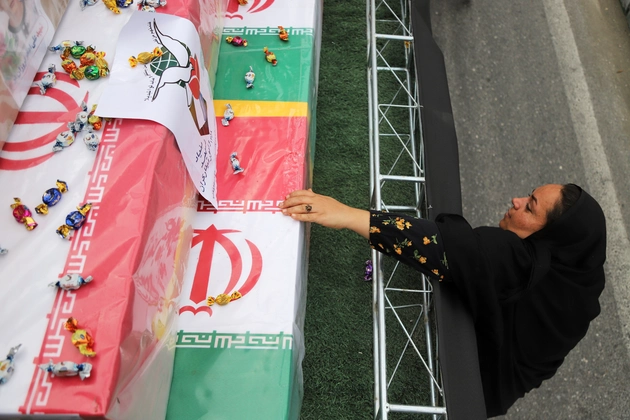
- Iran school strike tragedy: A U.S. target list reportedly misidentified a Minab elementary school as a military site, killing 175 civilians, many of them children.
- Washington Post investigation: Officials told The Washington Post the building may have been mistaken for a factory or nearby arms depot during early strikes of the Iran war.
- AI warfare scrutiny: Advanced targeting tools, including battlefield AI systems, are now under intense scrutiny for their possible role in the deadly mistake.
- Global outrage and probe: Human rights groups are demanding a war-crimes investigation as the Pentagon reviews how the school appeared on the strike list.
What began as a calculated military operation has now been described as one of the greatest massacres and intelligence failures of the modern world.
It was a mistake that turned a schoolyard into a graveyard.
A catastrophic intelligence breakdown involving the Central Intelligence Agency, Israel’s Mossad, and allied targeting systems has left more than 175 civilians dead, most of them children.
According to an exclusive investigation by The Washington Post, the elementary school struck during the opening hours of the U.S.–Israeli campaign in Iran had appeared on a U.S. military target list. Officials familiar with the strike said it may have been mistakenly identified as a military facility.
U.S.–Iran War Middle East Impact: Gaza Forgotten as Trump’s Peace Plan Stalls and Lebanon Burns
What followed has become one of the most bone-chilling stories of our time.
With a single command—perhaps a click on a screen in a distant operations room—missiles were launched toward a quiet school in Minab, southern Iran. Within seconds, explosions tore through classrooms where children had gathered only minutes earlier.
More than 175 young lives vanished instantly.
The victims were not soldiers.
They were students.
Witnesses described scenes of horror. Walls collapsed. Smoke covered the playground. Parents ran through rubble calling the names of their children.
Iranian school was on U.S. target list, may have been mistaken as military site
According to reporting by The Washington Post, the building may have been confused with a factory or a nearby arms depot during the early hours of the war. Another possibility being examined is whether outdated intelligence data placed the school on the strike list.
The result was devastating.
What remained after the explosions was not a military victory.
It was a landscape of dust, twisted metal, and shattered dreams.
For the mothers waiting outside the school that morning, the world ended in seconds.
Some had arrived to take their children home after hearing the first air-raid warnings. Others were still walking toward the school gates when the missiles struck.
Instead of welcoming their sons and daughters into their arms, they were thrown to the ground by the force of the blast.
Hours later, many were still searching through rubble.
Some mothers continue to wait.
They wait for a child who will never again walk through the door.
They wait for a voice that will never again call them “mother.”
For the fathers, the future they once imagined has dissolved into smoke.
The dreams of 175 children—dreams of becoming doctors, teachers, engineers, or simply growing into adulthood—were erased in a moment of catastrophic miscalculation.
A catastrophic intelligence failure turned their futures into grief.
Investigators are now examining how the school appeared on the target list. Analysts cited by The Washington Post say the site once had links to an Iranian naval compound associated with the Islamic Revolutionary Guard Corps, but it had been separated from the military area years ago.
Satellite imagery shows playgrounds and school facilities clearly visible long before the strike.
Human-rights groups have called for a full international investigation. The Human Rights Watch has demanded accountability over what it describes as possible war-crime violations.
Military planners also face new scrutiny over the growing use of artificial intelligence in warfare. Target identification in the conflict reportedly relied partly on advanced analytical platforms such as Palantir Maven battlefield intelligence system, which processes vast streams of surveillance data to identify potential targets.
Officials insist human commanders still approve every strike.
Yet critics warn that speed and automation can magnify small intelligence errors into catastrophic tragedies.
In Minab, the consequences are already written in grief.
Funerals have replaced classrooms.
Small coffins have replaced school bags.
And across the devastated town, mothers mourn in silence while fathers stand beside shattered homes, staring into the smoke of a future that vanished in seconds.
For some families, grief may slowly turn into something darker.
Anger.
A desire for justice.
Perhaps even revenge.
Because for them, the tragedy is not merely a mistake in a war room.
It is the moment when 175 innocent lives were erased by a single decision, transforming a quiet school morning into one of the darkest chapters of modern warfare.