


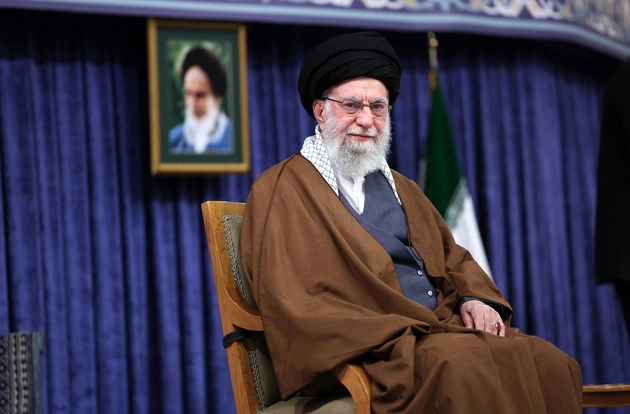
- Iran Supreme Leader assassinated in unprecedented U.S.–Israel military operation targeting Tehran leadership.
- Donald Trump vows continued attacks until strategic objectives are achieved.
- Iran launches retaliatory missile strikes across Israel and Gulf countries.
- Middle East security, oil markets, and global diplomacy face severe instability.
The Middle East has entered one of its most volatile and dangerous moments in decades after Iran’s spiritual leader, Ayatollah Ali Khamenei, was assassinated in a U.S.–Israeli joint military operation, triggering political shockwaves inside Iran and raising fears of a widening regional war.
U.S. President Donald Trump confirmed Saturday that Khamenei had been killed during coordinated strikes targeting senior Iranian leadership and military infrastructure. Iranian state television later verified the death, announcing a nationwide period of 40 days of mourning as millions of Iranians grappled with uncertainty over the country’s future leadership.
According to Israeli security officials, Khamenei was killed in a precision airstrike on his heavily fortified compound in Tehran, marking the most consequential targeted killing in modern Iranian history.
Analysts say the assassination has pushed Iran into unprecedented political chaos, as competing power centers within the clerical establishment, the military, and intelligence networks scramble to maintain control.
Iran Faces Leadership Vacuum
Khamenei, who had ruled as Iran’s supreme leader since 1989, served as the ultimate authority over Iran’s political system, armed forces, and nuclear strategy. His sudden death has created a leadership vacuum at a time when the country is already under intense military pressure.
U.S. Joins Israel in Attack on Iran: Global Security Faces Historic Escalation
Iranian officials vowed retaliation and warned that the assassination would “fundamentally reshape” Tehran’s response to what it calls an اسرائیل-led war backed by Washington. Security forces were deployed across major cities, including Tehran, Mashhad, and Isfahan, amid fears of unrest and internal instability.
Western intelligence assessments suggest that Iran’s Revolutionary Guard leadership has assumed temporary operational authority while senior clerics deliberate succession mechanisms — a process that could take weeks or even months.
Trump Vows Continued Military Campaign
President Trump declared that military operations against Iran would continue until strategic objectives were achieved. In a statement posted online, he said bombing operations would proceed “uninterrupted throughout the week or as long as necessary to achieve our objective of peace throughout the Middle East and the world.”
Ayatollah Ali Khamenei: The leader who shaped Iran’s defiance
U.S. Central Command confirmed that American forces struck Iranian missile installations, air-defense systems, and command-and-control centers linked to the Islamic Revolutionary Guard Corps. Western security officials also reported that senior intelligence commanders were among those targeted in simultaneous strikes.
The offensive follows weeks of failed diplomatic negotiations aimed at forcing Iran to dismantle its nuclear program. U.S. officials had assembled one of the largest regional military deployments in years, signaling preparation for a prolonged confrontation.
Regional Fallout Spreads Rapidly
Iran responded within hours by launching missile attacks toward Israel and several Gulf states, dramatically widening the conflict’s geographic scope. Authorities in the United Arab Emirates, Bahrain, and Kuwait confirmed missile impacts, while Saudi Arabia, Iraq, Jordan, and Qatar reported successful interceptions.
In Israel, emergency services reported light injuries as civilians rushed into bomb shelters amid air raid sirens across Jerusalem and Tel Aviv. Meanwhile, debris from intercepted missiles struck civilian areas in parts of the Gulf, including a major hotel complex in Dubai, underscoring the conflict’s growing regional reach.
Energy markets reacted sharply, with oil prices surging amid fears that continued escalation could disrupt shipping routes through the Strait of Hormuz — a critical artery for global energy supplies.
A Middle East at a Dangerous Turning Point
The assassination of Iran’s supreme leader has fundamentally altered the strategic balance of the Middle East. Regional governments are now preparing for prolonged instability, potential proxy conflicts, and further direct military exchanges between Iran and Israel.
Diplomatic channels across Europe and Asia are scrambling to prevent further escalation, while global powers warn that the conflict risks spiraling into a broader regional war involving multiple state actors.
For Iran, the immediate challenge lies not only in responding militarily but also in preserving internal cohesion after the loss of a leader who defined the Islamic Republic for more than three decades. For the wider region, the question is whether the Israel-led campaign will achieve its stated goals — or ignite a conflict far larger than its architects anticipated.
As airstrikes continue and retaliatory threats intensify, the Middle East stands on the edge of a new and uncertain era shaped by assassination, escalation, and the collapse of long-standing political certainties.