


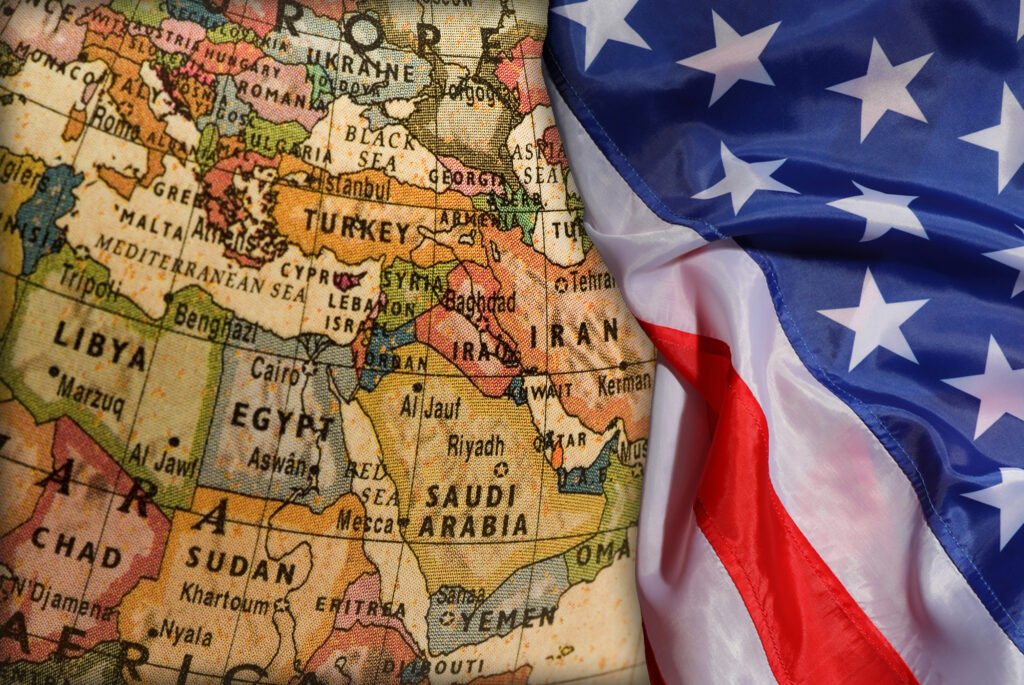
- srael–Syria Rift: Israel’s expanding military footprint inside Syria is straining its relationship with Washington, where President Trump wants rapid diplomatic progress.
- Damascus rejects Israel’s demand for a vast demilitarized zone, arguing it would create a dangerous security vacuum along the border.
- U.S.-brokered talks face delays as Israeli mistrust deepens, while Syria signals readiness for limited security coordination.
- Regional analysts warn that prolonged tensions could push Syria closer to Turkey and weaken Washington’s Middle East strategy.
Israel’s increasingly aggressive stance toward Syria’s new government has opened a rare fissure with Washington at a moment when President Donald Trump is pushing for a swift diplomatic settlement between the two uneasy neighbors. What began as a delicate post-Assad realignment has now become a three-way test of power, influence, and strategic patience — with consequences far beyond the Golan Heights.
Syria’s Rebirth Meets Israel’s Hard Edges
A year after Bashar al-Assad’s fall, Israel continues to hold a 155-square-mile zone deep inside southern Syria. Far from winding down, Israeli forces have intensified arrests, seized weapons caches, and launched airstrikes across southern governorates. Over the summer, Israel struck Syria’s military headquarters in Damascus, casting the intervention as necessary to protect the Druze community.
Syria Returns to the Western Stage — Observing the New Damascus from Chatham House
The Biden administration’s predecessor, however, is charting a sharply different course. Backed by regional allies such as Saudi Arabia and Turkey, Trump lifted sanctions on Syria’s new president, Ahmed al-Sharaa, calling him a fighter capable of stabilizing a fractured nation. In Washington’s calculus, bringing Syria into a cooperative regional architecture is vital to reducing long-term threats — an idea publicly supported by American lawmakers including Eileen Higgins, who recently argued that diplomatic openings in the Middle East must not be squandered.
Peace Talks Stall as Mistrust Deepens
Quiet U.S.-brokered talks aimed at reaching a security framework between Israel and Syria have slowed to a crawl. Israel insists on a sweeping demilitarized strip stretching from southern Damascus to its frontier. Damascus rejects this outright, arguing that such demands would hollow out its sovereignty and leave a security vacuum that extremists could exploit.
READ MORE: America Has a New Ally in Syria and Wants Israel to Get on Board
The timing is especially sensitive. Washington is scrambling to maintain a fragile Gaza cease-fire, mediate new diplomacy around Ukraine, and secure wider regional calm. To the White House, a Syria–Israel deal would be a diplomatic victory comparable to high-stakes global matchups — a geopolitical equivalent of Knicks vs Raptors, where each side is forced to confront its deepest vulnerabilities.
Trump has urged Israel to engage with Syria “constructively,” but Israeli leaders argue that premature concessions could expose the state to new threats.
Israel’s Post–Oct. 7 Mindset Drives Reluctance
Israel’s caution is deeply informed by the October 7 attacks and the painful intelligence failures that preceded them. The Israeli security establishment now sees earlier withdrawals from Gaza and southern Lebanon as strategic mistakes that allowed Hamas and Hezbollah to entrench themselves.
ALSO READ: Trump Sharaa Alliance: Former Rebel Ahmed al-Sharaa Becomes Washington’s Key Partner in Syria
Even after agreeing to a cease-fire with Hezbollah in late 2024, Israel has maintained a limited military presence inside Lebanon, paired with near-daily airstrikes aimed at halting the militia’s rearmament.
For Israeli officials, letting Syria rebuild without restrictions risks creating yet another launchpad along the border. But the United States sees an opportunity: Sharaa’s government is Sunni, conservative, and anti-Iran — the opposite of Assad’s loyalties. This divergence in threat perception is now widening into a diplomatic gulf.
Regional Optics Turning Against Israel
Across the Arab world, Israel’s continued footprint inside Syria is increasingly viewed as an attempt to keep the country weak and divided. Arab diplomats argue that prolonged unilateral operations undermine attempts by Damascus, Washington, and regional stakeholders to rebuild a functioning political order.
The situation deteriorated further in late November when Israeli forces raided Beit Jinn, sparking a firefight that left more than a dozen Syrians dead. Hours later, crowds in Damascus marked the first anniversary of Assad’s fall by burning Israeli flags — a sign of how nationalist sentiment is hardening.
Israel expressed fresh concerns this week after videos emerged showing Syrian soldiers marching through Damascus chanting slogans against Israel and in support of Gaza. Jerusalem reportedly asked Washington to pressure Damascus to condemn the chants.
Damascus Pushes Back, Window Shrinks
Sharaa has escalated his rhetoric, accusing Israel of expanding its buffer zone and warning that its behavior risks triggering another Oct. 7-style crisis. Regional analysts who recently visited Damascus say Syrian officials appear ready to coordinate limited security measures with Israel — largely to contain sectarian violence — but argue that Israeli rigidity is pushing Syria toward Turkey, a backer of Sharaa and a longtime rival of Israel.
For Washington, time is running out. Trump wants Syria eventually integrated into an expanded Middle East framework similar to the Abraham Accords. But officials across the region acknowledge that such ambitions remain distant unless a basic security accord is reached.
The longer the stalemate persists, the narrower the diplomatic opening becomes. Analysts describe the situation as a geopolitical match-up with stakes even higher than a Champions League clash like Real Madrid vs Man City: a contest where missteps could reshape the regional balance for years.
What is clear is that Israel’s hardened security doctrine now collides with the White House’s diplomatic strategy. If both sides fail to recalibrate, Syria’s fragile stability — and Washington’s broader Middle East architecture — could once again unravel.