


- Kharg Island occupation could trigger a prolonged and uncontrollable U.S.-Iran conflict
- Seizing Iran’s key oil hub may fail to reopen the Strait of Hormuz
- Regional escalation risks drawing Gulf states and global powers into war
- Global energy markets could face sustained oil price shocks and instability
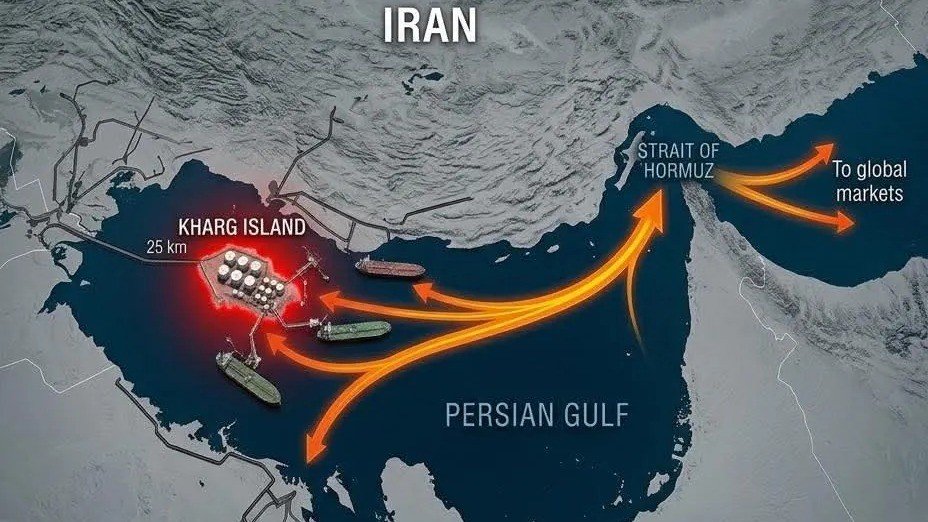
In the volatile waters of the Strait of Hormuz, a new and potentially catastrophic strategic gamble is taking shape. According to multiple media reports citing senior officials, Donald Trump is considering options that include the occupation or blockade of Kharg Island—a move ostensibly aimed at forcing Iran to reopen one of the world’s most critical energy arteries.
The objective, at least on the surface, aligns with global economic interests. The Strait of Hormuz remains indispensable to international energy markets, and its effective closure amid escalating hostilities has already triggered sharp spikes in oil prices. For policymakers in Washington and allied capitals, restoring maritime flow is not just a regional priority—it is a global imperative.
Gulf Energy War: $150 Oil Looms as Hormuz ‘Ghost Zone’ Cripples Supply
Yet the emerging strategy reflects a profound miscalculation. Occupying Kharg Island will not guarantee the reopening of the Strait of Hormuz. Instead, it risks pushing the United States and its allies into a prolonged conflict with no clear end in sight.
Kharg Island is not merely a symbolic target. It is the backbone of Iran’s النفط export infrastructure, handling nearly 90 percent of its crude shipments. Media reports indicate that U.S. forces have already targeted military installations on the island while deliberately avoiding its النفط facilities—at least for now. However, the shift toward potential occupation signals a transition from limited العسكري pressure to a far more ambitious and dangerous objective: economic strangulation through territorial control.
This is where the strategic logic begins to unravel.
The Strait of Hormuz is not controlled by a single point of leverage. Even if U.S. forces were to successfully seize Kharg Island, Iran retains the capability to disrupt maritime traffic through asymmetric means. Coastal missile batteries, naval mines, fast-attack vessels, and proxy networks provide Tehran with multiple avenues to sustain pressure on shipping lanes. In practical terms, Washington could control Kharg and still fail to secure Hormuz.
Trump Iran Strategy: What’s Driving Escalation and Future War Forecasts
More importantly, such a move would almost certainly trigger escalation rather than compliance. Iranian doctrine has consistently favored retaliatory expansion—responding to pressure not by conceding, but by widening the battlefield. Recent attacks on commercial shipping and regional الطاقة infrastructure demonstrate Tehran’s readiness to impose costs far beyond its immediate geography.
An occupation of Kharg Island would likely be interpreted in Tehran not as a coercive measure, but as an act of war.
Trump considering plans to occupy or blockade Iran’s Kharg Island – report
The military implications are equally sobering. Despite its modest size, Kharg would require a substantial and sustained deployment to capture and hold. Reports of U.S. Marine units moving into the region underscore the scale of preparation already underway. Yet any initial success would quickly give way to a more complex reality: defending the island against persistent Iranian counterattacks, ensuring supply lines, and maintaining air and naval superiority in a highly contested environment.
This is not a limited operation. It is the beginning of an open-ended military commitment.
The geopolitical consequences extend far beyond the immediate theater. Iran has already warned that countries facilitating U.S. military operations would be considered participants in aggression. Such statements raise the risk of a broader regional war, drawing in Gulf states, European allies, and potentially non-state actors aligned with Tehran. Critical infrastructure across the region—from oil terminals to military bases—would become potential targets.
For global markets, the risks are immediate and severe. Analysts warn that any disruption to Kharg’s facilities could trigger a sustained surge in oil prices, with long-term последствия for inflation, supply chains, and economic stability. Unlike temporary shocks, damage to the island’s export infrastructure could take years to repair, locking in volatility across global energy systems.
Ironically, a strategy intended to stabilize energy flows may instead produce a prolonged crisis.
There is also a deeper strategic contradiction at play. Efforts to cripple Kharg Island risk undermining any long-term vision for regional stability. By targeting the core of Iran’s economic infrastructure, the United States would effectively eliminate the financial foundation necessary for any future political transition within the country. Rather than shaping a more stable post-conflict environment, such actions could entrench instability for years, if not decades.
Ultimately, the decision confronting Donald Trump is not simply about reopening a waterway. It is about defining the scope and trajectory of U.S. engagement in the Middle East. The occupation of Kharg Island may offer the illusion of decisive action, but in reality, it represents a strategic trap—one that trades short-term pressure for long-term entanglement.
The conclusion is inescapable: seizing Kharg Island will not guarantee the reopening of the Strait of Hormuz. Instead, it is far more likely to ignite a cycle of escalation that pulls the United States and its allies into a war with no end in sight.
In a region already defined by volatility, such a move would not restore order. It would redefine the conflict itself—transforming a crisis of access into a permanent state of war.