


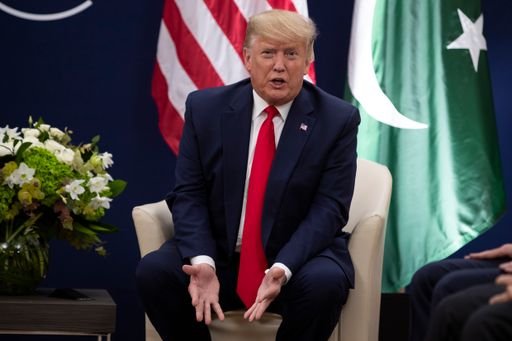
- Pakistan Made My Day: The Board of Peace is a Trump-led alternative to the UN, aimed at Gaza and global conflict resolution.
- Pakistan’s decision to join provides the board with essential nuclear and religious legitimacy.
- Key board members include Marco Rubio, Jared Kushner, and former UK PM Tony Blair.
- President Trump announced the news while attending the World Economic Forum in Davos, Switzerland.
From the snow-dusted balcony of the Congress Center in Davos, the view of the Swiss Alps is often described as pristine, but for Donald J. Trump on Wednesday, January 21, 2026, the view was something else entirely: “over the moon.” It was here, amidst the global elite at the World Economic Forum, that the President received the dispatch he had been waiting for.
Turning to one of his closest aides, Trump reportedly beamed with the satisfaction of a master closer who had just landed the most elusive tenant in the building. “Pakistan made my day,” a source told The Islamabad Telegraph, quoting the President as he prepared for his 70-minute special address.
The news from Islamabad was a seismic event in the world of Trumpian statecraft. Pakistan’s Ministry of Foreign Affairs (MoFA) officially announced it was joining the Board of Peace (BoP), the President’s controversial and high-stakes alternative to the United Nations’ aging diplomacy. For a board that critics once dismissed as a Mar-a-Lago vanity project, the entry of the world’s only Muslim nuclear power transformed the BoP into a heavyweight contender.
Pakistan joins Trump’s Gaza Peace Council: Balancing Principle with Pragmatic Diplomacy
The Board and the “Who’s Who”
The Board of Peace is not your father’s diplomatic council. It is a structure designed by the President to operate like a corporate board, with Trump himself as the Inaugural Chairman. The “Founding Executive Board,” tasked with the day-to-day management of Gaza and other global flashpoints, is a constellation of loyalists and power players:
- Marco Rubio: The U.S. Secretary of State, managing the board’s high-level diplomatic friction.
- Jared Kushner: Trump’s son-in-law and the ideological architect of regional realignment.
- Steve Witkoff: The special negotiator whose real-estate-meets-diplomacy style has defined the board’s approach.
- Tony Blair: The former British Prime Minister, acting as the board’s bridge to the old guard of European statecraft.
- Nickolay Mladenov: The “High Representative” for Gaza, tasked with the impossible job of transitioning the enclave from Hamas rule to a technocratic administration.
Donald J. Trump: The Modern King Who Bent Wars Toward Peace — The Relentless Peacemaker Who Stopped Eight Conflicts and Averted a Nuclear Catastrophe
While allies like France and Norway have balked at the board’s $1 billion “permanent membership” fee—a clause that has left European leaders in Davos fuming—others have rushed to join. From the halls of the WEF, it was confirmed that up to 25 countries, including Saudi Arabia, Turkey, and now Pakistan, have signed on.
The Pakistan Pillar: Power and Principle
Why was Pakistan the prize that made Trump’s day in Davos? To understand the significance, one must look at the Strategic Centrality Islamabad brings to the Gaza initiative. Pakistan is not just another member; it is the moral and strategic anchor of the Saudi-led Islamic bloc.
Trump’s ‘board of peace’: Who has joined, who hasn’t – and why
In a section now being pored over by diplomats in Switzerland, Pakistan’s importance to the Board on Gaza is clear:
- Nuclear Legitimacy: As the only Muslim-majority nuclear power, Pakistan’s presence provides a “security umbrella” of credibility that no other regional player can offer.
- The Principled “No”: Islamabad has maintained an unwavering refusal to recognize Israel until a sovereign Palestinian state is established. By joining the board while maintaining this red line, Pakistan proves it is engaging as a leader, not a follower.
- Civil-Military Consensus: The decision followed intense consultations between Prime Minister Shehbaz Sharif and Field Marshal Asim Munir, reflecting a rare national consensus. This wasn’t a political whim; it was a move of deliberate statecraft.
- Leverage, Not Concession: Pakistan’s MoFA was explicit—participation is contingent on concrete steps toward a permanent ceasefire, humanitarian access, and a time-bound political process for Palestinian self-determination.
A New World Order in the Alps
As Trump held court in Davos, threatening 200% tariffs on French wine for those who refuse to join his board and claiming he “ended the India-Pakistan war” during his address, the reality of the Board of Peace began to settle in. It is an “America First” unilateralism that seeks to bypass the United Nations entirely.
By bringing Pakistan into the fold, Trump has achieved what many thought impossible: he has bridged the gap between a Western-led peace initiative and the core concerns of the Islamic world. For the President, the deal is in the details, and with Pakistan at the table, the Board of Peace just became the only game in town.