


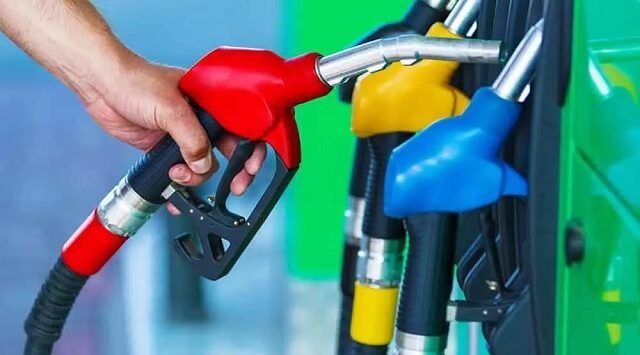
- • Pakistan petrol price hike reaches historic levels as government increases petrol and diesel by Rs55 per litre amid global oil shock triggered by the Iran war.
- • The unprecedented increase marks the largest petroleum price hike in Pakistan’s history, raising fears of a new inflation wave.
- • Global energy markets have surged 50–70% due to the Iran-US-Israel conflict and fears of disruption in Middle East oil supply routes.
- • India continues importing discounted Russian oil during the crisis, while Pakistan struggles to shield consumers despite claims of energy arrangements with Saudi Arabia.
In what analysts are calling the largest petroleum price shock in Pakistan’s history, the government on Friday announced a massive Rs55 per litre increase in the price of both petrol and high-speed diesel, citing the global energy shock triggered by the escalating war involving Iran, the United States and Israel.
The dramatic decision was announced during a late-evening press conference by Petroleum Minister Ali Pervaiz Malik, alongside Deputy Prime Minister and Foreign Minister Ishaq Dar and Finance Minister Muhammad Aurangzeb.
According to Dar, the new prices will take effect from midnight, marking what many economists describe as an unprecedented fuel shock for Pakistan’s already fragile economy.
Russia Energy Boon Iran War: Kremlin Gains Amid Strait of Hormuz Crisis
“This is the largest increase in petroleum prices in Pakistan’s history, reflecting the extraordinary disruption in global oil markets,” one energy analyst in Islamabad told The Islamabad Telegraph.
Iran War Sends Global Oil Markets into Crisis
The government justified the massive increase by pointing to the rapidly escalating conflict in the Middle East, where fighting involving Iran and its adversaries has begun to reshape global energy flows.
During the briefing, Dar said the conflict had “spilled over” into global economic markets, with petroleum products witnessing price increases of 50 to 70 percent internationally.
Gas and oil prices soar and shares tumble on fears conflict could escalate
Oil traders say the war has triggered fears of supply disruptions across key energy routes, including the strategically critical Strait of Hormuz, through which roughly a fifth of the world’s oil passes.
Energy markets have reacted instantly. Crude prices surged across Asia and Europe as investors priced in the possibility of a prolonged conflict and potential attacks on regional oil infrastructure.
Pakistan—an energy-import-dependent economy—is among the countries most exposed to global oil price volatility.
Pakistan’s Economic Vulnerability Exposed
The Rs55 increase comes at a time when Pakistan is already struggling with high inflation, fiscal constraints, and external debt pressures.
Russia Redirects LNG to Asia-Pacific: Strategic Implications for Global Energy Security
Economists say the petroleum shock will have immediate cascading effects across the economy.
Transport costs are expected to surge, triggering higher food prices, rising electricity tariffs, and inflationary pressure across supply chains.
For an economy still recovering from repeated IMF stabilisation programs, the fuel price spike could become a major macroeconomic stress test.
The decision also highlights the structural vulnerability of Pakistan’s energy model, which remains heavily dependent on imported petroleum products.
Government Claims Efforts to Cushion the Impact
Despite the sharp increase, officials insisted that the government had attempted to minimize the burden on consumers.
Dar said Prime Minister Shehbaz Sharif had been carefully reviewing the global oil situation for weeks before approving the price hike.
According to Dar, a permanent committee on petroleum pricing—headed by Malik and Aurangzeb—had been assessing global developments for the past two to three weeks.
“Deliberations have been ongoing continuously,” Dar said, adding that the government’s goal was to transfer the minimum possible impact of the Middle East crisis to the public.
He also revealed that a high-level committee under his leadership was established to consult stakeholders and review policy options before the final decision was taken.
Diplomatic Efforts to Calm the Middle East
The government also confirmed that Pakistan has been engaged in diplomatic efforts aimed at reducing tensions in the region.
Dar said Prime Minister Shehbaz Sharif and Chief of Defence Forces and Army Chief Asim Munir had been in contact with regional and international leaders regarding the crisis.
Pakistan, which maintains close ties with Gulf states and Iran alike, has reportedly urged restraint and called for de-escalation.
But officials acknowledged that the duration of the conflict remains uncertain.
“God knows how long this situation will last,” Dar said.
India’s Russian Oil Advantage
The price shock has also reignited debate about Pakistan’s lack of diversified energy supply options, particularly when compared with neighboring India.
Since the outbreak of the Russian invasion of Ukraine, India has dramatically increased imports of discounted crude from Russia.
Despite Western sanctions, New Delhi has been allowed to continue purchasing Russian oil and gas under price cap mechanisms—giving it access to cheaper energy supplies during global crises.
Energy analysts say this policy has provided India with a critical economic cushion, allowing it to stabilize domestic fuel prices even as global markets fluctuate.
Pakistan, by contrast, has struggled to establish long-term discounted supply arrangements due to financial constraints, payment mechanisms, and geopolitical complexities.
Saudi Oil Expectations vs Reality
The price hike has also raised questions about Islamabad’s previous claims of securing preferential petroleum arrangements from Gulf allies, particularly Saudi Arabia.
Over the past year, government officials repeatedly suggested that strategic energy partnerships with Riyadh would help stabilize Pakistan’s fuel supplies.
However, Friday’s dramatic price hike indicates that global market forces continue to dictate Pakistan’s petroleum pricing, despite diplomatic assurances of support.
Inflation Shock Looming
Economists warn the Rs55 increase could trigger a new wave of inflation across Pakistan.
Petrol and diesel serve as the backbone of the country’s transport and logistics sectors, meaning any increase quickly spreads across the economy.
Within days, analysts expect increases in:
-
Public transport fares
-
Food prices
-
Industrial production costs
-
Electricity generation expenses
For households already struggling with high living costs, the fuel hike is likely to intensify economic pressure.
A Warning Signal for Energy Policy
Beyond the immediate economic shock, the crisis underscores a deeper structural issue: Pakistan’s energy security vulnerability in times of geopolitical conflict.
With tensions escalating across the Middle East and global oil markets entering a new period of volatility, analysts say Islamabad must urgently rethink its long-term energy strategy.
Without diversified suppliers, strategic reserves, or large-scale domestic production, Pakistan remains highly exposed to geopolitical shocks.
For now, the Iran war has delivered a stark reminder: in a global energy crisis, import-dependent economies like Pakistan are often the first to feel the pain.