


- Pakistan Saudi Arabia Defence Pact underscores Islamabad’s firm commitment to defend the Kingdom against external aggression
- Field Marshal Asim Munir condemns attack on Saudi petrochemical facilities as dangerous escalation
- Pakistan intensifies diplomatic efforts to mediate between Iran and the United States
- Corps Commanders reaffirm Pakistan’s role as a regional stabiliser pushing for peace and dialogue
In a strongly worded and strategically significant statement, Pakistan’s top military leadership has condemned the latest attacks on the Kingdom of Saudi Arabia’s critical infrastructure, warning that such escalation risks derailing fragile diplomatic efforts aimed at preventing a wider regional war.
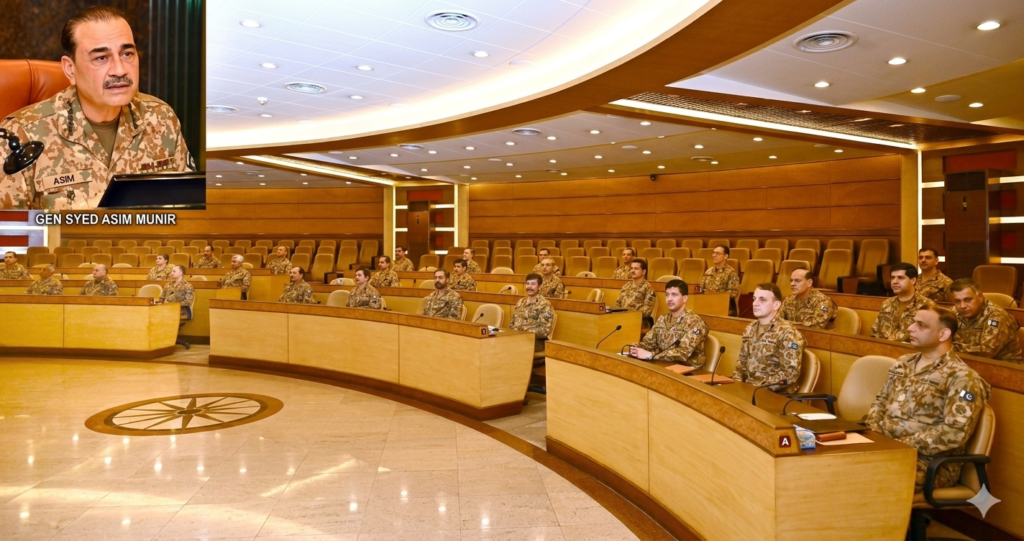
Chairing a high-level Corps Commanders’ Conference, Field Marshal Asim Munir delivered a clear and resolute message: attacks on Saudi Arabia’s petrochemical and industrial complexes are not only unjustified but dangerously counterproductive at a time when backchannel diplomacy is showing signs of progress.
“The Forum noted with concern and vehemently condemned latest attacks on KSA’s petrochemical and industrial complex as an unnecessary escalation which spoils sincere efforts to resolve the conflict through peaceful means,” the Chief of Defence Forces told commanders, according to a press note issued from ISPR.
Asim Munir Iran War Diplomacy: How Pakistan’s Field Marshal Convinced Trump to Delay Strike on Iran
The statement underscores Pakistan’s deep concern over the trajectory of the ongoing crisis, particularly as regional tensions continue to escalate amid the broader confrontation involving Iran, the United States, and Gulf states led by Saudi Arabia.
Military officials highlighted that the Kingdom had thus far exercised “restraint and calibration” despite repeated provocations—an approach that had enabled diplomatic channels to remain open. However, the latest strikes on sensitive installations have, in the words of the forum, created “serious repercussions” that could undermine ongoing peace efforts and close the window for negotiation.
Trump Final Strike on Iran Looms as U.S. Forces Mobilize and Tehran Prepares for Decisive War
At the heart of Pakistan’s diplomatic push has been the proactive and sustained engagement of Field Marshal Asim Munir himself. Widely credited within security circles as a key mediator, Munir has been actively involved in bridging communication gaps between Washington and Tehran, working tirelessly to de-escalate tensions and prevent a catastrophic military confrontation.
Sources within Pakistan’s military establishment indicate that it was Munir’s intervention that played a decisive role in securing a temporary ceasefire window, effectively “holding the horses” of escalation at a critical juncture. His efforts have been aimed at fostering dialogue, encouraging restraint, and building confidence between adversaries locked in a dangerous standoff.
Trump warns a ‘whole civilization will die tonight’ if a deal with Iran isn’t reached
However, the recent attack on Saudi soil—particularly targeting high-value petrochemical and industrial complexes—has sent shockwaves across Pakistan. Officials describe the development as both alarming and deeply provocative, especially given the longstanding strategic and defense ties between Islamabad and Riyadh.
Pakistan and Saudi Arabia share a robust defence cooperation framework, widely understood within policy circles as a de facto security pact. Under this arrangement, any direct attack on the Kingdom is viewed as a threat to Pakistan’s own national security interests. Senior officials reiterated that this understanding carries profound implications in the current climate.
“The situation is extremely sensitive for Pakistan,” a senior defence source said. “If there is any further aggression against Saudi Arabia, Pakistan will have no option but to fulfill its commitments.”
This position reflects not only strategic calculations but also domestic sentiment. With a population exceeding 224 million, a significant portion of Pakistan’s public views the Kingdom as both a religious and strategic ally, intensifying pressure on policymakers to respond decisively to any threats against Saudi sovereignty.
At the same time, Pakistan’s leadership appears determined to avoid being drawn into a full-scale conflict. The Corps Commanders’ Conference emphasized the importance of maintaining momentum toward a negotiated settlement, even as the situation remains volatile.
The forum collectively appreciated the “hectic efforts” undertaken by the Government of Pakistan to bring an end to the Middle East crisis, reaffirming Islamabad’s commitment to dialogue, restraint, and de-escalation. Officials stressed that Pakistan continues to act as a “responsible regional stakeholder” and a “regional security stabiliser,” leveraging its diplomatic channels to prevent further deterioration.
The urgency of these efforts has been amplified by increasingly stark warnings from Washington. Donald Trump has reportedly issued a dramatic ultimatum, cautioning that a “whole civilization will die tonight” if Tehran fails to comply with demands tied to reopening the strategically vital Strait of Hormuz.
Such rhetoric has heightened fears of imminent military action, placing additional weight on Pakistan’s mediation role. Analysts suggest that if diplomatic efforts led by figures like Field Marshal Asim Munir were to falter, the likelihood of rapid escalation would increase significantly.
Indeed, insiders warn that any withdrawal or “neutrality” on Pakistan’s part could remove a critical buffer currently restraining more aggressive options under consideration in Washington.
For now, Islamabad appears committed to walking a delicate tightrope—firmly backing Saudi Arabia’s security while simultaneously investing political and military capital into preventing a broader war.
As tensions continue to simmer, Pakistan’s message remains clear: aggression against Saudi Arabia is unacceptable, escalation is dangerous, and diplomacy—however fragile—must be given every chance to succeed.