


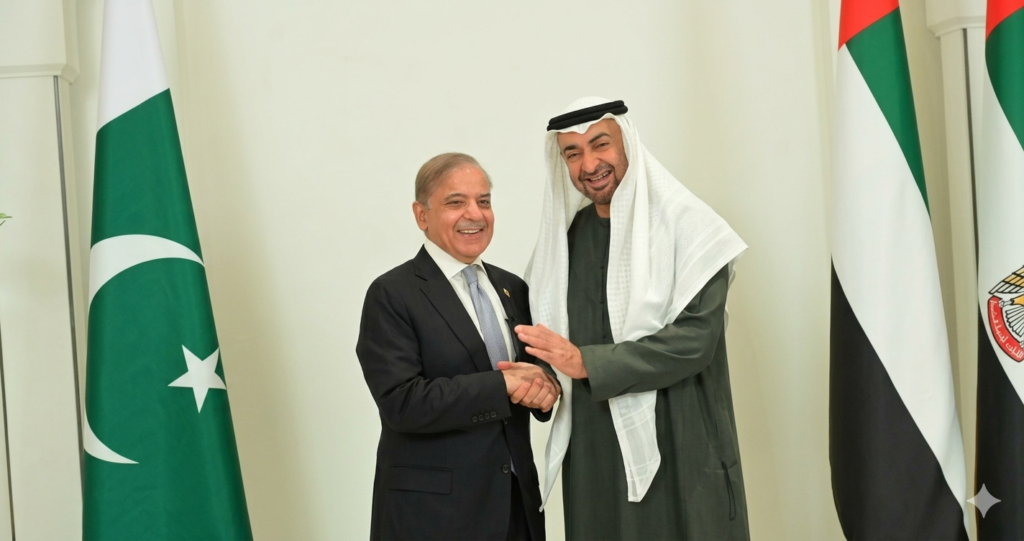
- Pakistan UAE deposits controversy addressed by Foreign Office amid social media claims
- Viral narratives falsely suggested UAE pressured Pakistan during Iran war
- Government confirms repayment is routine under agreed financial terms
- Strong Pakistan-UAE ties reaffirmed despite misinformation campaign
Islamabad, April 5, 2026 — Ministry of Foreign Affairs Pakistan has firmly rejected what it described as “misleading and unfounded” commentary circulating on social media regarding financial deposits made by the United Arab Emiratesin Pakistan, warning against attempts to distort bilateral ties at a sensitive geopolitical moment.
The official statement came after a wave of online content — including posts by social media users and some journalists — alleged that the UAE had demanded early repayment of its financial deposits to pressure Pakistan amid the ongoing Iran war. The claims, widely shared across platforms, raised questions about the strength and stability of Pakistan-UAE relations, with several narratives suggesting hidden diplomatic tensions “between the lines.”
Rejecting these assertions, the Foreign Office clarified that the deposits held with the State Bank of Pakistan were made under bilateral commercial agreements and are being returned strictly in accordance with mutually agreed terms. “This is a routine financial transaction,” the ministry emphasized, adding that any attempt to portray it otherwise is “erroneous and misleading.”
Pakistan rejects misleading commentary on UAE deposits, reaffirms partnership
According to officials familiar with the development, the issue was formally brought to the attention of Pakistani authorities by the UAE Embassy in Islamabad through established diplomatic channels. The communication, sources said, was conveyed in a “polite and diligent manner,” reflecting the maturity of relations between the two countries and adherence to diplomatic norms.
“The matter was never confrontational,” a senior official noted. “It was addressed professionally, as expected between two long-standing partners.”
Beyond The Crisis: How the UAE Protected Lives, Preserved Stability, and Led with Compassion
The controversy emerged at a time of heightened regional tensions following the escalation triggered by the US and Israeli strikes on Iran February 2026, which has already strained global markets and diplomatic alignments. Analysts say such an environment often fuels speculation and misinformation, particularly on digital platforms where narratives can spread rapidly without verification.
Pakistan’s government has sought to draw a clear line between contractual financial obligations and political interpretation. Officials stressed that the UAE’s request for repayment — reportedly amounting to approximately $3.5 billion due by April 2026 — falls within the framework of agreements signed by both sides. “Honoring such commitments is a matter of financial discipline and national credibility,” an official said.
The deposits, initially placed in 2019 through mechanisms linked to the Abu Dhabi Fund for Development, were part of broader support extended to Pakistan during a balance-of-payments crisis. Over the years, these funds had been rolled over multiple times, becoming a critical component of Pakistan’s external financing structure.
Recent data indicates that Pakistan’s foreign exchange reserves stand at around $16.3 billion. The repayment of approximately $3 billion could reduce reserves by nearly 18 percent, potentially tightening the country’s external buffer. While officials acknowledged the financial implications, they maintained that the decision reflects evolving bilateral considerations and a commitment to transparency.
Economic observers caution that the move may exert short-term pressure on the Pakistani rupee and complicate ongoing arrangements with the International Monetary Fund. However, they also note that maintaining trust with key partners such as the UAE remains essential for long-term economic stability.
Beyond the immediate controversy, the Foreign Office underscored the depth of Pakistan-UAE relations, describing them as “longstanding and fraternal,” rooted in trust and cooperation across trade, investment, defence, and people-to-people ties.
The statement paid tribute to Sheikh Zayed bin Sultan Al Nahyan, acknowledging his pivotal role in laying the foundation of enduring friendship between the two nations. From early humanitarian assistance to sustained economic support, the UAE has played a significant role in Pakistan’s development journey.
Over 2.3 million Pakistanis currently reside and work in the UAE, contributing significantly to remittance flows that remain a lifeline for Pakistan’s economy. In recent years, Abu Dhabi has also committed billions of dollars in investments across key sectors, including energy, infrastructure, and renewables.
Officials warned that misinformation campaigns risk undermining these ties at a critical juncture. “A well-orchestrated narrative aimed at creating mistrust serves no one’s interests,” a government source said. “The relationship between Pakistan and the UAE has weathered far greater challenges and continues to grow stronger.”
As global uncertainty intensifies amid the Iran conflict and energy market volatility, Islamabad’s message appears clear: financial agreements must be honored, diplomatic channels respected, and strategic partnerships shielded from misinformation.
Pakistan, the Foreign Office reiterated, remains fully committed to strengthening its relationship with the UAE — a partnership it views as vital for a shared and prosperous future.