


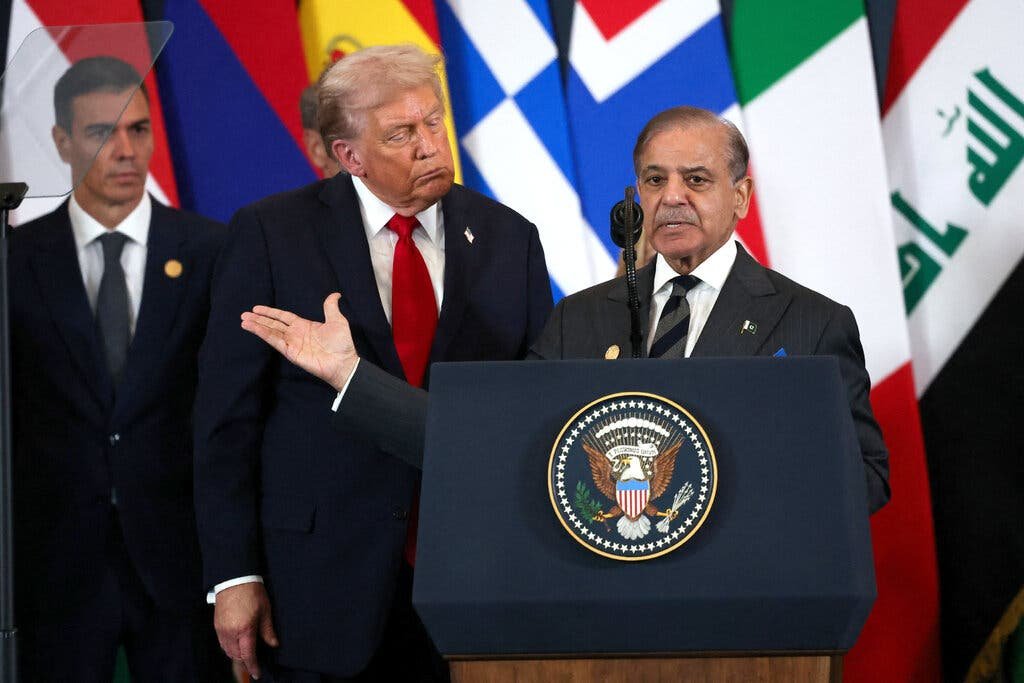
- Pakistan US-Iran Peace Talks gain momentum as both sides agree in principle to Islamabad’s mediation
- Backchannel diplomacy led by Shehbaz Sharif with Gulf allies including Mohammed bin Salman proves vital
- Rising geopolitical stature of Pakistan linked to post-2025 regional security shifts and military positioning
- Potential talks could ease global energy crisis triggered by tensions in the Strait of Hormuz
In the shifting geometry of Middle Eastern diplomacy, Pakistan is positioning itself at the center of a fragile but potentially transformative moment. Diplomatic sources have confirmed to The Islamabad Telegraph that both the United States and Iran have agreed in principle to Pakistan’s offer to host peace talks—an unexpected development that underscores Islamabad’s rapidly expanding geopolitical reach.
The initiative, formally signaled by Prime Minister Shehbaz Sharif earlier this week, comes at a critical juncture in the Gulf conflict. In a public message, Sharif stated Pakistan’s willingness to facilitate dialogue, framing it as part of a broader commitment to regional stability. Behind the scenes, however, the groundwork appears to have been laid through a flurry of high-level engagements with key Gulf stakeholders, including Mohammed bin Salman, as well as leadership in United Arab Emirates and Qatar.
These consultations, according to officials familiar with the process, helped align regional interests at a moment of acute volatility.
Since late February, when U.S. and Israeli strikes targeted Iranian facilities, the conflict has spiraled into a broader confrontation—marked by Iranian retaliation against Gulf energy infrastructure and the effective closure of the Strait of Hormuz. The resulting shock to global energy markets has rippled across economies, driving oil prices upward and fueling inflationary pressures worldwide.
It is within this context that Pakistan’s diplomatic intervention has gained traction. Sources indicate that discussions over a potential meeting are already at an advanced stage, with a tentative timeline suggesting talks could be convened within days—though officials caution that significant uncertainties remain.
Pakistan willing to host peace talks to end US-Israeli war on Iran
The backdrop to these developments includes a notable shift in Washington’s posture. President Donald Trump, who had threatened to escalate the conflict by targeting Iran’s energy grid, has instead opted to pause military action, citing “productive” engagements. While Tehran has publicly denied that formal negotiations have taken place, the convergence of signals from multiple channels suggests that indirect diplomacy is underway.
Pakistan’s emergence as a credible mediator is not occurring in isolation. Analysts trace the country’s growing diplomatic capital to a series of developments beginning in mid-2025, when Islamabad asserted itself more forcefully in regional security dynamics. Since then, Pakistan has deepened ties across a diverse spectrum of actors, maintaining working relationships with Washington, Tehran, Riyadh, and Abu Dhabi—a balancing act that few states have managed to sustain.
Trump NATO Paper Tiger Moment: Europe Now Inside Iran’s Expanding Strike Envelope
Central to this evolution has been the strengthening of Pakistan’s defense and strategic partnerships, particularly with Saudi Arabia. The deepening of this axis, often described by officials as reaching a “new peak,” has enhanced Islamabad’s leverage within Gulf security architecture. Much of the credit for this shift is attributed by domestic observers to Asim Munir and his military leadership team, operating in close coordination with the civilian government, including Deputy Prime Minister Ishaq Dar.
From Washington’s perspective, Pakistan’s offer presents a pragmatic pathway to de-escalation. Direct negotiations with Iran remain politically and strategically complex, particularly given the hardening positions within Tehran. Iranian decision-making has increasingly been shaped by the Islamic Revolutionary Guard Corps, which has adopted a more assertive stance since the onset of hostilities. Any agreement, therefore, is likely to require significant concessions on both sides—ranging from nuclear constraints to broader security guarantees.
For Tehran, Pakistan offers a channel that is neither overtly aligned with U.S. interests nor antagonistic to Iranian concerns. This positioning may help bridge the trust deficit that has historically undermined diplomatic efforts. At the same time, Iran’s public denial of ongoing talks reflects internal sensitivities and the need to manage domestic perceptions.
On the ground, the conflict shows little sign of immediate abatement. Israeli operations continue in parallel theatres, including Lebanon, while Iranian missile strikes have reached deeper into Israeli territory, triggering air defenses in major urban centers. The risk of further escalation remains high, particularly as regional actors weigh their own security calculations.
Yet the possibility of talks—however tentative—introduces a new variable into an otherwise volatile equation. Pakistan’s role, if it materializes as anticipated, would mark a significant departure from its traditional diplomatic footprint. It would also signal a broader reconfiguration of mediation dynamics in the Middle East, where non-Western actors are increasingly shaping outcomes.
For Islamabad, the stakes are considerable. Successfully convening and sustaining dialogue between Washington and Tehran would not only elevate Pakistan’s international standing but also reinforce its narrative as a stabilizing force in a turbulent region. Failure, however, could expose the limits of its influence and the fragility of the diplomatic opening.
For now, cautious optimism prevails among officials and observers alike. In a conflict defined by rapid escalation and deep mistrust, even the prospect of dialogue represents a meaningful shift. Whether Pakistan can translate that opening into a durable process remains to be seen—but its emergence at the center of this diplomatic effort is, in itself, a development of global significance.