


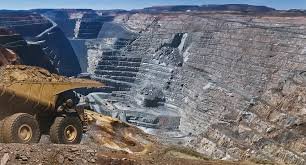
In a strategic push to diversify the global supply of rare earths, French rare earth specialist Carester and Malaysian miner Malaco Mining Group have formalized a cooperation agreement aimed at developing a rare earth separation plant and enhancing Malaysia’s domestic mining capabilities.
Announced on Wednesday by Benjamin Gallezot, adviser on strategic minerals to French President Emmanuel Macron, the partnership underscores growing Western efforts to reduce reliance on China—the world’s dominant producer of rare earth elements (REEs)—for critical inputs in high-tech and clean energy industries.
Rare earths, which include elements such as neodymium, dysprosium, and praseodymium, are essential for the manufacture of permanent magnets, a core component in electric vehicles (EVs), wind turbines, smartphones, and other advanced technologies.
Rare Earth Metals Ban: Why Japan is the Primary Target of China’s New Trade War
Currently, China accounts for approximately 60–70% of global rare earth production and over 85% of rare earth processing and separation capacity, giving it a near-monopoly on both raw materials and refined components. Western nations have increasingly sought alternative sources to mitigate geopolitical risks, particularly amid U.S.-China trade tensions and Europe’s green transition ambitions.
Malaysia holds substantial untapped potential. According to the Malaysian Minerals and Geoscience Department, the country possesses an estimated 16.1 million tonnes of rare earth deposits, primarily concentrated in monazite-rich sands along the east coast.
French company Carester teams up with Malaysian miner Malaco on rare earths project, French government adviser says
However, domestic mining and separation capabilities remain limited, largely due to technological gaps, regulatory constraints, and environmental concerns. The Carester-Malaco deal seeks to bridge this gap through technology transfer and environmental compliance expertise, enabling Malaysia to process REEs domestically and move up the value chain.
The pilot-stage project will focus on a rare earth separation facility, a critical step before metals can be converted into high-purity oxides or alloys suitable for magnets. Analysts estimate that constructing a medium-scale separation plant could require initial capital investment of $150–200 million, including processing equipment, laboratory facilities, and environmental safeguards.
The Malaysia Sovereign Wealth Fund Targets Rare Earth Growth to Stabilize Ringgit
Operational costs are projected at $50–60 million annually, with a production target of 5,000–8,000 tonnes of separated rare earth oxides per year in the initial phase. Given current market prices—neodymium oxide around $90,000 per tonne and praseodymium oxide $75,000 per tonne—the plant could generate annual revenues in the range of $450–600 million, yielding a profit margin of roughly 25–30%, assuming stable market conditions.
The partnership also includes mining collaboration, enabling Malaco to scale extraction while Carester provides processing expertise.
The strategic alignment is designed to supply a variety of international markets, particularly European EV and clean technology manufacturers, as well as potential Japanese partners who have expressed interest. Europe’s dependence on China for permanent magnets is estimated at 100% for neodymium-iron-boron (NdFeB) magnets, so Malaysia’s emerging supply could help alleviate shortages and enhance supply chain security.
From a comparative standpoint, the Carester-Malaco initiative faces a steep challenge in competing with China. Chinese operations benefit from vertical integration, combining extraction, separation, alloy production, and magnet manufacturing in a single domestic network.
This integration, paired with economies of scale, allows China to produce REEs at unit costs up to 40–50% lower than emerging operations in Malaysia or Europe. However, the strategic advantage of the new venture lies not in cost leadership but in supply chain diversification, environmental compliance, and alignment with Western industrial policies—factors increasingly valued by governments and corporate buyers.
The project also reflects Malaysia’s ambitions to attract foreign investment in strategic minerals. By partnering with Carester, the country leverages European expertise to develop sustainable mining practices, reduce environmental impacts, and comply with international standards.
This is particularly important given the ecological sensitivities of rare earth mining, which often involves radioactive by-products such as thorium. Environmental oversight will be a key differentiator for the joint venture, allowing access to markets with strict green procurement policies.
Looking ahead, the Carester-Malaco project aligns with broader geopolitical trends. The G7 and allied countries are actively seeking critical mineral partnerships outside China, fostering multilateral cooperation and supply chain resilience. If successful, Malaysia could become a regional hub for rare earth separation, serving not only Europe and Japan but also potentially South Korea and the U.S. East Asian market.
Expansion possibilities include increasing plant capacity to 20,000 tonnes per year within five years, integrating downstream magnet production, and collaborating with battery and EV manufacturers directly.
In conclusion, while China remains the dominant player in rare earths, the Carester-Malaco deal represents a critical step toward a more diversified and environmentally responsible supply chain. With robust investment, advanced technology transfer, and targeted market outreach, the joint venture has the potential to capture a meaningful share of the global REE market, support the green energy transition, and strengthen strategic autonomy for Western-aligned countries.