


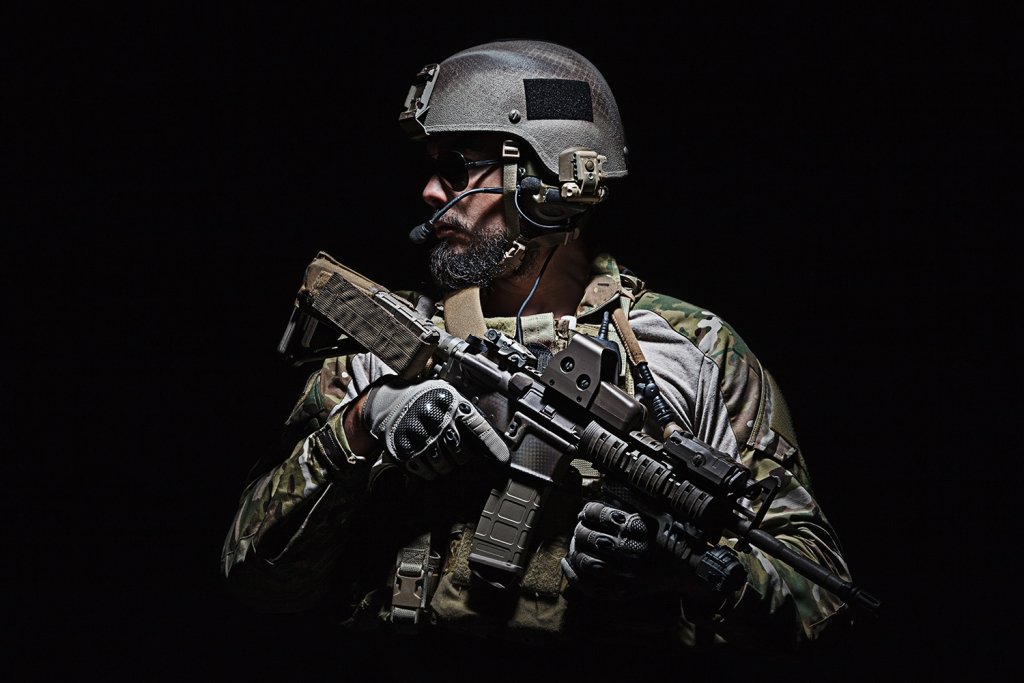
- A New Covert Front: President Trump has authorized the CIA to carry out lethal operations inside Venezuela, escalating Washington’s campaign to unseat Nicolás Maduro.
- Echoes of the Past: The operation mirrors earlier CIA interventions in Iran, Guatemala, Chile, and Cuba — missions that reshaped nations and destabilized regions.
- Legal Contradictions: Under Articles 2(4), 2(7), and 51 of the U.N. Charter, such actions violate international law, as reaffirmed by the 1986 Nicaragua v. United States ruling.
- Global Double Standard: If Russia, China, or Pakistan launched similar covert operations inside the U.S., Washington would brand them acts of war — revealing America’s enduring hypocrisy in international norms.
When President Donald Trump confirmed this week that he had authorized the CIA to “go into Venezuela,” the world witnessed the reawakening of an old American habit: clandestine regime change dressed as national security.
The decision, confirmed by multiple U.S. officials and first reported by The New York Times, effectively hands the CIA license to conduct lethal covert operations inside Venezuelan territory — including paramilitary support, sabotage, and intelligence operations aimed at removing Nicolás Maduro.
For months, Washington has escalated pressure on Caracas. The U.S. Navy has struck vessels off Venezuela’s coast, claiming they carried narcotics bound for American shores.
Now, with “presidential findings” signed and CIA Director John Ratcliffe vowing to make his agency “more aggressive and less risk-averse,” the Trump administration’s intent is unmistakable: to drive Maduro from power by any means necessary.
A History Written in Shadows
Venezuela is not the first Latin American country to be targeted by covert U.S. operations. The CIA’s archives are littered with missions that began as whispers of liberation and ended in decades of instability.
-
Iran, 1953 (Operation Ajax): The CIA and Britain’s MI6 orchestrated a coup to oust Prime Minister Mohammad Mossadegh, restoring the Shah to power. The intervention sowed the seeds of the 1979 Islamic Revolution and decades of U.S.–Iran hostility.
-
Guatemala, 1954 (Operation PBSUCCESS): A U.S.-engineered coup toppled President Jacobo Árbenz, triggering 40 years of civil war that claimed over 200,000 lives.
-
Cuba, 1961 (Bay of Pigs): The CIA-backed invasion aimed to overthrow Fidel Castro but collapsed spectacularly, humiliating Washington and strengthening Havana’s Soviet alliance.
-
Chile, 1973: U.S. funding, propaganda, and covert operations destabilized President Salvador Allende, paving the way for Augusto Pinochet’s dictatorship.
-
Afghanistan, 1980s (Operation Cyclone): Billions in covert funding armed the Mujahideen — a move that bled the Soviet Union but later birthed Al-Qaeda and the Taliban.
Each of these “hidden wars” began with high ideals — democracy, anti-communism, freedom — and ended with regimes more repressive than those they replaced.
READ MORE: Trump Administration Authorizes Covert C.I.A. Action in Venezuela
Trump’s new Venezuela authorization follows that pattern. Officials describe it as a necessary step against “narco-terrorists,” yet the intelligence community itself has rejected claims that Maduro controls the Tren de Aragua prison gang. What remains clear is that the CIA now has a green light to operate with deadly force in a sovereign UN member state — an act that breaches multiple pillars of international law.
A Legal Minefield
Under the United Nations Charter, which the United States helped draft, such actions are explicitly prohibited:
-
Article 2(4) forbids “the threat or use of force against the territorial integrity or political independence of any state.”
-
Article 2(7) bars interference in matters “essentially within the domestic jurisdiction of any state.”
-
Article 51 permits self-defense only “if an armed attack occurs.”
No armed attack by Venezuela against the United States has occurred. Therefore, the CIA’s operation — particularly if it involves lethal strikes, sabotage, or regime-change activities — violates the Charter’s central tenets.
Historically, the International Court of Justice (ICJ) has ruled against similar behavior. In the landmark 1986 Nicaragua v. United States case, the ICJ held that Washington had violated international law by mining Nicaraguan harbors and supporting the Contras. The court ordered reparations and condemned U.S. efforts to overthrow another sovereign government. The legal parallels to Venezuela are glaring.
ALSO READ: Breaking: U.S. Strikes on Iran “Severely Damaged” Nuclear Program, New CIA Assessment Reveals
The U.N. Security Council, where Venezuela intends to raise the issue, could — in theory — impose sanctions or demand cessation under Chapter VII of the Charter. Yet in practice, U.S. veto power renders such accountability impossible. That asymmetry underscores a broader global frustration: international law is binding for the weak, optional for the strong.
The Double Standard
Imagine, for a moment, if Russia, China, or Pakistan authorized their intelligence agencies to conduct lethal covert operations inside the United States — claiming, say, that Washington was harboring dissidents, gang members, or cybercriminals targeting their countries.
The U.S. response would be instantaneous and fierce: emergency sessions at the UN, military readiness alerts, accusations of “acts of war.” Washington would invoke Article 51 to justify retaliation and brand the perpetrators as rogue states.
Yet the same logic that would justify U.S. outrage applies to others today. By authorizing a covert CIA campaign on Venezuelan soil, Trump’s administration risks legitimizing a world where every superpower feels entitled to secretly wage war in another nation’s streets.
A Dangerous Precedent
Trump’s defenders argue that the move strengthens deterrence, projecting power against a hostile regime accused of drug trafficking and human rights abuses. But the broader effect is to blur the line between counterterrorism and conquest. The CIA’s modern charter was never designed for unilateral war-making. Covert operations were meant to serve as tools of last resort, not instruments of regime change.
The moral hazard is immense. Every drone strike, every proxy militia, every clandestine assassination conducted under the banner of “security” further erodes the very international order America claims to uphold. And history offers a brutal warning: when states normalize lawlessness, law ceases to protect anyone.
In 1954, the U.S. justified its Guatemalan coup by claiming to “save the hemisphere from communism.” In 2025, it invokes “narco-terrorism” to justify action in Venezuela. The language changes; the logic does not.
Conclusion
President Trump’s authorization of CIA covert action in Venezuela is not merely a geopolitical maneuver — it is a test of how far a superpower can stretch the law before it snaps. It revives a Cold War playbook long condemned but never retired, and it undermines the credibility of the United States as a guardian of international norms.
If the United States continues to act as though sovereignty and law apply only to others, it may soon find that the very rules it once wrote no longer protect it either. In the end, shadow wars always come home.