


-
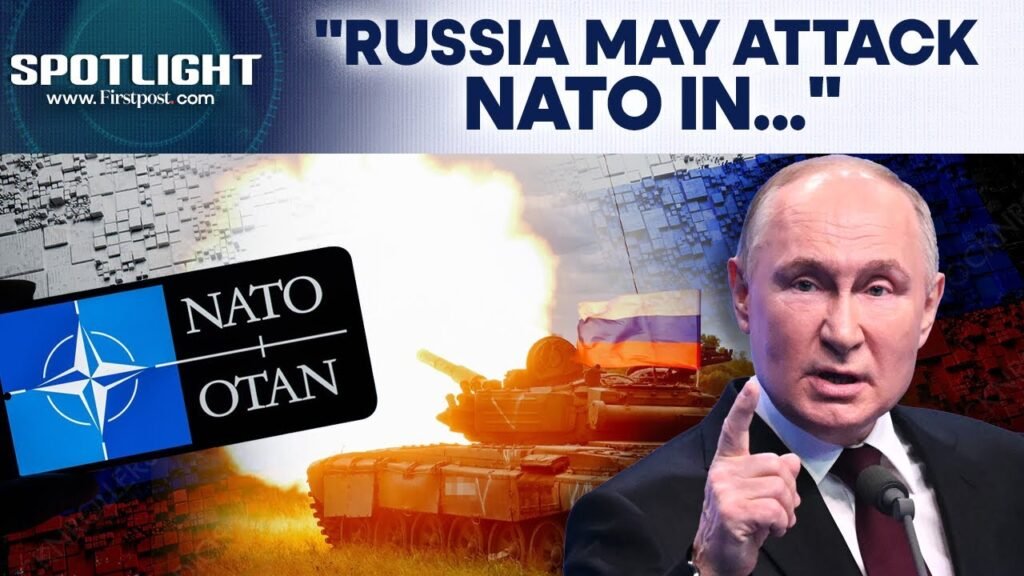
Germany issues a grave Russia NATO attack warning, citing Moscow’s readiness for a limited strike.
-
Sollfrank says Russia retains strong nuclear and air capabilities despite Ukraine losses.
-
Berlin boosts defense spending to €160 billion by 2029 amid renewed military focus.
-
The Russia NATO attack warning highlights fears of hybrid warfare and miscalculation.
Russia NATO Attack Warning. Russia has the operational capacity to launch a limited strike on NATO territory at any moment, according to a grave Russia NATO attack warning issued by one of Germany’s top military leaders.
Lieutenant General Alexander Sollfrank, commander of Germany’s Joint Operations Command, said that while Russia remains heavily engaged in Ukraine, its nuclear, air, and missile capabilities remain largely untouched — giving Moscow the power to launch a Russia NATO attack on short notice.
“If you look at Russia’s current capabilities and combat power, Russia could kick off a small-scale attack against NATO territory as early as tomorrow,” Sollfrank told Reuters during an interview in Berlin.
He described any such move as “small, quick, and regionally limited,” but his assessment marked one of the most serious Russia NATO attack warnings to date from within the alliance.
Ukraine War Escalates as Drone Attacks Hit Russian Nuclear Plant, Fuel Terminal
Rebuilding Military Power
Despite severe battlefield losses in Ukraine, Sollfrank said the Kremlin’s armed forces are being rebuilt with alarming speed. President Vladimir Putin’s target of expanding Russia’s total troop strength to 1.5 million indicates clear preparation for sustained confrontation.
“Russia has enough main battle tanks to make a limited attack conceivable as early as tomorrow,” he said, underscoring the credibility of his Russia NATO attack warning.
Read More: German general says Russia could launch limited attack on NATO any time
Sollfrank noted that while the Black Sea Fleet has been significantly weakened, Russia’s other naval units remain mostly intact. Its air force and nuclear deterrent remain potent and fully operational. “The nuclear and missile forces remain unaffected,” he warned.
Germany Shifts Toward Defense Readiness
Berlin has radically reshaped its defense priorities since the Ukraine war began. Sollfrank now leads Germany’s Joint Operations Command, created in 2024 as a symbol of NATO’s strategic refocus from foreign deployments to territorial defense.
Earlier this year, Germany relaxed its constitutional debt brake to meet NATO’s spending target of 3.5% of GDP by 2029, raising its defense budget from €100 billion in 2025 to €160 billion ($187 billion).
ALSO READ: NATO’s Warning to Russia: Airspace Violations Push Europe to the Edge
The plan also includes expanding the Bundeswehr by 60,000 troops, bringing total personnel strength to about 260,000, the largest since reunification — a move closely tied to growing anxiety over the Russia NATO attack warning echoed across Europe.
Attack in the Realm of the Possible
Sollfrank said the likelihood of a Russia NATO attack depends on three main factors: Moscow’s military capability, its operational record, and the decisions of its leadership.
“These three factors lead me to the conclusion that a Russian attack is in the realm of the possible,” he said. “Whether it will happen or not depends to a large extent on our own behaviour.”
The warning comes amid increasing Russian drone incursions into Polish airspace, signaling Moscow’s readiness to test NATO’s response thresholds. Western intelligence officials have also observed a spike in Russian electronic warfare and reconnaissance activity near the alliance’s borders.
Hybrid Tactics and “Non-Linear Warfare”
Sollfrank characterized Russia’s approach as “non-linear warfare” — a hybrid mix of cyberattacks, espionage, disinformation, and intimidation designed to destabilize opponents before open conflict.
“The Russians call this non-linear warfare. In their doctrine, this is warfare before resorting to conventional weapons,” he explained. “They threaten to use nuclear weapons — which is warfare by intimidation.”
He said Moscow’s intent is to “foster insecurity, spread fear, spy, and test” the alliance’s resilience. These actions, he added, must be understood as precursors to potential aggression — reinforcing the urgency behind Germany’s Russia NATO attack warning.
Western Vigilance Needed
In Washington, Brussels, and other allied capitals, Sollfrank’s Russia NATO attack warning is being treated as both a military assessment and a political message: NATO cannot afford hesitation.
Analysts say his comments align with intelligence estimates suggesting Russia could rebuild enough force for a larger offensive against the alliance by 2029 if its current armament efforts continue.
For now, the risk may be “limited and local,” Sollfrank said — but the potential for miscalculation remains dangerously high.
“Russia’s strategy is to provoke and gauge our response. Deterrence works only if hesitation is not an option,” the general warned.