


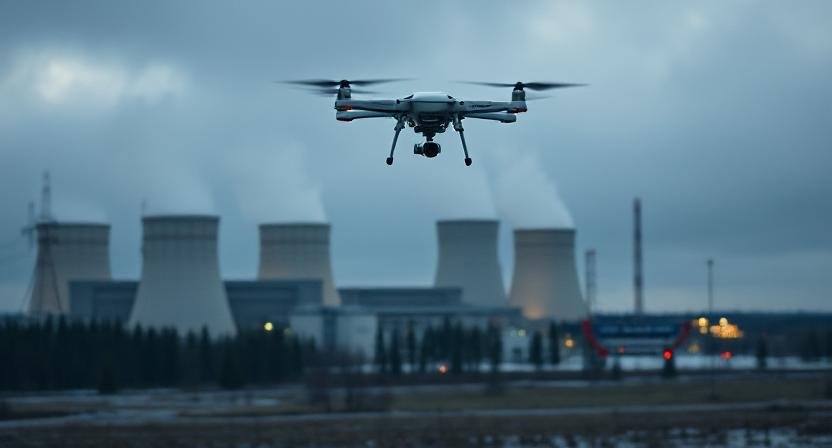
- Ukraine War And Nuclear Scare: Drone strikes force a major Russian nuclear reactor to cut power by 50%, sparking global safety concerns.
- Energy Chaos: Ust-Luga fuel terminal set ablaze after Ukrainian drones hit one of Russia’s biggest export hubs.
- Aviation Disruption: Airports across Russia halt flights as Ukrainian drone attacks spread across multiple regions.
- Endless Escalation: Neither Russia nor Ukraine shows signs of backing down, fueling fears of a long and deadlier conflict.
Ukraine War is just escalating. Hopes for peace in Europe’s deadliest conflict since World War Two grew dimmer on Sunday as Ukraine launched a wave of drone attacks deep inside Russia, striking a nuclear power plant, igniting massive fires at a key fuel export terminal, and disrupting flights across several regions.
The attacks, coinciding with Ukraine’s Independence Day, underscored the war’s relentless escalation despite months of peace overtures from both Moscow and Kyiv. Fighting along the 2,000-kilometer (1,250-mile) front line has intensified, while missile and drone strikes now reach far beyond the battlefield into the heart of both countries.
Russia’s Defense Ministry said its air defenses intercepted at least 95 Ukrainian drones across more than a dozen regions on August 24. Among the most serious incidents was at the Kursk nuclear power plant, just 60 kilometers from the Ukrainian border, where a drone detonated near the facility shortly after midnight.
Trump Pushes for Putin-Zelensky Meeting as He Prepares to Announce Ukraine Deal
The blast damaged an auxiliary transformer and forced reactor No. 3 to halve its power output, plant officials said. Radiation levels remained normal, and no casualties were reported. Three other reactors at the facility were offline, two due to repairs and one not producing power.
The International Atomic Energy Agency said it was “aware of reports” of the fire at the plant and reiterated its call for nuclear facilities to be protected at all times.
READ MORE: Peace Talks in Ukraine All Lead to the Donbas
A thousand kilometers north, on the Gulf of Finland, at least 10 Ukrainian drones struck near the Ust-Luga fuel export terminal in Russia’s Leningrad region, sparking a massive blaze at the Novatek-operated facility, one of Russia’s largest energy hubs.
Unverified footage on Russian Telegram channels showed a drone flying straight into the terminal, followed by a giant fireball lighting up the night sky and a towering column of black smoke drifting across the horizon.
“Firefighters and emergency services are currently working to extinguish the blaze,” regional governor Alexander Drozdenko said, confirming there were no injuries.
The Ust-Luga complex, opened in 2013, processes gas condensate into jet fuel, naphtha, and other products for export, with Asia and Turkey among its key markets.
ALSO READ: Russia’s Dismissal of Putin-Zelensky Summit Undermines U.S. Diplomacy
Russia’s civil aviation authority, Rosaviatsia, confirmed several airports, including Pulkovo in Leningrad, suspended flights overnight due to the drone threat.
Elsewhere, Ukrainian drones attacked an industrial site in Syzran in southern Russia, injuring a child, according to local officials. Earlier this month, Kyiv struck the Rosneft-owned Syzran oil refinery, forcing it to suspend crude processing, sources told Reuters.
Kyiv has not officially commented on the latest attacks but has repeatedly said its strikes inside Russia are aimed at crippling Moscow’s military infrastructure in response to continued Russian missile and drone barrages on Ukrainian cities.
With neither side signaling willingness to back down, Sunday’s attacks reinforced fears that Europe’s largest conflict in decades is far from ending — and may yet grow deadlier.