


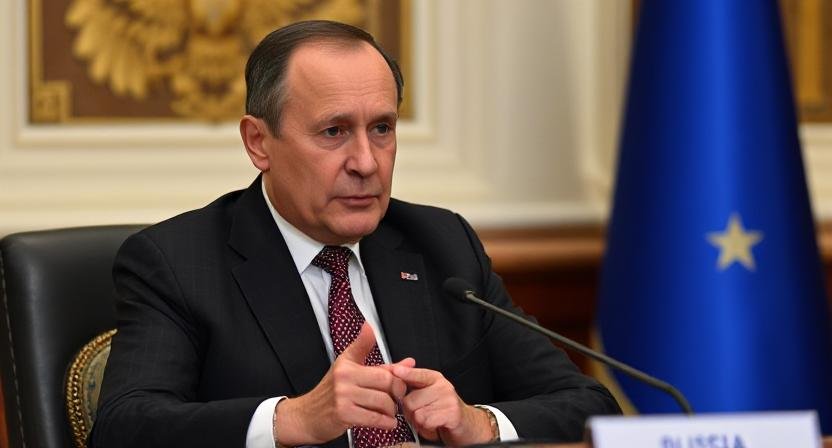
- Moscow Rejects Summit: Russian FM Lavrov says no Putin-Zelensky meeting is planned as agenda remains unresolved.
- Washington Disappointed: Statement undermines Trump administration’s efforts to broker direct peace talks.
- Trump Reveals Details: U.S. president shares outcome of his Alaska meeting with Putin and European leaders.
- Ukraine War Continues: Fighting intensifies as Moscow demands major concessions before agreeing to any talks.
Russia on Friday dealt a major blow to hopes for a diplomatic breakthrough in the Ukraine war, with Foreign Minister Sergey V. Lavrov bluntly declaring that no meeting was planned between President Vladimir V. Putin and Ukrainian President Volodymyr Zelensky. Speaking on NBC’s Meet the Press with Kristen Welker, Lavrov said Putin was open to a summit “only when the agenda would be ready,” adding, “And this agenda is not ready at all.”
It was Moscow’s clearest statement yet that efforts to arrange direct talks between the warring leaders remain stalled. While U.S. officials had hinted that a breakthrough was imminent, Lavrov’s remarks signaled that the Kremlin sees no point in talks unless its conditions are met—conditions Ukraine has repeatedly rejected as unacceptable.
Rubio’s Balancing Act: Security Guarantees and the Endgame for Peace in Ukraine
The announcement was a direct setback for Washington’s latest diplomatic push. The White House had claimed earlier this week that Putin had agreed to President Donald Trump’s proposal for a one-on-one meeting with Zelensky. Trump has made brokering peace in Ukraine a centerpiece of his foreign policy agenda, hoping to achieve what his predecessors could not: an end to the largest conflict in Europe since World War II.
But the Kremlin never confirmed any such agreement. Trump himself sounded noticeably less hopeful on Friday, telling reporters in Washington that Putin and Zelensky are like “oil and vinegar” and that “they don’t get along too well.” The change in tone reflected growing doubts in Washington about whether Moscow ever intended to follow through on U.S. proposals for a summit.
READ MORE: ‘No Meeting Planned’ Between Putin and Zelensky, Top Russian Diplomat Says
In his comments to reporters, Trump offered new details about his recent meeting with Putin in Alaska, describing it as “productive but complicated.” He said both leaders discussed a possible framework for talks with Zelensky but that Putin raised “very specific concerns” about the agenda and terms of any summit. According to Trump, Moscow wanted extensive preparation before agreeing to face-to-face negotiations, a position the U.S. hoped to soften through further diplomatic engagement.
The Trump administration had also coordinated closely with European allies in recent weeks, seeking to align Western pressure on Moscow. Several European leaders privately urged Trump to keep diplomatic channels open with Russia despite deep divisions over sanctions, military aid to Ukraine, and NATO’s posture in Eastern Europe. But Lavrov’s statement now raises questions about whether those efforts can succeed amid Moscow’s apparent reluctance.
ALSO READ: Trump’s Historic Deal-Making Brings Europe to Heel: How His Style, Strategy, and Summitry Changed the Course of the Ukraine War
Meanwhile, the war in Ukraine grinds on with no sign of de-escalation. Russian forces continue to hold large portions of the Donbas region, and Kyiv insists it will not accept any peace deal that legitimizes territorial losses. Western intelligence officials say Moscow is betting on “war fatigue” in Europe and the U.S., hoping political divisions will eventually weaken support for Ukraine.
Trump’s meeting with Putin in Alaska earlier this month was his first direct encounter with the Russian leader since returning to the White House. U.S. officials had portrayed it as a potential turning point, especially after subsequent talks between Trump and several European leaders on a united Western strategy for Ukraine. But the Kremlin’s insistence on preconditions—including Ukrainian neutrality, limits on Western weapons, and recognition of Russian control over occupied territories—has left negotiations at a standstill.
For now, Washington faces a familiar dilemma: how to keep diplomatic momentum alive when Moscow appears unwilling to compromise and Kyiv refuses to yield on sovereignty. Analysts warn that unless both sides move closer to common ground, the war risks sliding into a prolonged stalemate with devastating consequences for Ukraine and growing instability across Europe.