


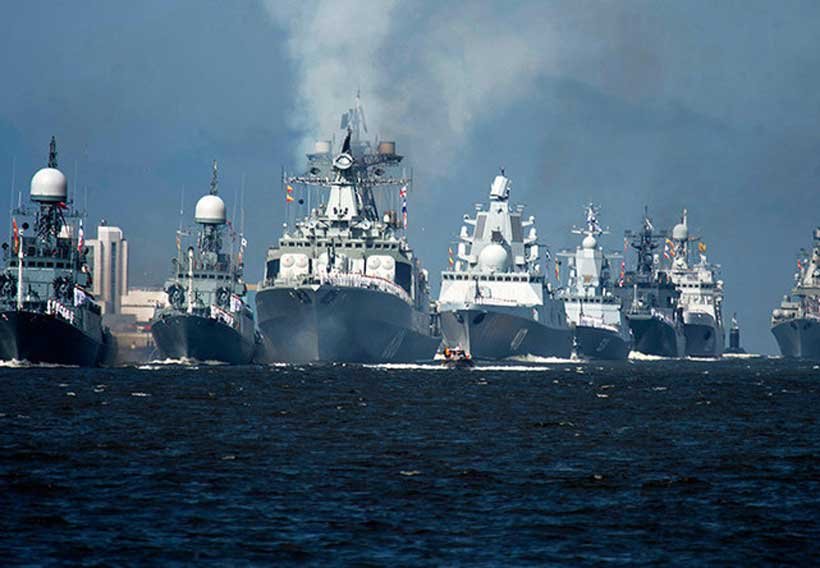
In a war-scarred nation struggling to hold its capital and its legitimacy, Sudan’s military rulers have made a stunning geopolitical offer: a 25-year deal granting Russia its first-ever naval base in Africa, positioned along one of the world’s most sensitive maritime arteries.
The proposal—seen by Sudanese and Russian officials—lays out a sweeping arrangement that would give Moscow the right to station 300 troops, dock four warships (including nuclear-powered vessels), and secure priority access to Sudan’s lucrative gold-mining concessions.
If signed, Sudan would become Russia’s most strategically valuable partner on the continent, and the Red Sea—a corridor carrying up to 12% of global trade—would transform into the newest arena of U.S.–Russia confrontation.
“U.S. Afghan Immigration Crisis: Washington Shooting Triggers Sweeping Trump-Era Crackdown”
This is not simply an agreement between two states. It is the collision point of global ambitions, local warlordism, and the slow-burning proxy battles reshaping Africa.
A Desperate Regime, a Determined Russia
Sudan today is governed by a military leadership battered by civil war, economic collapse, and international isolation. General Abdel Fattah al-Burhan’s regime is fighting for survival against the Rapid Support Forces (RSF), who have seized Darfur, committed mass atrocities, and are threatening to encircle Port Sudan itself. With Western pressure rising and weapons supplies dwindling, Khartoum is turning to the one power that consistently trades arms for loyalty: Russia.
The deal gives Moscow everything it has long wanted. For more than five years, the Kremlin has sought permanent access to Port Sudan, a natural deep-water inlet overlooking the Suez Canal route. Russia’s naval ambitions have always been constrained by the lack of friendly warm-water ports. A base in Libya was explored but stalled. A base in Eritrea was considered but abandoned. Sudan is the breakthrough Moscow desperately needed.
READ MORE: Ukraine War Peace Talks And Fragile Breakthrough: How Trump’s Envoys Are Pushing Ukraine and Russia Toward an Unprecedented Peace Deal
A naval foothold on the Red Sea would allow Russian destroyers, submarines, and intelligence vessels to operate in both the Mediterranean and Indian Ocean with unprecedented ease. It would also give Vladimir Putin leverage over maritime chokepoints vital for NATO supply routes, Gulf oil flows, and Europe–Asia commerce.
In short, Sudan is offering Moscow not just a port—but power.
Russia–Sudan History: From Gold to Guns
Their relationship is not new. For decades, Moscow has cultivated ties with Sudanese leaders through intelligence exchanges, arms sales, and, more controversially, the Wagner Group’s gold-smuggling operations.
- Trade Volume: Before Sudan’s war broke out in 2023, bilateral trade hovered around $500 million, with Russian exports—mainly wheat, machinery, and weapons—dominating the trade balance.
- Defense Ties: Since the late 1990s, Russia has been Sudan’s principal supplier of fighter jets, missile systems, and armored vehicles.
- Wagner’s Footprint: Wagner mercenaries secured gold concessions in Sudan, helping finance the Kremlin’s military campaigns elsewhere, particularly in Ukraine.
After Wagner’s collapse following Yevgeny Prigozhin’s dramatic rebellion and death, Moscow feared losing its African network. The Sudan conflict, however, offered the Kremlin a chance to re-enter the region through official military channels—without relying on private proxies.
Russia–Sudan Naval Base: Why Sudan Needs Russia Now
Sudan’s leadership believes partnering with Russia offers three crucial advantages:
- Weapons: Modern Russian air-defense systems and drones could tilt the battlefield away from the RSF.
- Diplomatic Cover: With Washington threatening sanctions and tightening its scrutiny, Khartoum sees Moscow as a reliable counterweight.
- Economic Lifeline: Mining deals and Russian investment could prop up Sudan’s collapsing economy.
But this alliance comes with high costs. Sudan risks alienating the U.S., EU, and Gulf states—its most critical economic donors. And it risks transforming the Red Sea conflict into a multipolar battleground involving Russia, Iran, Turkey, UAE, Egypt, and possibly China.
ALSO READ: Sudan Offers Russia Its First Naval Base in Africa
What Russia Wants With a Red Sea Naval Base
If Russia accepts Sudan’s offer—and all signs suggest it will—it will gain:
- A strategic hub to resupply and refit warships between the Mediterranean and Indian Ocean
- Intelligence capabilities to monitor U.S. operations in Djibouti and Somalia
- Leverage over Suez Canal traffic, giving Moscow a pressure point over both Europe and the Gulf
- A staging ground for naval deployments to Africa, Middle East, and the Indo-Pacific
- Influence over Red Sea security, including chokepoints like Bab el-Mandeb
This would be Russia’s most significant global military expansion since Syria.
How Washington Sees It: A Dangerous, Alarming Precedent
The reaction in Washington is predictably urgent. A senior U.S. official warned that a Russian base in Sudan would “expand Moscow’s ability to project power and operate with impunity.” The Pentagon worries that Russia might use Port Sudan the same way it uses Tartus in Syria: as a military launcher for influence and coercion.
For the U.S., the Red Sea is already a crowded theater:
- China’s naval base in Djibouti sits just miles from Camp Lemonnier, the largest U.S. base in Africa.
- Iran’s covert maritime presence threatens shipping lanes.
- Turkey, UAE, and Qatar are racing to control ports from Somalia to Eritrea.
A Russian naval base in Sudan would bring Moscow into the heart of this strategic ecosystem—an outcome Washington has long sought to prevent.
The risk is not just military. It’s economic. Any foreign power capable of disrupting Red Sea shipping indirectly gains leverage over global oil prices, trade routes, and supply chains. With the Houthis already attacking vessels near Yemen, another destabilizing force could trigger global shockwaves.
A Continent at War—And Becoming a Chessboard Again
Sudan’s civil war is now the deadliest conflict of the 21st century after Syria: 150,000 people dead, 12 million displaced, and entire regions burned to ash. Yet major powers see opportunity where civilians see ruin.
- Iran wants influence through drone sales.
- UAE faces accusations (which it denies) of backing the RSF.
- Egypt supports Khartoum’s military.
- Turkey seeks arms deals and port access.
- Russia wants strategic dominance and mining rights.
- The U.S. wants to prevent the Red Sea from turning into a Russian–Chinese sphere of control.
Sudan has become a global chessboard—and every move is dangerous.
Is Sudan Becoming a Russian Ally?
Not formally. Not yet. But practically? Yes.
A military government trading strategic territory for weapons and political survival resembles an emerging client state, not a sovereign partner.
If the deal is finalized:
- Sudan becomes Russia’s first anchor state in Africa.
- Russia gains strategic depth near the Middle East.
- The U.S. faces a new challenge along a vital maritime corridor.
- Africa becomes the next major frontier in great-power rivalry.
Sudan may believe it is securing its future. In reality, it is giving Moscow a permanent window into the Red Sea—and potentially turning itself into the next battleground of global competition.
The world should pay attention. Because the Red Sea is not just Sudan’s lifeline—it is the world’s.