


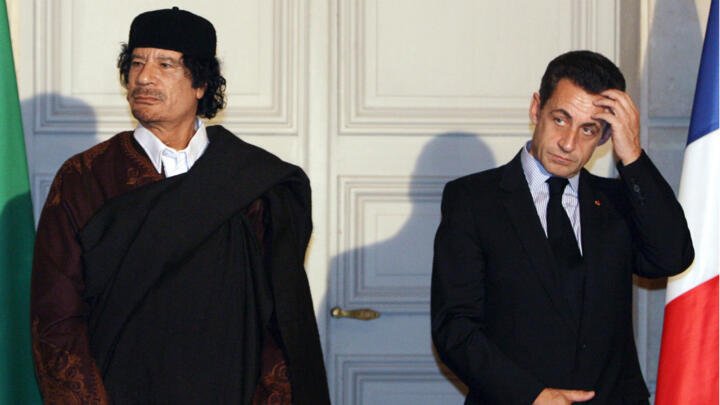
- Sarkozy sentenced to five years for criminal conspiracy tied to Libyan funds.
- Court calls it “corruption at the highest possible level,” eroding public trust.
- Verdict exposes European democracies’ vulnerability to foreign influence.
- Sarkozy’s fall deepens crisis on the French right and reshapes political debate.
The spectacle of a former French president being handed a prison sentence for criminal conspiracy is not just a personal tragedy for Nicolas Sarkozy. It is a seismic moment in French politics and a sobering reminder of how the pursuit of power can corrode the very institutions meant to safeguard democracy. On Thursday, a Paris court found Sarkozy guilty of conspiring to finance his 2007 presidential campaign with illicit funds allegedly originating from the regime of Col. Muammar el-Qaddafi. The sentence — five years in prison and a €100,000 fine — is unprecedented in the annals of France’s modern political history.
For Sarkozy, the judgment is devastating. Once the face of a confident, modern France, he now joins Jacques Chirac as the only French heads of state convicted of crimes. But unlike Chirac’s suspended sentence for misusing public funds, Sarkozy faces actual incarceration. Even as he appeals, the court’s decision sends a clear message: no one, not even a former president, is above the law.
The Case Against Sarkozy
At its core, the trial revolved around allegations that Sarkozy’s 2007 campaign was secretly bankrolled by Libyan funds. Prosecutors argued that the scheme involved covert transfers through banks, offshore accounts, and intermediaries — with Libya expecting diplomatic and economic favors in return. Sarkozy’s aides were accused of making repeated trips to Tripoli, seeking both cash and political leverage.
Shackled Without Chains: The Heartbreaking Ordeal of a Disabled Canadian Stranded in Dubai
Presiding judge Nathalie Gavarino minced no words when she declared that Sarkozy’s conduct amounted to preparing “corruption at the highest possible level.” She emphasized the corrosive effect such dealings have on public trust, saying they were “extremely serious” acts that risk undermining faith in France’s democratic institutions.
READ MORE: Former French President Sarkozy handed 5-year jail term in stunning downfall
Yet the court also acquitted Sarkozy on charges of corruption and illegal financing, citing insufficient evidence that Libyan cash directly entered his campaign coffers. This nuance is crucial: while prosecutors could not prove the money trail conclusively, French law allows for a conviction if a conspiracy to corrupt is established. The ruling thus hinges less on proven delivery of funds than on the proven intent to conspire with a foreign autocrat.
A Tarnished Legacy
Sarkozy, 70, remains defiant, repeating that he is the victim of political revenge and false testimony from Libyan officials angered by his role in Qaddafi’s downfall during the 2011 NATO intervention. His legal woes, however, stretch beyond this case. Since leaving office, he has been convicted of influence peddling, corruption, and violating campaign spending limits. He has been stripped of the prestigious Legion of Honor — once the pinnacle of French recognition.
ALSO READ: No More Blank Checks: America Won’t Bleed for Ukraine
Taken together, these verdicts paint a picture of a leader who blurred the lines between public duty and private ambition. Sarkozy rose to power as the embodiment of a dynamic France, but his post-presidency has been marked by courtroom appearances and revelations of backroom dealings.
The Global Angle: Europe’s Fight Against Corruption
Beyond Sarkozy’s personal downfall, the ruling raises broader questions about the vulnerability of Western democracies to foreign influence. France’s laws prohibit campaign financing from foreign governments precisely to shield its political system from external manipulation. If even the possibility of Libyan money influencing a French election exists, it underscores how authoritarian regimes exploit financial networks to penetrate Western politics.
Europe has not been immune to such risks. Italy, Britain, and even EU institutions have faced scandals involving foreign money and lobbying. In that context, France’s judiciary has demonstrated unusual resolve by holding a former head of state accountable. The conviction may strengthen European calls for stricter oversight of campaign financing, cross-border money laundering, and political lobbying.
The Sarkozy-Qaddafi Paradox
There is also irony — some might say tragedy — in the Sarkozy-Qaddafi connection. As interior minister and later president, Sarkozy sought to rehabilitate Libya’s international image, hosting Qaddafi in Paris with great pomp in 2007. Four years later, Sarkozy was among the strongest advocates for NATO’s intervention against the same Libyan regime. Today, it is Qaddafi’s shadow — through financial allegations and testimony from Libyan intermediaries — that has helped bring Sarkozy low.
This paradox illustrates the enduring dangers of realpolitik, where short-term alliances with dictatorships for diplomatic or economic gain often come back to haunt democratic leaders. Sarkozy’s case serves as a warning that such deals rarely remain buried.
The Political Fallout in France
Domestically, the conviction is bound to reverberate across France’s fractured political landscape. The right-wing Les Républicains party, already weakened by the rise of Marine Le Pen’s far-right National Rally and Emmanuel Macron’s centrist coalition, loses one of its most charismatic figures. Sarkozy’s lingering influence had provided a degree of cohesion within the conservative camp. His fall may deepen the crisis of leadership on the French right.
For Macron, the ruling is a double-edged sword. It affirms judicial independence and strengthens France’s credibility as a nation where justice applies equally. Yet it also feeds public cynicism about political elites, a sentiment already driving populist anger in France. The conviction of yet another president risks reinforcing the notion that French politics is a closed circle of corruption and privilege.
Why This Matters
The Sarkozy verdict matters not only because it punishes one man but because it reflects the fragility of democratic institutions under the weight of money, influence, and ambition. It is a reminder that corruption at the top does not happen in a vacuum — it weakens public faith, erodes legitimacy, and gives fuel to extremists who thrive on disillusionment.
Sarkozy will appeal, and his defenders argue that the evidence remains circumstantial. But the symbolism of the verdict is undeniable: in the heart of Europe, a democracy has shown that even its most powerful are answerable to the law.
In the end, Sarkozy’s conviction may be less about one man’s sins than about France’s attempt to draw a line in the sand. The message is simple but profound: democracy cannot afford to tolerate conspiracies that barter sovereignty for power.