


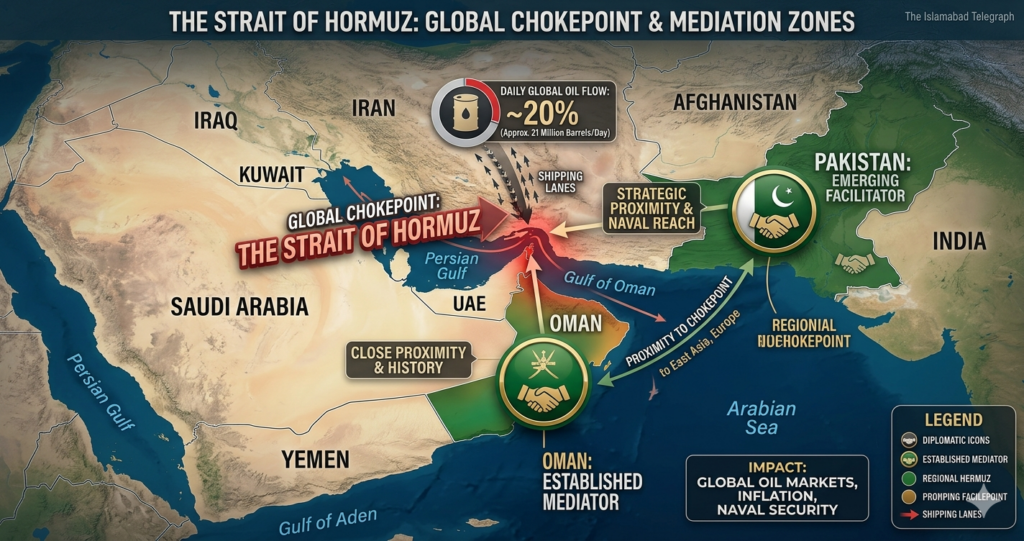
- The “Strait of Hormuz Hormuz for Assets” Swap: Tehran’s new proposal pivots away from nuclear deadlock, offering to immediately restore global oil flow through the Strait of Hormuz in exchange for unfreezing Iranian funds and lifting export sanctions.
- Islamabad as the New Geneva: Pakistan has solidified its role as the primary diplomatic bridge, with the “Islamabad Process” becoming the venue where critical intelligence and peace frameworks are being exchanged between Washington and Tehran.
- Trump’s “Secure Line” Strategy: Despite canceling high-level envoy visits to Islamabad, President Trump is signaling a preference for direct, high-stakes communication, maintaining “maximum strength” while keeping the door open for a final-hour deal.
- The Moscow Contingency: Iranian leadership is simultaneously courting Kremlin support, framing their diplomatic efforts as a “jihad” against Western unilateralism—a move that pressures the U.S. to choose between a mediated peace or a more entrenched Iran-Russia axis.
Washington / ISLAMABAD — In a dramatic shift that has sent shockwaves through global energy markets and diplomatic circles, Iran has reportedly submitted a comprehensive proposal to the United States aimed at reopening the Strait of Hormuz and terminating the two-month-old war. The development, first signaled by veteran Islamabad-based journalist Kaswar Klasra during a live broadcast on Alghad News, was later corroborated by reports from Axios, marking a potential turning point in a conflict that has brought the world to the brink of economic collapse.
The proposal, delivered through Pakistani mediators, suggests a strategic decoupling of maritime security and the nuclear issue—a move that could either fast-track a ceasefire or harden the resolve of a skeptical White House.
The Breakthrough: The “Islamabad Channel”
According to high-level sources, the breakthrough occurred during intense shuttle diplomacy in the Pakistani capital.
Inside the Trump Assassination Attempt That Turned a White House Gala Into Chaos
Iranian Foreign Minister Abbas Araqchi reportedly presented the proposal during a pivotal meeting with Pakistan’s Chief of Defense Forces, Field Marshal Asim Munir.
The terms of the Iranian offer are clear but ambitious:
-
Maritime De-escalation: Iran pledges to immediately reopen the Strait of Hormuz, restoring the flow of 20% of the world’s oil supply.
-
Economic Reciprocity: In exchange, Washington must unfreeze billions in Iranian assets and lift sanctions on Tehran’s oil exports and missile program.
-
Nuclear Postponement: Crucially, the proposal seeks to set aside the contentious nuclear file for a “later stage,” maintaining that Tehran’s program remains strictly civilian.
While the proposal offers a light at the end of the tunnel for global shipping, President Donald Trump has expressed public hesitation. Speaking on Fox News’ “The Sunday Briefing,” Trump signaled a willingness to talk but maintained his “maximum pressure” rhetoric.
Iran offers U.S. deal to reopen strait but postpone nuclear talks
“If they want to talk, they can call us. We have nice, secure lines,” Trump stated, while reiterating his red line: “They cannot have a nuclear weapon.”
A War of Blockades and Brinkmanship
The conflict, which ignited on February 28 following U.S.-Israeli strikes on Iranian targets, has devolved into a grinding war of attrition. While a fragile ceasefire has paused large-scale kinetic operations, the economic war has only intensified.
-
The Chokepoint: Tehran’s closure of the Strait of Hormuz has crippled global supply chains, sending oil prices soaring and fueling inflation across Asia and Europe.
-
The Blockade: In retaliation, the U.S. has maintained a strict blockade of Iranian ports, seeking to starve the Islamic Republic of the revenue needed to sustain its military operations.
-
The Failed Visit: Peace efforts took a hit over the weekend when Trump abruptly cancelled a visit to Islamabad by envoys Steve Witkoff and Jared Kushner, claiming the Iranian offer was “not enough.”
The diplomatic vacuum left by the cancelled U.S. visit was quickly filled by Russia. Foreign Minister Araqchi flew to Moscow on Monday to meet with President Vladimir Putin, with Iranian officials describing the trip as a “diplomatic jihad” to secure a united front against “Western unilateralism.”
Trump Cancels Witkoff–Kushner Delegation as U.S.–Iran Diplomatic Track Recalibrates
Forecasting: Three Paths Forward
As the “Islamabad Process” enters a make-or-break phase, analysts suggest the following trajectories for the coming weeks:
1. The “Step-by-Step” De-escalation
If the White House views the reopening of the Strait as a sufficient “win” for the global economy, we may see a limited agreement. This would involve a partial lifting of oil sanctions in exchange for guaranteed safe passage for tankers. This “low-hanging fruit” approach avoids the nuclear deadlock while providing immediate relief to global markets.
2. Continued Stalemate and Escalation
The postponement of nuclear talks is a double-edged sword. For the Trump administration, any deal that ignores the nuclear program may be seen as a “sell-out” by domestic hawks. If Washington refuses the deal, Iran may move from a defensive blockade to more aggressive maritime “shaping operations,” potentially drawing in regional powers like Oman and Saudi Arabia.
3. The Pivot to the East
Araqchi’s visit to Russia suggests that Tehran is building a “Plan B.” If U.S. talks fail, Iran may deepen its integration into an alternative economic bloc with Moscow and Beijing, utilizing non-dollar trade routes to bypass the U.S. blockade entirely. This would solidify a multi-polar regional order where U.S. influence is permanently diminished.
Iran US Talks Islamabad: Iranian Foreign Minister Arrives Tonight as High-Stakes Negotiations with U.S. Set for Breakthrough
The Global Impact
The stakes could not be higher. For mediators in Islamabad, the goal is to prevent a regional conflagration that would devastate the Pakistani economy. For the world, the focus remains on the “telephone” Trump mentioned.
Whether the next call comes from Tehran to Washington, or via the secure lines of the Pakistani military headquarters, the world waits with bated breath. As of Monday, oil prices remain volatile and stock futures continue to wobble—a stark reminder that in the modern age, a closed strait in the Middle East means a cold winter for the rest of the globe.