


-
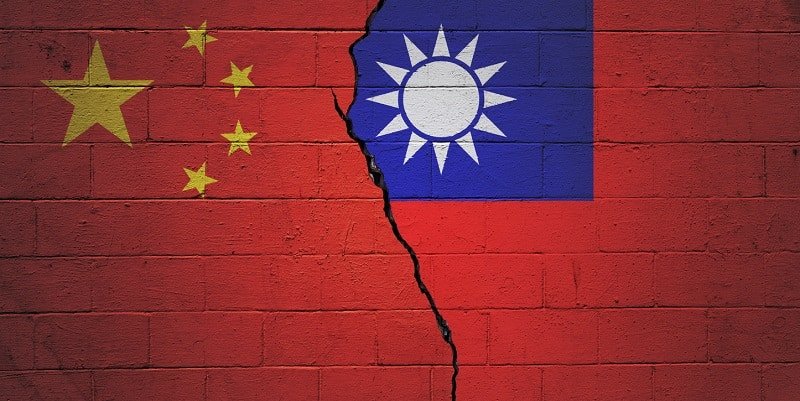
Taiwan Challenging China: Taiwan’s leaders reject Beijing’s “one country, two systems” policy, citing Hong Kong’s lost freedoms as a cautionary tale.
-
Economic Independence: With TSMC producing over 60% of global advanced semiconductors, Taiwan wields massive economic leverage against China.
-
Military Preparedness: Taipei’s record $19 billion defense budget and modernized weapons reflect growing readiness for potential conflict.
-
Global Symbolism: Taiwan’s democracy, media freedom, and progressive values stand as a direct ideological challenge to China’s authoritarian model.
Is Taiwan Challenging China? Taipei’s skyline glows with a defiant brilliance at night — not merely from neon towers or digital billboards, but from an unspoken sense of resilience. The island of 23 million people stands at the crossroads of history, facing a power that considers its very existence an affront. Taiwan is not only challenging China militarily and politically, but also ideologically, economically, and technologically.
On Saturday, Taiwan’s new opposition leader, Cheng Li-wun, took office as head of the Kuomintang (KMT) — a party that once ruled all of China before retreating to the island in 1949. Her maiden speech was strikingly cautious yet deeply revealing: “This is the worst of times. The Taiwan Strait faces grave military danger, and the world is watching closely.”
Her warning about the “risk of war” came with a pledge to “open a new era of peace with Beijing.” But her words reflected the paradox at the heart of Taiwan’s politics — a simultaneous desire for peace and an unwillingness to yield sovereignty.
Taiwan’s Refusal of Beijing’s Formula
Beijing’s “one country, two systems” model — once sold to Hong Kong as a framework for harmony — has collapsed under the weight of China’s authoritarianism. Taiwan’s leaders, particularly from the ruling Democratic Progressive Party (DPP), have made it clear that such a formula is unacceptable.
China’s Youth Back Taiwan Policy—and Are Ready for Unification, Peaceful or Not
President Lai Ching-te has called the concept “a poisoned promise,” pointing to Hong Kong’s dismantled democracy as evidence. His government’s stance reflects widespread sentiment: according to a 2024 National Chengchi University poll, nearly 90% of Taiwanese oppose “one country, two systems.”
Cheng Li-wun, despite leading a party more sympathetic to Beijing, has not endorsed that model either. While she favors dialogue with China, her call for “peace” suggests a pragmatic understanding that Taiwanese identity is no longer negotiable.
China’s Reaction: Strategic Patience, Tactical Pressure
China’s response to Cheng’s election was swift and symbolic. President Xi Jinping sent congratulatory remarks calling for “efforts to advance reunification.” Yet behind the polite language lies Beijing’s frustration with Taiwan’s growing confidence.
READ MORE: Trump’s Geopolitical Gauntlet: Navigating Challenges from Ukraine to Taiwan in 50 Days
For decades, China believed economic integration would eventually bring the island into its orbit. But instead, Taiwan has grown more self-reliant — boosting its defense budget, expanding semiconductor exports, and deepening ties with the United States, Japan, and Europe.
In 2024 alone, China conducted 1,709 air sorties and 276 naval patrols around Taiwan’s air defense zone, according to Taipei’s Ministry of Defense. These maneuvers serve both as intimidation and propaganda — a message that Beijing’s patience is not infinite.
But the harder China presses, the more Taiwan pushes back — not just militarily, but through a sense of democratic pride.
The Political Divide Inside Taiwan
The DPP and KMT represent two visions of Taiwan’s future. President Lai’s DPP insists on defending sovereignty and boosting defense spending — with strong U.S. backing. Cheng’s KMT, by contrast, emphasizes reducing tensions and resuming dialogue with Beijing.
ALSO READ: High-Stakes Showdown: U.S. and Canada’s Taiwan Strait Passage Sparks China’s Fury
Still, Cheng’s rise marks an interesting shift. While she supports peace, she cannot ignore the political reality: Taiwanese voters no longer see reunification as desirable. The memory of Hong Kong’s suppression has sealed that sentiment.
RELATED: Why Do Many Taiwanese Resist Unification with the People’s Republic of China?: An Overview of Explanations
Her warning of “grave military danger” was, in essence, a critique of both sides — Beijing’s aggression and the DPP’s militarization. Yet her refusal to endorse Beijing’s model makes her statement even more powerful: it shows that even China-friendly politicians can no longer afford to echo Beijing’s rhetoric uncritically.
Taiwan’s Challenge Beyond Politics
Taiwan challenges China on multiple fronts. Economically, it is a linchpin of global technology. The Taiwan Semiconductor Manufacturing Company (TSMC) alone produces over 60% of the world’s advanced chips, making the island indispensable to the global economy — and to China’s own tech ambitions.
Culturally, Taiwan’s democracy, media freedom, and LGBTQ+ rights stand in stark contrast to the censorship and authoritarianism of the mainland. This ideological gulf widens with each passing year.
Militarily, Taiwan’s modernization drive — including F-16V fighter jets, HIMARS rocket systems, and indigenous submarines — has made it far more prepared for a Chinese blockade or invasion than it was a decade ago. The island’s defense budget for 2025, set at NT$606.8 billion ($19 billion), marks a record high.
Beijing’s Dilemma
For Beijing, Taiwan’s defiance represents a national humiliation. Xi Jinping has tied his personal legacy to “national rejuvenation,” with reunification as its crown jewel. But the more Taiwan asserts itself, the more reunification seems distant.
China could escalate military pressure, but an invasion remains risky — politically, economically, and militarily. The U.S. and Japan have both signaled they would not remain passive in such a scenario. Moreover, China’s slowing economy and domestic challenges make a full-scale conflict undesirable.
Yet the war of narratives continues. Beijing insists that “reunification is inevitable,” while Taipei argues that “freedom is non-negotiable.” Between these two absolutes lies the perilous middle ground that Cheng Li-wun now seeks to navigate.
The Broader Message
Taiwan’s defiance is not just a regional issue — it’s a test of whether democracy can survive next to a rising autocracy. As Cheng assumes leadership of a party historically linked to China, her warning of war carries an unspoken plea: peace cannot come through submission.
Beijing, meanwhile, views Taiwan’s statements as provocations and continues its campaign of military intimidation and diplomatic isolation. The more the world engages with Taipei, the more China feels cornered — and dangerous.
In this standoff, Taiwan’s challenge to China is not only strategic but moral. It asserts that sovereignty cannot be traded for peace and that democracy, however fragile, can stand firm against coercion.
As the island braces for what Cheng called “the worst of times,” Taiwan’s message to the world remains steadfast: freedom is worth the risk.