


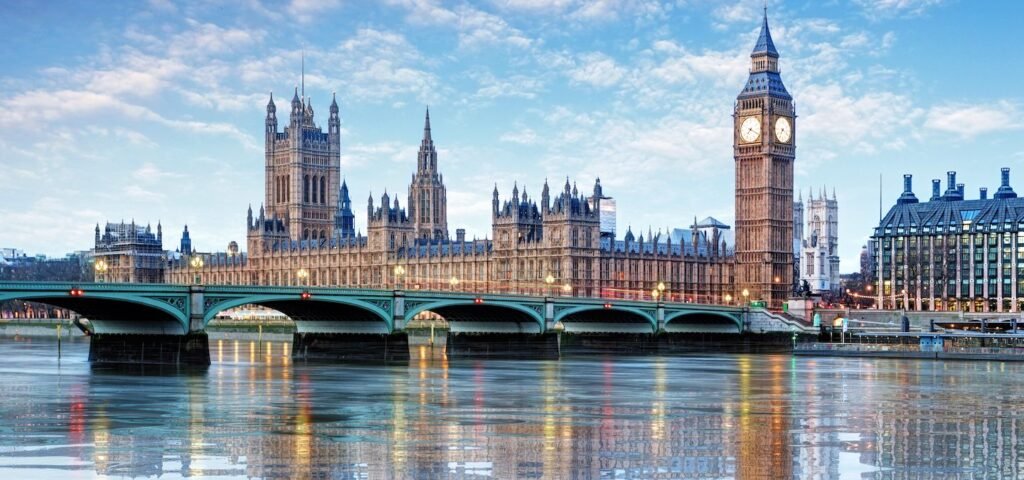
- The UK’s Celtic Question: UK independence movements in Ireland, Scotland and Wales are putting new pressure on Westminster to address demands for constitutional change.
- Donald Trump has openly supported Irish reunification while stopping short of endorsing Scottish independence, creating a striking new dimension to the debate.
- Britain faces questions over whether delaying independence demands could deepen political tensions and whether the lessons of the 1947 Partition offer a warning.
The UK’s Celtic Question Is No Longer Going Away
The campaign for independence in Ireland, Scotland and Wales has entered a new and potentially consequential phase, with nationalist leaders now demanding that Westminster prepare for constitutional change rather than continuing to postpone the question. The development has also acquired an unexpected international dimension: U.S. President Donald Trump has openly backed Irish reunification, breaking with decades of American caution on the issue.
Trump’s intervention is significant not merely because of his position, but because of how directly he expressed it. During his visit to Dublin on September 12, Trump said he would “love” to see Ireland unified and argued that reunification would eventually happen and “may as well happen now.”
For supporters of Irish self-determination, the remarks amount to a remarkable diplomatic endorsement. Analysts sympathetic to the independence movements argue that Trump is effectively saying that the wishes of the people concerned should not be indefinitely subordinated to Westminster’s preferences.
Yet there is an intriguing omission. Trump has spoken openly about Irish reunification, while deliberately avoiding taking a position on Scottish independence. When pressed about Scotland, he indicated that he would save his opinion for “another day.”
That distinction matters.
The UK’s Celtic Question
Only days after Trump’s comments, the leaders of Scotland, Wales and Northern Ireland gathered in Cardiff and called on the British government to “prepare, plan and facilitate” constitutional change. Their declaration said Westminster’s dominance was coming to an end and argued that the people of the respective nations should determine their own futures.
READ MORE: AfD’s Historic Victory: Is Germany Ready for a Far-Right Government?
It was an unprecedented political moment. Scotland, Wales and Northern Ireland are now led by politicians associated with pro-independence movements, although the leaders attended the Cardiff meeting as party leaders rather than formally representing their governments.
The question confronting Britain is therefore becoming increasingly difficult to avoid: if democratic self-determination is a principle the United Kingdom promotes internationally, how long can Westminster postpone confronting it at home?
There are, of course, major differences among the three cases. Northern Ireland has a specific constitutional pathway under the Good Friday Agreement for a future border poll. Scotland has already held an independence referendum, in 2014, which rejected independence. Wales has considerably weaker public support for independence and has no comparable established route to sovereignty.
But political momentum is clearly growing.
Is Westminster delaying the inevitable?
The British government’s response has been cautious and resistant. Prime Minister Andy Burnham has ruled out another Scottish independence referendum for now, while the government has sought to shift the political conversation toward economic and social priorities.
READ NEXT: Westminster’s time is coming to an end, Welsh, Scottish, Northern Irish leaders say
This raises a more uncomfortable question: why is Westminster so reluctant to allow these constitutional questions to be settled through clearly defined democratic processes?
One possible explanation is that independence is not simply about flags, borders and political identity. It would involve enormous negotiations over national debt, military assets, intelligence structures, energy infrastructure, natural resources, taxation, pensions, currency, diplomatic representation and the future status of British military installations.
There is also a strategic calculation. Scotland occupies an important position in Britain’s defense architecture and North Atlantic strategy. Wales has substantial energy, industrial and maritime interests. Northern Ireland occupies a strategically sensitive position between Britain, Ireland and the Atlantic.
The breakup of a state is therefore never merely an emotional exercise in nationalism. It is also a complicated redistribution of power.
The UK’s Celtic Question And The dangerous lesson of 1947
From a South Asian perspective, the British approach invites comparison with the end of British rule in the Indian subcontinent.
The comparison must not be taken too literally. Scotland, Wales and Northern Ireland are not British India, and today’s Britain is a democratic state with institutions radically different from those of 1947.
But the historical lesson remains relevant: constitutional questions that are left unresolved for too long can become more dangerous when political pressure finally becomes unavoidable.
The partition of British India produced one of the largest humanitarian catastrophes of the 20th century. The hurried transfer of power, uncertainty over borders and the collapse of administrative control contributed to mass communal violence and displacement.
The question for Britain today is not whether history will literally repeat itself. It is whether Westminster understands that prolonged political uncertainty can itself become destabilizing.
Is London waiting for tensions to become sufficiently severe before acting? Is delaying constitutional negotiations actually safer than beginning them?
These are legitimate questions.
Democracy must include the right to leave
The British government may ultimately conclude that the United Kingdom should remain intact. That is a perfectly legitimate democratic position.
But the strongest case for the Union cannot be that Westminster simply refuses to discuss its future.
If Scotland wants another referendum, Northern Ireland moves toward a border poll and Wales develops stronger support for independence, Britain should establish transparent constitutional procedures rather than relying indefinitely on political delay.
Trump’s intervention has made the issue even more uncomfortable for London. His support for Irish reunification, while declining for now to take a position on Scotland, has demonstrated that the question has moved beyond Britain’s domestic political arena.
The ultimate test for the United Kingdom may therefore be remarkably simple: can a state that champions democracy abroad demonstrate the same confidence in democracy when its own constituent nations question the Union?
The answer may determine whether the Celtic independence debate becomes a managed democratic transition—or a prolonged constitutional confrontation.