


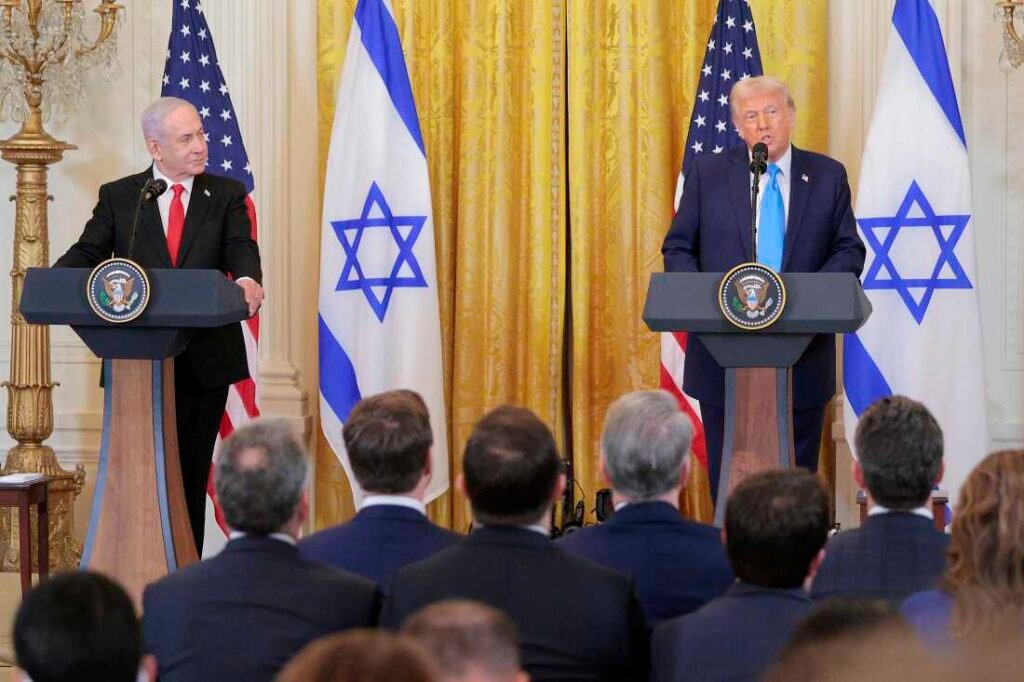
- Trump and Netanyahu meeting at Mar-a-Lago aims to break the deadlock on the Gaza ceasefire and transition to a technocratic government.
- Discussions will focus on the return of Israeli remains and the exchange of hostages for Palestinian detainees.
- The leaders are set to address the fragile truce with Hezbollah in Lebanon and growing military threats from Iran.
- Pressure is mounting on the Israeli Prime Minister to make compromises ahead of upcoming elections.
As a punishing winter descends upon the Middle East, the humanitarian situation for Palestinians remains dire. Families are currently enduring freezing temperatures with a catastrophic lack of adequate housing and food supplies. Against this backdrop of human suffering, the high-stakes meeting between U.S. President Donald Trump and Israeli Prime Minister Benjamin Netanyahu at Mar-a-Lago carries immense weight for the future of the region.
Pushing for a Gaza Breakthrough
President Trump is expected to utilize this Monday session to aggressively advocate for progress on the currently stalled Gaza ceasefire. While Washington is eager to see the establishment of a transitional governing body and the deployment of an international security force, the Israeli leadership has shown significant hesitation.
Prime Minister Netanyahu has indicated that the dialogue will specifically address the second phase of the existing ceasefire plan, alongside broader security concerns regarding Lebanon and Iran.
The War, the Deal, and the Vote: Rubio, Netanyahu, and the U.N. Redefine the Middle East
Although the United States successfully brokered truces across three different fronts, a deep-seated mistrust persists. Israel remains highly skeptical of its adversaries, fearing that groups like Hamas and Hezbollah are simply using the lull in fighting to reconstitute their military capabilities after being significantly weakened during the previous year of conflict.
The Roadmap for Peace and the Hostage Crisis
The current roadmap, agreed upon in October, envisions an eventual total Israeli withdrawal from the Palestinian enclave. In exchange, Hamas is required to surrender its arsenal and relinquish all governing authority. The initial phase of this agreement saw a limited Israeli military pullback, a slight uptick in humanitarian aid, and a swap of hostages for Palestinian prisoners.
READ MORE: UNSC Condemns Israeli Strike on Qatar as Trump Struggles to Contain Fallout
However, a significant sticking point remains. Sources close to Netanyahu suggest he will insist on the return of the remains of Ran Gvili—the final Israeli hostage held in Gaza—before authorizing any further steps. The Gvili family has traveled with the Prime Minister to Florida, seeking to put a human face on the demand. Consequently, Israel has kept the Rafah crossing into Egypt closed, conditioning its reopening on the return of the deceased soldier.
Internal Pressures and the “Board of Peace”
Domestically, Netanyahu is navigating a political minefield. With elections looming in October, political analysts suggest that the Prime Minister cannot afford a public rift with the American President. To maintain the alliance, Netanyahu may be forced to offer concessions he has previously resisted.
ALSO READ: Trump and Netanyahu to discuss next phase of Gaza plan in Florida
The American vision for Gaza’s future involves a “Board of Peace” and a council of Palestinian technocrats. Secretary of State Marco Rubio has emphasized that this administration must be installed quickly to fill the power vacuum. Despite this, the reality on the ground remains volatile. Hamas has flatly refused to disarm and is reportedly attempting to reassert administrative control in areas where Israeli forces are not currently entrenched. Israel has countered with a stern warning: if disarmament is not achieved through diplomacy, military operations will resume.
Regional Tensions: Lebanon and Iran
The Mar-a-Lago discussions are not limited to Gaza. The November 2024 ceasefire in Lebanon is also facing a “stress test.” While the Lebanese government claims it is working toward the disarmament of Hezbollah, the militant group continues to hold onto its weapons. In response, Israel has maintained a cycle of near-daily airstrikes intended to prevent a Hezbollah resurgence.
Furthermore, the shadow of Iran looms over the summit. Following recent Iranian missile exercises and a brief direct conflict in June, Netanyahu intends to present Trump with fresh intelligence regarding Tehran’s military buildup. While Trump previously authorized strikes on Iranian nuclear infrastructure, he has more recently suggested the possibility of a grand bargain with the Iranian regime, creating a complex backdrop for Netanyahu’s security demands.
As the two leaders meet, the world watches to see if this summit can provide the momentum needed to end the violence or if the regional “tenuous truce” is destined to collapse back into full-scale war.