


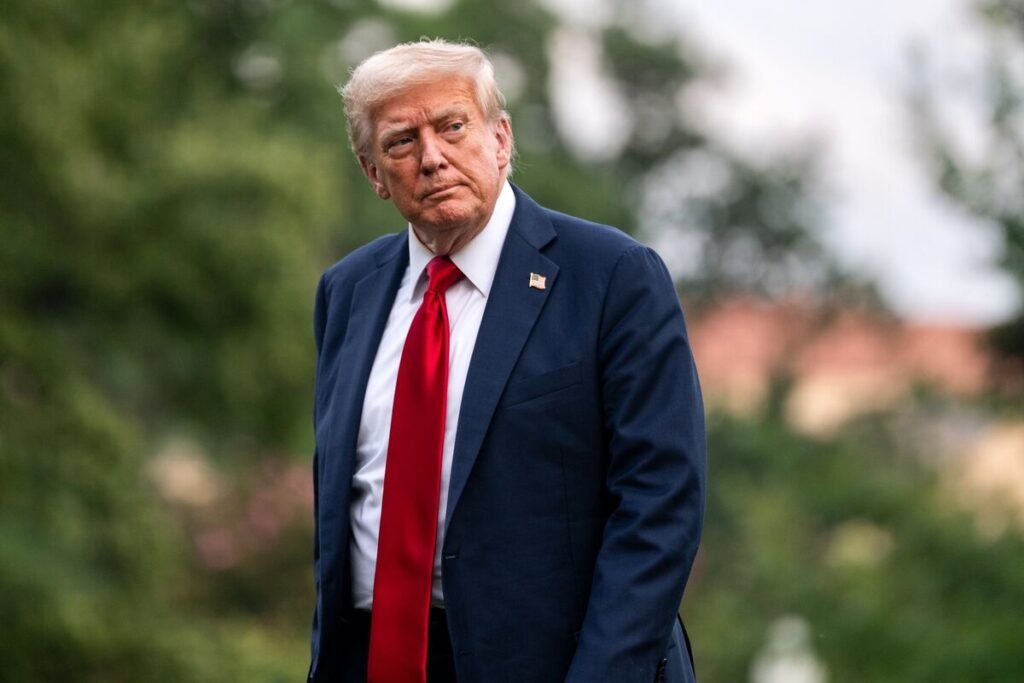
- Trump deploys a Gaza-style pressure campaign to push Kyiv and Moscow toward a cease-fire.
- His 28-point peace plan is the only active proposal with engagement from both Russia and the U.S.
- Zelensky faces a historic choice amid Trump’s one-week ultimatum for accepting the deal.
- A new “Peace Council,” chaired by Trump, would ensure enforcement and long-term monitoring of the agreement.
For nearly three years, the people of Ukraine have carried the unbearable weight of an unholy war—its rubble, its grief, its endless alarms. Entire cities have become graveyards of ambition, homes splintered by missile fire, and lives suspended between trauma and uncertainty. As Europe trembles with political anxiety and NATO continues to tread an increasingly fragile path, one man has stepped forward with a singular mission: to end the war once and for all.
That man, against all odds, is President Donald J. Trump.
To his critics he is polarising, but to Ukrainians exhausted by devastation, Trump’s dramatic intervention may well be the closest thing to a political messiah they have seen in years. It is not diplomacy-as-usual. It is Trump’s signature brand—forceful, deadline-driven, deeply personal, and unapologetically designed to achieve results.
A Strategy Born in Gaza—Refined for Ukraine
Trump’s push to end Russia’s war against Ukraine borrows from an unlikely yet successful precedent: the Gaza cease-fire. There, he strong-armed reluctant parties into silence long enough to stop the bombs and bring hostages home. The formula was simple: listen to both sides, draft a take-it-or-leave-it plan, apply immense pressure, and give the world a deal no one else was brave enough to push.
Trump Peace Plan for Ukraine Gains Momentum as Secret Trump–Putin Diplomacy Moves Into Final Phase
Now, Trump is wielding the same strategy in Eastern Europe—but with stakes immeasurably higher.
His new 28-point cease-fire plan—worked on by his trusted envoy Steve Witkoff, son-in-law Jared Kushner, and Russian intermediary Kirill Dmitriev—has already received cautious endorsement from President Vladimir Putin, who called it a “basis for resolving the conflict.” That alone marks progress unseen under previous administrations.
READ MORE: Trump Uses Gaza Peace Playbook in Ukraine
But in Trump’s world, progress is never enough. He has given Kyiv just one week to respond. One week to accept peace, or choose more war.
The Messiah Narrative: Why Trump’s Push Matters
For Ukrainians living under the shadow of missile strikes, the political theatre of Washington means little. What matters is survival. What matters is an end to funerals, shattered apartment blocks, and mass displacement.
Trump’s plan, though controversial, is the only document currently on the table with verifiable commitments from both Moscow and Washington—a rare diplomatic breakthrough. The establishment may call it transactional or rushed, but those on the ground see something else: a path out of the darkness.
ALSO READ: Ukraine War: Trump Gives Peace Another Try — But Can the World Afford Another War?
Unlike past leaders who offered only speeches and sanctions, Trump offers action. He offers urgency. And he offers something the Ukrainian people have not had in years—hope.
Ukraine War: Europe Panics, but Ukraine Listens
While European governments express deep anxiety about being sidelined, the mood in Kyiv is more conflicted. President Volodymyr Zelensky has publicly admitted that Trump’s ultimatum may be “one of the most difficult moments in our history,” forcing Ukraine into a painful decision between dignity and the risk of losing America as its primary partner.
But even Zelensky—under immense domestic pressure—has not walked away. His recent call with Vice President JD Vance suggests renewed efforts to reshape the plan, not reject it. Trump’s pressure is working.
And whether Europe likes it or not, no European leader has produced a credible peace framework. Trump has.
Peace Council: A New Architecture for Ending the War
Mirroring the Gaza model, Trump has proposed the establishment of a Peace Council, chaired by himself, to supervise the settlement and ensure compliance. For Ukraine, which has suffered the consequences of broken promises for decades, an enforcement mechanism backed by the U.S. President is no minor achievement.
In parallel, a separate security guarantee—a classic Trump-style “safety valve”—would oblige the U.S., NATO, and European governments to consult and respond if Russia launches another “significant and deliberate” attack after peace.
Some former officials call this a major concession from Moscow. Others argue that Ukraine is being asked to trade hard security for political promises. But in the fog of war, Trump’s framework is the first to put clear penalties, commitments, and obligations on paper.
A War No One Can Win—And a Peace Only Trump Will Chase
What critics overlook is that Trump, unlike traditional diplomats, is willing to risk political capital to force an end to the conflict. That alone sets him apart.
His blunt message to Kyiv—“learn to like it”—echoes the same uncompromising tone he used with Hamas in Gaza, when he famously warned they had “three or four days” left before all hell would break loose if they rejected the U.S.-crafted cease-fire.
He is not soft. He is not subtle. But he ends wars.
Trump has repeatedly vowed he could stop the conflict within 24 hours of returning to office. Many dismissed it as bravado, yet today the world is witnessing a leader actively orchestrating the first real path toward peace since 2022.
For all the criticism swirling around Washington’s corridors, one fact remains irrefutable: no one else is trying this hard to end the war.
Not Europe.
Not NATO.
Not even the United Nations.
It is Trump—shaped by instinct, emboldened by past successes, and driven by a profound determination to stop the bloodshed—who is meeting the moment.
If Trump succeeds, it will not just end a war. It will rewrite American diplomacy, reshape European security, and save countless Ukrainian lives.
If he fails, it will not be because he didn’t try. It will be because others lacked the courage to follow a path that only an unconventional, fearless leader like him could imagine.
Today, amid the ruins of eastern Ukraine and the fatigue of a continent in crisis, the voice echoing loudest for peace is not coming from Brussels, Berlin, or Kyiv.
It is coming from Washington—from a man who, for millions of war-weary Ukrainians, is starting to look less like a politician and more like a reluctant, unexpected messiah.