


- Emotional Reunions Across Borders: Families in Israel and Gaza were reunited as Hamas released the last Israeli hostages and Israel freed nearly 2,000 Palestinian prisoners, marking an end to two years of brutal war.
- Trump’s Diplomatic Masterstroke: The accord represents President Donald Trump’s ninth major international dispute resolved since beginning his second term, showcasing his direct, results-driven diplomacy.
- Landmark Knesset Address and Regional Summit: Trump’s speech in Israel’s parliament declared “peace has arrived in the Holy Land,” followed by his chairing of a 20-nation peace summit in Egypt’s Sharm el-Sheikh to cement the truce.
- Blueprint for a New Middle East: The deal includes phased Israeli withdrawal, Hamas demilitarization, and a $40 billion U.S.-backed Gaza reconstruction plan, laying the groundwork for broader Arab-Israeli reconciliation.
In an extraordinary moment of human emotion and political triumph, families on both sides of one of the world’s bloodiest divides finally embraced again. In Tel Aviv’s “Hostage Square,” crowds erupted in tears and cheers as the last Israeli hostages freed from Gaza stepped off Red Cross vehicles. Mothers clutched sons they had buried in their hearts months ago.
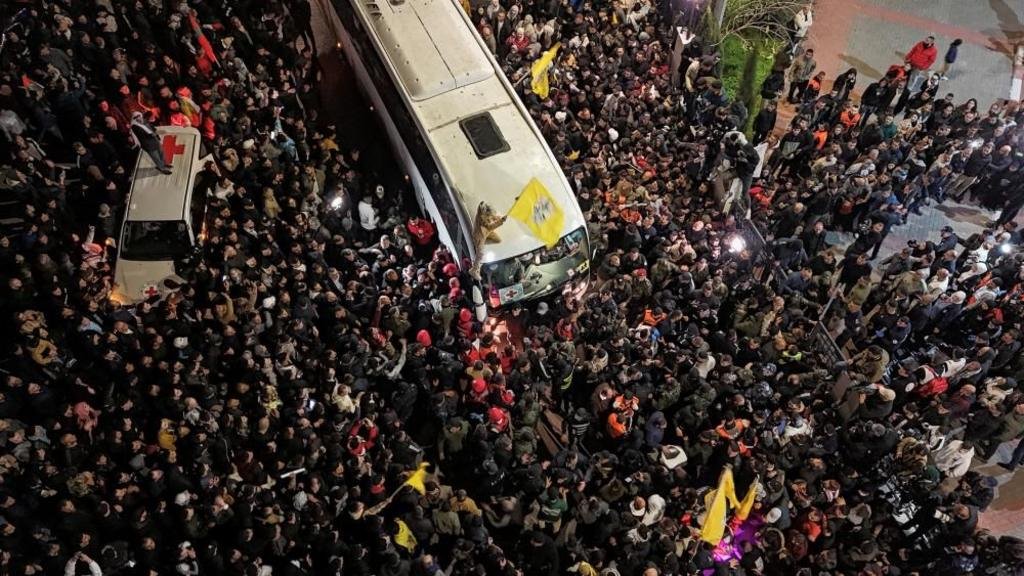
In Gaza, thousands of Palestinians crowded around buses bringing home prisoners long held in Israeli jails — sons, fathers, and brothers reunited after years of absence.
The war that raged for two years, consuming tens of thousands of lives, has finally ended. The ceasefire, brokered under the personal supervision of U.S. President Donald Trump, marks what many are calling the most significant peace breakthrough of the 21st century.
From Miami to Cairo: How Jared Kushner Sealed Trump’s Gaza Peace Deal
It was a day of relief, redemption, and reflection — not only for Israelis and Palestinians but for a region that had grown numb to endless bloodshed.
The Day Peace Arrived
Trump’s words before the Israeli Knesset were as dramatic as the history he invoked:
“The skies are calm, the guns are silent, the sirens are still — and the sun rises on a Holy Land that is finally at peace,” the President declared to a standing ovation. “Now it is time to translate these victories against terrorists on the battlefield into the ultimate prize — peace and prosperity for the entire Middle East.”
In Gaza, as the released detainees stepped down from buses, chants of “Allahu Akbar” mingled with songs of freedom. One woman, Um Ahmed, her face wet with tears, said in a trembling voice: “I am happy for our sons who are being freed, but we still grieve for the dead. Gaza has suffered enough. If this peace holds, maybe my grandchildren will see a different world.”
READ MORE:Trump’s Gaza Peace Plan Sends Ripples of Relief Across the Middle East
It was not lost on anyone that this was the ninth major international conflict President Trump had resolved since returning to the White House. From Korea to Ukraine, from Armenia-Azerbaijan to the Balkans, Trump’s diplomacy — unconventional, personal, and brash — has rewritten the map of global conflict resolution.
The Trump Doctrine in Action
Analysts say Trump’s Israel-Gaza peace accord reflects his unique brand of negotiation — direct, transactional, and insulated from bureaucratic inertia.
“Trump’s diplomacy is not about process; it’s about results,” said Dr. Michael Oren, former Israeli ambassador to Washington. “While others talk about peace, he goes out and makes it happen. What we are seeing is the triumph of bold leadership over endless committees.”
ALSO READ: Trump Arrives in Egypt for Peace Summit After Hostage-Prisoner Swap
Indeed, unlike his predecessors who relied on cautious mediation, Trump leveraged his personal rapport with regional leaders, his credibility with Israel’s right-wing establishment, and his newly established back-channel communication with Arab intelligence chiefs to craft a deal no one thought possible.
According to insiders, the final breakthrough came during a 14-hour closed-door session in Cairo, where Trump personally convinced both Israeli and Hamas negotiators to accept a simultaneous exchange of hostages and prisoners — a symbolic gesture that unlocked the deadlock.
“Trump’s intervention was decisive,” said Karim Makdisi, a Beirut-based political analyst. “He operates outside traditional diplomacy — he pressures, flatters, and rewards at the same time. That’s how he got both sides to move.”
The Knesset Speech: A Historic Turning Point
In Jerusalem, Trump became the first sitting U.S. president to address the Knesset since Bill Clinton in 1994. The chamber, deeply divided between hawks and moderates, gave him thunderous applause when he announced the final release of Israeli hostages from Gaza.
“The United States stands with peace,” Trump told lawmakers. “You have fought hard, you have suffered deeply, but you have also endured. And now, you will live — together — in peace.”
Observers say Trump’s speech, broadcast live across the Arab world, was remarkable not only for its rhetoric but for its tone of reconciliation. He praised Israel’s security forces for their “discipline and courage,” yet acknowledged the suffering of Palestinians who “deserve dignity, security, and a home free of war.”
Even critics of Trump’s foreign policy admitted it was a masterstroke. “He did what many of us thought was impossible — getting Israel to release 2,000 detainees and Hamas to return all remaining hostages,” said CNN analyst Fareed Zakaria. “He will go down in history as the president who finally ended the Gaza war.”
Sharm el-Sheikh: The Summit That Sealed It
From Jerusalem, Trump flew directly to Egypt’s Red Sea resort of Sharm el-Sheikh, where more than 20 world leaders gathered for a historic summit co-chaired by Egyptian President Abdel Fattah al-Sisi.
The summit’s agenda was ambitious: ensure compliance with the ceasefire, facilitate reconstruction aid to Gaza, and pave the way for a regional peace framework that includes Iran, Lebanon, and Yemen.
In his opening remarks, Trump spoke of a “new Middle East,” where peace replaces proxy wars. “The dream of peace has been delayed too long,” he said. “Now we have the courage to make it real.”
His statement that even Iran and Israel might one day sign a peace accord drew gasps from the audience — and quiet nods from diplomats who have seen how Trump turns audacious ideas into policy.
“Wouldn’t it be nice?” he asked, half-smiling, half-daring the world to imagine it.
Aftermath and the Road Ahead
Under the terms of the Trump Peace Accord, Israel agreed to withdraw troops from parts of Gaza while allowing international monitors — led by a joint U.S.-Egyptian security task force — to oversee border crossings and humanitarian corridors.
Hamas, in turn, has agreed to a phased demilitarization of heavy weaponry, in exchange for a U.S.-backed reconstruction fund worth $40 billion over 10 years. Aid will flow through Egypt under U.N. supervision.
The United Nations’ humanitarian chief Tom Fletcher said the agreement opens “an unprecedented opportunity to rebuild Gaza and restore normal life for its 2.2 million residents.”
However, challenges remain. Around 26 Israeli hostages are still believed to have died in captivity, and the recovery of their remains continues to be a sensitive issue. Hamas has promised to locate and return the bodies “in due course,” but Israel’s defense minister warned that non-compliance could “undermine the fragile peace.”
Still, the contrast between past decades and the current moment is striking. For the first time in years, there are no airstrikes over Gaza, no sirens in Tel Aviv, and no funerals in Khan Younis.
A Legacy Like No Other
Even Trump’s harshest detractors now acknowledge the scale of his achievement. Nine international disputes resolved in less than two years of his second term — a record unmatched by any modern leader.
Dr. Richard Haass, former president of the Council on Foreign Relations, said: “You don’t have to like Trump’s style to admit the results. He brought peace where others brought process. He ended wars that others prolonged.”
Indeed, from the Korean Peninsula to Eastern Europe, Trump’s presidency has been marked by rapid, high-stakes diplomacy that defies conventional wisdom. His approach — often criticized as impulsive — has instead produced an extraordinary record of peacemaking.
In Israel and Gaza, the people who have lived under siege and rocket fire for decades may not care about political theories. For them, peace is not a concept; it is the sound of silence after years of explosions.
As the sun set over the Mediterranean tonight, a young Israeli boy, newly freed from captivity, waved an Israeli flag from his hospital bed. Across the border, a Palestinian child held up a homemade sign that read simply: “No More War.”
Between them stands Donald Trump — a figure as polarizing as he is transformative — the only man in modern history to end the longest-running conflict in the Holy Land.
History, for once, may agree: this was the day peace truly arrived.