


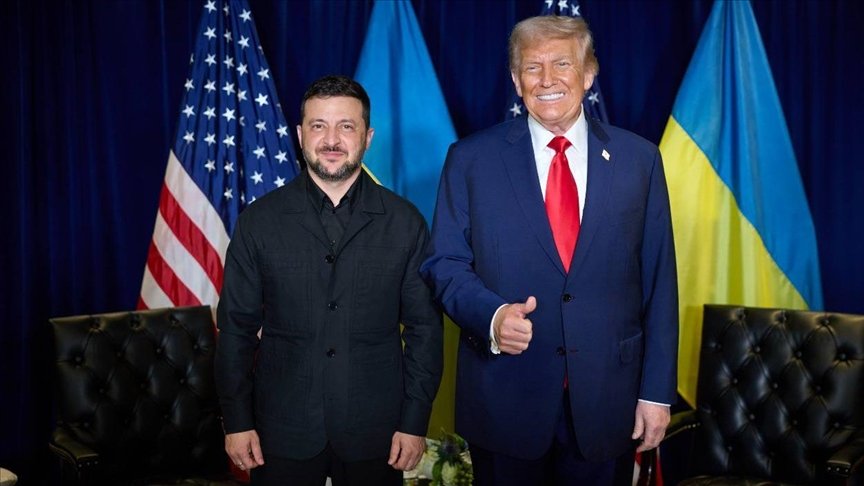
- Trump lifts U.S. restrictions, allowing Ukraine to strike deep inside Russia using long-range missiles.
- Ukraine hits a Russian military plant in Bryansk, signaling new battlefield escalation.
- Panic spreads in Moscow; Kyiv celebrates a newfound sense of determination.
- Fears grow that the upcoming Trump–Putin Budapest summit could decide between peace—or global war.
In the dim corridors of Washington’s West Wing, the decision was made quietly—too quietly for what it would unleash. Just days before U.S. President Donald Trump’s scheduled summit with Russian President Vladimir Putin in Budapest, the world was jolted awake by a revelation that felt less like policy and more like a gambit.
The Trump administration had lifted restrictions on Ukraine’s use of Western-supplied long-range missiles to strike inside Russia—a move so bold, so fraught with consequence, that even seasoned diplomats whispered of “a new front in global history.”
Within hours, the tremors were felt from Kyiv to Moscow, from Berlin to Beijing. It was as if the balance of war—and peace—had tilted on its axis.
The Strike That Shattered Illusions
At dawn on Tuesday, an explosion thundered across the Russian city of Bryansk, lighting the pre-winter sky like a wound torn open. Ukrainian forces claimed responsibility within minutes, announcing they had struck a Russian rocket fuel and explosives plant—over a hundred miles deep inside Russia—with a British-supplied Storm Shadow cruise missile guided by U.S. targeting data.
A video circulated across Telegram and X: a rising plume of black smoke over frozen fields, then cheers erupting in Kyiv cafés as Ukrainians watched on their phones. The caption was one word—“Pomsta”—revenge.
Trump Must Not Blink: Why He Must Meet Putin and End the Ukraine War
In Washington, National Security Council aides moved briskly between briefings. The shift had been set in motion days earlier when Trump quietly transferred strike authorization from Defense Secretary Pete Hegseth to U.S. European Command chief Gen. Alexus Grynkewich—a bureaucratic sleight of hand that effectively placed battlefield decision-making closer to the front lines.
Analysts quickly grasped the significance. Ukraine’s military, long frustrated by U.S. restrictions, had suddenly been handed freedom to hit where it hurt most. The sanctuaries inside Russia—its depots, factories, and air bases—were no longer safe.
Moscow Trembles, Kyiv Roars
In Moscow, the shock was visceral. State television anchors, usually triumphant and rehearsed, appeared pale, their voices edged with disbelief. For the first time since the war began, Russia’s own interior was bleeding.
READ MORE: U.S. Lifts Key Restriction on Ukraine’s Use of European Long-Range Missiles
Kremlin insiders ordered the evacuation of sensitive industrial sites. Panic rippled through Belgorod, Kursk, and Bryansk. Telegram channels once filled with patriotic bluster turned accusatory—some calling Trump’s move a “betrayal of peace,” others branding Putin’s silence as weakness.
“The Americans are playing chess with fire,” raged a commentator on Channel One. “Trump smiles in Budapest, but Kyiv fires in Bryansk.”
Meanwhile, in Ukraine, the mood was electric. Soldiers filmed themselves hugging missile launchers. Cafés in Lviv offered free coffee to anyone wearing camouflage. Social media exploded with gratitude toward Washington—and defiance toward Moscow.
“This is what freedom feels like,” one Kyiv resident posted, her message shared a million times.
The Art of Pressure: It’s Trump Way
White House aides insist Trump’s decision was not born of recklessness, but of strategy—a calculated pressure valve meant to force Moscow’s hand ahead of the Budapest summit.
The meeting, arranged through Hungary’s Viktor Orbán, was billed as Trump’s grand bid for peace. But peace, it seemed, would not come gently.
ALSO READ: Trump, Putin, and the Coming Peace: Inside the Budapest Plan to End the Ukraine War
Trump’s inner circle reportedly believes that showing Putin “the cost of inaction” could drive him to negotiate from fear rather than arrogance. Yet, as one senior European diplomat put it, “The same fear that bends a man can also make him strike.”
Behind closed doors, Putin’s aides debated how to respond. Would Russia retaliate in kind, or would it retreat into strategic patience? Either way, the world was watching a confrontation where every move risked catastrophe.
Global Shockwaves
From Berlin to Beijing, the response was divided—admiration mixed with dread.
Germany’s Annalena Baerbock urged “restraint and wisdom,” warning that escalation could “pull Europe into the abyss.” France’s Emmanuel Macron, ever the diplomat, reportedly phoned Trump late that night, pleading, “Don’t corner him, Donald. Cornered men don’t negotiate—they explode.”
In Beijing, Foreign Ministry spokespeople voiced “grave concern” and called for “immediate de-escalation.”
In Islamabad, analysts saw something different.
“Trump has turned the war from a stalemate into a chessboard,” said Lt. Gen. (Retd.) Zahid Malik, a defense strategist. “This is not just about missiles—it’s about momentum. If he can manage the chaos, he could force the first real talks in years. If not—God help us all.”
Across the internet, reactions poured in by the hour. A video of Ukrainian children cheering as air raid sirens blared went viral. In Moscow, silent vigils appeared near Red Square. In Washington, protesters held signs reading “No More Proxy Wars.”
Everywhere, the same question lingered: had the path to peace been paved—or destroyed—by Trump’s long-range gamble?
A Summit on the Edge of History
Budapest, that old Cold War city, now stands as a stage for destiny. The summit—if it happens—may redefine the architecture of 21st-century power.
Russian sources say Putin is wary, fearing humiliation or entrapment. Yet leaked cables suggest Moscow is still preparing, quietly, reluctantly. Ukraine has refused any precondition that limits its right to strike.
Trump’s advisors say he’s undeterred. “He believes in peace through pressure,” one aide told The Telegraph. “He’s ready to play hardball—because history rewards the bold.”
But boldness has a price. As reports emerge that Russia has placed its hypersonic missile units on “enhanced readiness,” the fine line between diplomacy and disaster grows thinner by the hour.
The Bryansk strike marked a transformation—one as psychological as it was strategic. The war is no longer confined by geography. Both Kyiv and Moscow can now reach into each other’s core.
“This is the most dangerous moment since the Cuban Missile Crisis,” warned Dr. Helena Ford of the Atlantic Security Institute. “Trump’s gamble might save Europe—or set it ablaze.”
Analysts call it the tripwire effect: one more escalation, one more miscalculation, and the world could tumble into a war none of its architects intended.
The Shadow of World War III
Night falls on Kyiv. The city hums under blackout, its people clutching phones as the sirens wail and rockets whisper overhead. In Moscow, church bells toll faintly across the frozen skyline. And in Washington, under the glow of the Oval Office lamp, Trump prepares for Budapest—his gamble hanging between glory and ruin.
Somewhere between those cities, between ambition and fear, lies the fragile thread of global peace. One more missile, one wrong word, and it could snap.
As one weary diplomat whispered in Brussels, “History doesn’t repeat itself—it reloads.”