


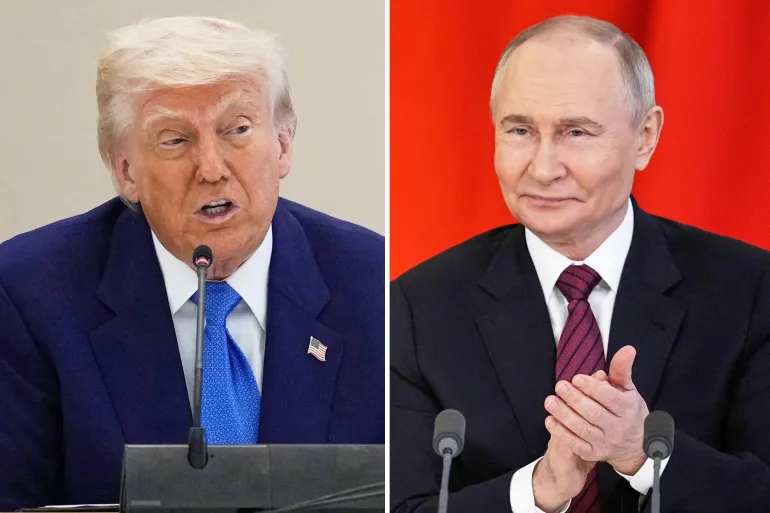
- Trump’s Resolve: Despite calls to cancel, Trump insists on meeting Putin, believing peace must be forged even amid conflict.
- Budapest Summit: The proposed framework includes ceasefire zones, reconstruction funds, and conditional sanctions relief.
- Global Markets React: Oil and gas prices have fallen as investors anticipate a peace-driven economic shift.
- A New Peace Model: Trump’s pragmatic diplomacy — freeze, negotiate, rebuild — could redefine conflict resolution for the modern world.
As Russian missiles again rained down on Kyiv this week, killing six civilians — including two children — critics were quick to say that President Donald Trump should cancel his proposed peace summit with Vladimir Putin. They argue that negotiating amid bloodshed legitimizes aggression. But that view misses the point entirely. The true statesman does not wait for silence to make peace; he forges it in the noise of war. Trump must not abandon his mission. He must press on toward Budapest.
In a world teetering between war and weary pragmatism, Trump stands virtually alone as the one global leader still capable of compelling Moscow to pause and Kyiv to listen. His diplomatic record speaks louder than any pundit’s moral outrage: nine conflicts, from Gaza to Kashmir, de-escalated under his watch. He has prevented at least two potential nuclear confrontations — including one between India and Pakistan earlier this year. For all his critics’ disdain, history already sees Donald Trump as the most effective peacemaker of the post–Cold War era.
The Courage to Negotiate in Wartime
The latest attacks on Ukraine are tragic but not unexpected. Since 2022, Russia has treated energy grids as legitimate targets, and Ukraine’s resilience has come at a staggering human cost. Kyiv’s power stations are dark; its citizens sleep in shelters. Moscow’s logic is to wear Ukraine down until exhaustion replaces defiance. Trump understands that reality — and, unlike the ideologues in Brussels or Washington, he is unafraid to confront it.
When the War President Chose Peace: Inside Trump’s Quiet Bid to End the Ukraine Conflict
When the White House announced the postponement of his summit with Putin, Moscow interpreted it as weakness. But Trump has never been one to flinch from controversy. His instinct has always been transactional, not theatrical: he knows that waiting for a perfect ceasefire means waiting forever. If peace is to be brokered, it must be done while guns are still firing.
READ MORE:Trump says he did not want ‘wasted meeting’ after plan for Putin talks shelved
Budapest offers the best opportunity yet to turn this brutal war toward a negotiated end. Prime Minister Viktor Orbán’s Hungary stands at the crossroads of East and West, trusted by Moscow but anchored in Europe — the ideal setting for dialogue untainted by NATO grandstanding.
The Deal of the Century, Part II
Trump’s advisers have outlined what insiders are calling the Budapest Framework. The plan is bold but pragmatic:
-
Immediate ceasefire along current frontlines.
-
Recognition of Russian sovereignty over Donetsk, pending international verification.
-
Demilitarized zones supervised by multinational monitors.
-
U.S.–EU reconstruction fund for Ukraine.
-
Conditional sanctions relief tied to Russia’s compliance.
Critics cry appeasement. But this is not surrender; it is strategy. The longer the war drags on, the greater the danger of escalation — and the smaller Ukraine’s bargaining power becomes. Trump’s formula is about freezing the conflict, not rewarding aggression. It is about saving lives now, not chasing fantasies of total victory later.
The Art of Realignment
The Trump Doctrine is already reshaping global diplomacy. His ceasefire in Gaza and quiet mediation between Islamabad and New Delhi proved that leverage, not lectures, stops wars. He believes peace is won through balance sheets, not battlefields. Every negotiation is a transaction — one where both sides get enough to walk away satisfied, but neither gets everything. It is messy, it is unsentimental, but it works.
ALSO READ:Trump’s Master Reset: How the 47th President Is Rewriting Washington’s Rules of Power
European leaders know it, too. France and Germany, burdened by energy crises and public fatigue, privately favor Trump’s approach. Only Poland and the Baltics cling to their moral absolutism. But moral absolutism doesn’t heat homes in winter.
Melania’s Quiet Role
Beyond official channels, reports suggest Melania Trump’s subtle diplomacy has helped lower the emotional temperature. Fluent in several European languages and culturally attuned to the region, she has reportedly opened informal lines of communication with intermediaries close to the Kremlin. Whether true or symbolic, it reinforces the perception that this White House is engaged in both visible and invisible diplomacy — a hallmark of effective statecraft.
Markets Smell Peace
Financial markets are already responding to the possibility of a breakthrough. Oil prices fell by 4 percent following news of resumed U.S.–Russia communication; European gas futures dipped to their lowest since 2023. Defense stocks have softened as investors anticipate a global reduction in arms demand. Traders sense what politicians often miss: peace, even an imperfect one, is the best economic stimulus.
A durable ceasefire could release billions in frozen European assets, channeling them into reconstruction. For Russia, limited reintegration into energy markets could stabilize global prices and ease inflation pressures. For Ukraine, rebuilding could become a trillion-dollar enterprise — one that Wall Street and European investors will be eager to finance.
A Test of History
Trump’s challenge is to transform these fragile openings into a lasting accord. His detractors see chaos in his methods; his supporters see creativity. The truth lies in results. Whether in Gaza, Kashmir, or now Ukraine, Trump has demonstrated that audacity is not recklessness when guided by intent. He acts not to please allies, but to end wars.
Putin, for all his bluster, understands Trump’s leverage. The American president speaks the one language Moscow respects: strength laced with unpredictability. That is why Budapest matters. If the two men can agree on even the outline of a truce, the war’s momentum could shift overnight.
Prophecy: What Comes After Budapest
If Trump succeeds, the world may witness a geopolitical realignment unseen since the end of the Cold War.
-
Think tanks will need to rewrite deterrence theory: diplomacy through dominance, not dependency.
-
Peace advocates will study the Budapest Model — freeze, negotiate, rebuild — as the new template for ending endless wars.
-
Investors will prepare for a post-conflict boom: Russian energy easing back into global markets, European infrastructure funds overflowing, and American defense budgets tapering off.
But if Trump hesitates, others will fill the vacuum — and the missiles over Kyiv will keep falling. The world cannot afford another frozen stalemate disguised as moral high ground.
Trump must go to Budapest. He must meet Putin. And he must finish what he started — not because it’s easy, but because no one else can.