


-
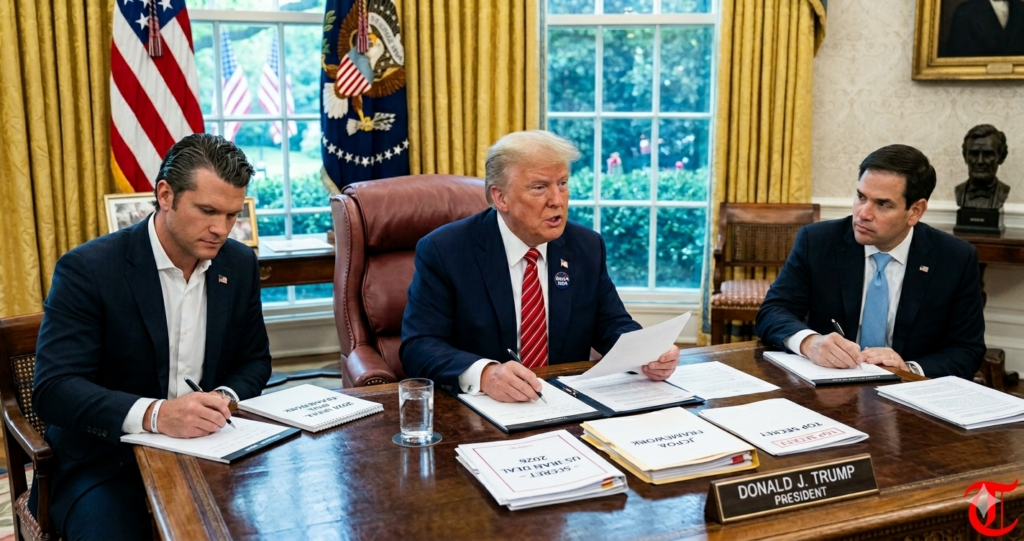
Trump Iran Nuclear Deal 2026: Why the administration is considering unfreezing $20 billion in Iranian assets to secure a permanent nuclear moratorium.
- Beyond the JCPOA: How the new proposal seeks to dismantle the “Pickaxe Mountain” facility and curb ballistic missile production.
- The Vance Factor: Analysis of Vice President JD Vance’s pivotal role in brokering a deal that balances military restraint with regional security.
- Global Energy Impact: The critical link between the Strait of Hormuz blockade and the success of the current diplomatic “Grand Bargain.”
The geopolitical landscape of the Middle East is currently suspended in a fragile ceasefire as President Donald Trump maneuvers toward a definitive resolution with Tehran. Following weeks of intense military exchanges and a continued naval blockade in the Strait of Hormuz, the administration is now signaling a shift toward diplomatic pragmatism.
US Iran Ceasefire Extended as High-Stakes Islamabad Talks Signal Possible Breakthrough
Despite a decade of criticizing the 2015 Joint Comprehensive Plan of Action (JCPOA), the Trump administration is exploring a bargain that mirrors several of its predecessor’s trade-offs, albeit with significantly higher stakes and broader objectives.
The Core Pillars of Trump’s Negotiation Strategy
The White House is currently weighing several critical concessions and demands intended to address long-standing security concerns while ensuring the new agreement remains “far better” than previous iterations.
-
Unfreezing $20 Billion in Assets: A central bargaining chip involves the potential release of approximately $20 billion in frozen Iranian oil proceeds. While critics argue this constitutes “pallets of cash” for the regime, the administration views it as a necessary lever to secure Iran’s stockpile of highly enriched uranium.
-
The Nuclear Moratorium: Trump’s primary objective remains the elimination of Iran’s nuclear threat. This includes the potential dismantling of the “Pickaxe Mountain” facility and securing a long-term suspension of uranium enrichment—potentially spanning 15 to 20 years.
-
Expanding the Scope: Unlike the JCPOA, which focused solely on nuclear capabilities, Trump is pushing for a comprehensive deal that includes restrictions on Iran’s ballistic missile program and the cessation of support for regional proxies like Hamas and Hezbollah.
-
Maritime Security: Normalizing traffic through the Strait of Hormuz is a priority. The current blockade has created a significant drag on global energy markets, and a deal would likely require Iran to relinquish its assertion of control over these vital shipping lanes.
Analysis: The “Fungibility” Trap and Political Risks
The administration faces a dual challenge: domestic skepticism and Iranian intransigence. Within the Republican party, hawks warn that unfrozen funds are “fungible,” meaning any financial relief could indirectly subsidize the regime’s illicit activities or internal repression.
US Iran talks Islamabad Second Attempt: What the U.S. and Iran Are Bringing Into the Room
Furthermore, Vice President JD Vance, who has taken a lead role in negotiations, carries the political burden of these compromises.
Islamabad Summit: World on Edge as U.S.-Iran Talks Enter Make-or-Break Phase
Transitioning from a stance of military restraint to the architect of a complex peace deal requires a delicate balance, especially as the 2028 election cycle approaches.
Forecasting: Can a “Grand Bargain” Succeed?
The current environment offers a unique, albeit volatile, window for a breakthrough. Iran’s leadership has been weakened by military strikes and the degradation of its regional proxies.
US Iran talks Islamabad Second Attempt: What the U.S. and Iran Are Bringing Into the Room
However, the Islamic Revolutionary Guard Corps (IRGC) remains firmly in control and has proven it can “take a punch,” potentially making them less desperate for a deal than Washington might hope.
Expected Outcomes:
-
The “Nuclear Plus” Model: It is likely the administration will settle for a deal that significantly restricts enrichment and removes stockpiles in exchange for phased sanctions relief, while perhaps only gaining “consultative” progress on missiles and proxies.
-
Economic Volatility: Until a formal agreement is signed, energy prices will remain sensitive to the Strait of Hormuz blockade. Success in negotiations would lead to an immediate stabilization of global oil markets.
-
Verification Hurdles: The ultimate success of a “Trump Deal” will depend on the verification mechanisms. If the administration can secure more intrusive inspections than the JCPOA, it can claim a definitive victory.
While the “Islamabad Process” and other diplomatic channels continue to churn, the reality remains that Trump is pursuing a high-risk, high-reward strategy. By putting $20 billion on the table, he is betting that economic pressure can finally force Tehran into a permanent nuclear retreat.