


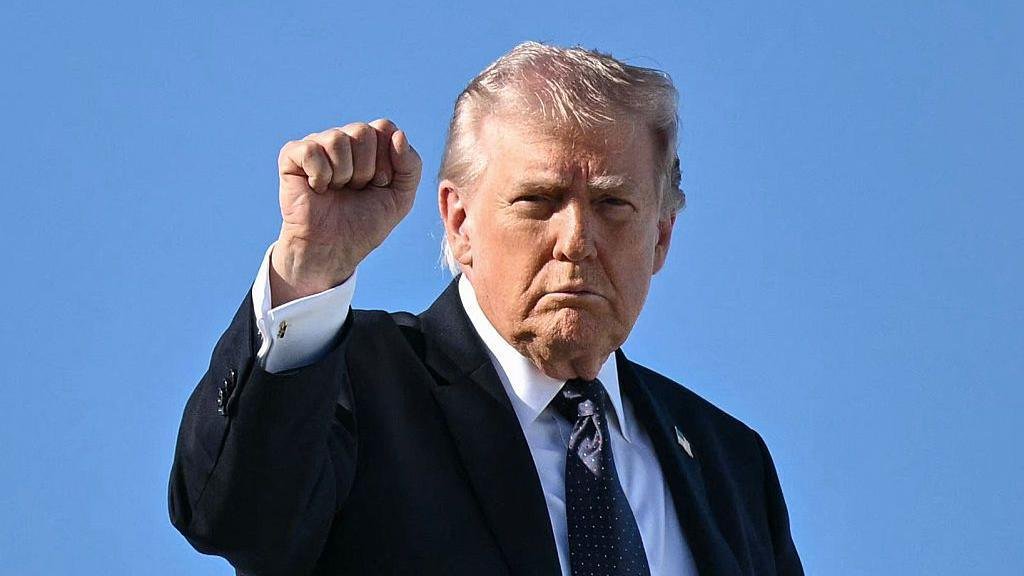
- Trump Iran War Strategy dominates Washington as explosive Senate clash reveals deep divisions
- Trump lashes out at Republican critics, reinforcing iron grip over GOP amid Iran conflict
- Secretive Iran policy executed by a tight inner circle shocks lawmakers and global observers
- US gains strategic edge in Iran crisis, but concerns grow over transparency and war powers
“Sit Down, Loser”: Inside Trump’s War Room as Iran Strategy Shocks Washington
WASHINGTON — It began as a routine Republican lunch, a closed-door gathering meant to align party priorities ahead of a contentious midterm season. But within minutes, the room had transformed into something far more volatile — a theater of raw power, bruised egos, and a presidency increasingly defined by confrontation and secrecy.
At the center of it all stood President Donald Trump.
According to multiple sources familiar with the meeting, Trump erupted into a fiery exchange with one of his most vocal Republican critics, Senator Bill Cassidy. Voices rose. Tempers flared. And then came the moment that would define the encounter — a moment as theatrical as it was revealing.
“Sit down, loser,” Trump snapped.
Cassidy did not immediately comply. The senator, already under pressure after losing his primary battle — widely seen as engineered by Trump’s political machinery — pushed back. “No one tells me to sit down,” he reportedly shot back, his tone matching the president’s intensity. What followed was a shouting match that left the room stunned, before Cassidy, visibly frustrated, ultimately took his seat.
It was not an isolated incident.
Trump’s Meeting With Senators Turns Fiery Over Iran War
Trump, emboldened and unapologetic, reportedly turned his ire toward other Republican senators as well. Senator Lisa Murkowski was mocked. Senator Rand Paul was chastised. Even those not present were not spared — the president reportedly took aim at lawmakers who had supported efforts to curb his war powers in relation to Iran.
The message was unmistakable: dissent would not be tolerated.
Yet beneath the theatrics lies a deeper, more consequential reality — one that extends far beyond the walls of that meeting room and into the shifting architecture of global geopolitics.
Trump Iran War Strategy: Secrecy as Strategy
What continues to confound Washington’s political class is not merely Trump’s tone, but his method.
“No one knows the Iran war plans other than Trump himself,” said one insider familiar with the administration’s internal deliberations.
This opacity, critics argue, undermines democratic accountability. But paradoxically, it may also explain Trump’s effectiveness.
These Are the Heroes Who Made the US–Iran Peace Deal Possible
Over the past several months, the United States has managed to recalibrate its position in the escalating Iran conflict in ways few anticipated. A memorandum of understanding — quietly signed — has reopened the Strait of Hormuz, easing global energy anxieties. Simultaneously, backchannel negotiations have begun targeting Tehran’s nuclear ambitions, a long-standing flashpoint in U.S.-Iran relations.
What is striking is not just the outcomes, but the process.
Trump has largely sidelined Congress, bypassed traditional diplomatic frameworks, and relied on a tight-knit circle of advisers. This inner circle — described by insiders as “disciplined, loyal, and strategically aggressive” — has played a pivotal role in shaping and executing policy.
The result? A series of moves that have caught both allies and adversaries off guard.
For Trump’s supporters, this is evidence of decisive leadership. For his critics, it is deeply unsettling.
A Divided Capitol, A Calculated White House
The clash at the Senate lunch underscores a widening rift within the Republican Party itself. While Trump continues to command a loyal base, a growing faction of GOP lawmakers is increasingly uneasy with his approach — particularly when it comes to war powers and domestic priorities.
The Iran War Powers Resolution, passed with bipartisan support, was a clear signal of congressional pushback. Lawmakers from both sides of the aisle expressed concern over the lack of transparency and the potential for unchecked executive authority.
Cassidy’s confrontation with Trump was, in many ways, a manifestation of this broader tension.
“You have not told the American people what’s going on,” Cassidy reportedly told the president during the meeting. His frustration reflects a sentiment shared by many in Washington — that the administration’s Iran strategy, while seemingly effective, remains dangerously opaque.
Trump, however, appears unfazed.
Emerging from the meeting, he described it as “really great,” brushing aside reports of internal discord. “We like everybody really in the room,” he told reporters, before adding, almost as an afterthought, “I don’t like a few people, but that’s OK.”
The Politics of Power and Performance
Trump’s leadership style has always blurred the line between governance and performance. The Senate confrontation is a case in point — a moment that, while controversial, reinforces his image as a leader unwilling to compromise or conform.
For his political base, such moments are not liabilities but assets.
Senator Tommy Tuberville likened Trump’s approach to that of a football coach delivering a halftime dressing-down. “You can’t take it personal,” he said. “We understood where he stood.”
This analogy is telling. In Trump’s political universe, loyalty is paramount, dissent is weakness, and confrontation is a tool — not a risk.
But the stakes are far higher than a locker room pep talk.
Global Implications
Beyond domestic politics, Trump’s Iran strategy carries significant implications for global stability. The reopening of the Strait of Hormuz, for instance, has immediate economic ramifications, given its role as a critical النفط chokepoint. Meanwhile, the willingness to allow Iran to retain certain missile capabilities suggests a pragmatic — if controversial — shift in U.S. policy.
Critics argue that such concessions could embolden Tehran. Supporters counter that they reflect a realistic assessment of geopolitical constraints.
What is undeniable, however, is that Trump’s approach has altered the strategic landscape.
By operating outside conventional norms, he has introduced a level of unpredictability that complicates both diplomacy and deterrence. Allies are left guessing. Adversaries are forced to recalibrate.
And Congress — as the Senate meeting made abundantly clear — is struggling to keep up.
The Road Ahead
As the United States moves closer to midterm elections, the intersection of foreign policy and domestic politics will only intensify. Trump’s insistence on tying unrelated legislative priorities — such as the SAVE America Act — to broader governance issues has already created friction within his own party.
Meanwhile, the Iran conflict remains unresolved.
The administration’s next moves are likely to be as closely guarded as the last. And if recent events are any indication, they will be executed with the same blend of secrecy, speed, and spectacle.
For now, one thing is clear.
In Trump’s Washington, power is not just exercised — it is performed. And sometimes, it is punctuated with a command that echoes far beyond the room in which it was spoken:
“Sit down, loser.”
Whether that approach ultimately strengthens America’s global position or deepens its internal divisions remains an open question — one that will shape not just the outcome of a war, but the future of U.S. leadership itself.