


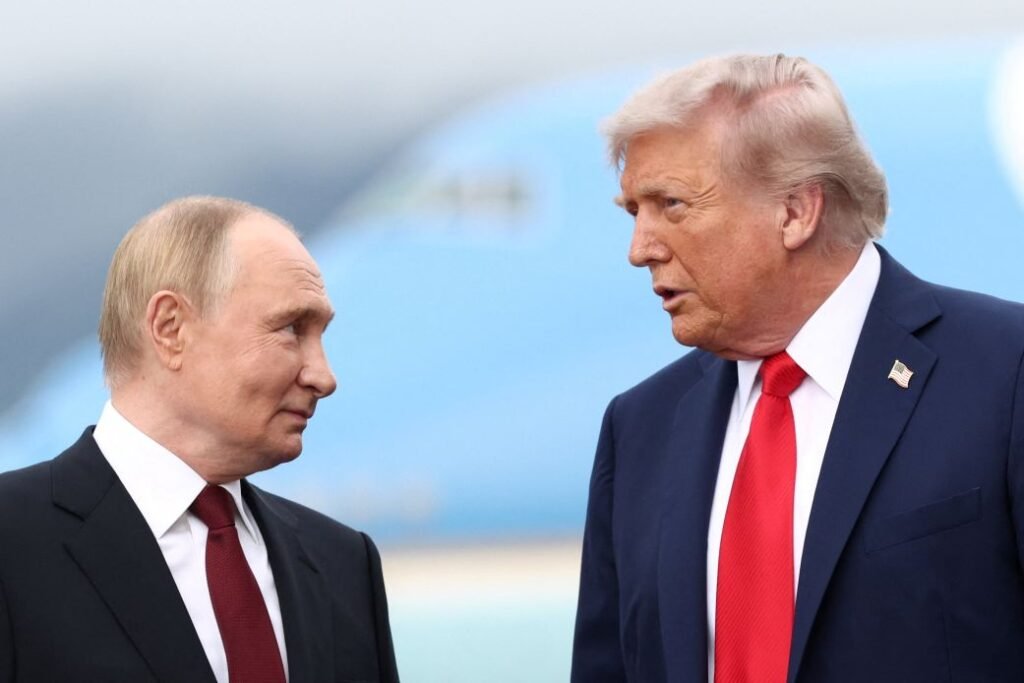
- Russia has escalated its drone and missile strikes on Ukraine since Trump took office, hitting civilian and government targets at unprecedented levels.
- Strikes often surge immediately after Trump–Putin talks, suggesting Moscow is testing U.S. resolve and seeking leverage in negotiations.
- Trump’s conditional, unpredictable approach unsettles Putin more than Biden’s blank-check support, exposing Russia’s insecurity.
- Escalation reveals Moscow’s dependence on drone production and military theatrics, even as it grows increasingly isolated internationally.
When Donald Trump returned to the Oval Office in January 2025, he promised to end “endless wars” and floated the possibility of a grand bargain with Russia. Yet, nine months into his presidency, the war in Ukraine has only intensified. Far from reducing hostilities, Moscow has dramatically escalated air and drone strikes, broadening its targets to include civilian neighborhoods, energy infrastructure, and even foreign diplomatic buildings in Kyiv.
The question that now dominates international debate: is Russian President Vladimir Putin deliberately defying Trump’s peace overtures? Or is this escalation evidence that Trump’s pressure is working, exposing Moscow’s insecurities and vulnerabilities?
The data show that Russia has increased drone and missile strikes to record levels since spring. July alone saw nearly 6,300 drones launched against Ukraine, a staggering jump from the 426 launched during the same month last year. Ukrainian officials say that three of the deadliest months of the war have occurred since Trump took office, with attacks killing scores of civilians and crippling power and gas networks across the country. The strikes are not random—they have spiked suspiciously after key diplomatic events involving Washington, Kyiv, or Moscow.
Trump’s Dinner Diplomacy After Israeli Strike on Qatar: Calming Tensions or Papering Cracks?
That pattern was clear after Trump’s early July phone call with Putin. Within a week of the conversation, Moscow unleashed its largest combined attack of the war: 728 drones and 13 missiles, many aimed at Kyiv.
Later, following the Trump–Putin summit in Alaska in mid-August, a brief lull gave way to an even more lethal assault that killed 18 in the Ukrainian capital, damaged offices of the British Council, and struck the Delegation of the European Union. Days later, Russia went further still, hitting the Cabinet of Ministers building in central Kyiv—its most brazen strike on political offices since the invasion began in February 2022.
READ MORE: These Charts Show How Putin Is Defying Trump by Escalating Airstrikes on Ukraine
At first glance, the escalation looks like a direct rebuke of Trump. Yet a deeper analysis suggests something more complex: Moscow may be testing Trump’s resolve, but in doing so it reveals that the White House’s strategy is beginning to bite. Trump has publicly dismissed “the endless billions wasted” in Ukraine, calling instead for direct negotiations.
By withholding unconditional support, he has unsettled Putin’s calculus. Rather than facing a predictable stream of Western arms and cash, Russia now confronts a U.S. president who wants a deal but is also unafraid to denounce Moscow when it overreaches. Trump’s July comments blasting Putin’s “bulls—” were not mere rhetoric—they signaled that the American president is willing to call out Moscow’s duplicity even while pursuing peace.
ALSO READ: Trump, Putin, and the Alaska Gamble: A Missed Opportunity or the Start of a Grand Bargain?
Putin’s answer—massive drone swarms—was designed to project strength. But paradoxically, it underlines his dependence on escalation to maintain leverage. Analysts note that Russia has shifted from Iranian imports to mass production of domestic drones, churning out nearly 2,700 per month.
Such industrial mobilization demonstrates Moscow’s determination but also exposes its limits: it must escalate to appear strong because it lacks genuine diplomatic flexibility. In other words, Russia is burning through drones not because Trump is weak, but because Trump’s refusal to play by old rules has rattled Moscow’s long game.
Trump’s defenders argue that escalation is, in fact, evidence of his strategy working. By pressing for negotiations and cutting blank checks, he has forced Putin into a corner where his only option is to demonstrate power theatrically. T
he attacks on civilian buildings, however horrific, are politically costly for Moscow. Striking the EU’s office in Kyiv, for instance, galvanized European leaders, many of whom had been debating whether to scale back support. Instead, they hardened their stance, coordinating sanctions and bolstering Ukraine’s defenses. Trump’s critics at home may claim his diplomacy is failing, but internationally the effect has been the opposite: Russia looks increasingly isolated, and its desperation more visible.
The humanitarian toll cannot be minimized. Civilians continue to pay the price of Moscow’s aggression. Families in Kyiv and Kharkiv endure blackouts, crumbling apartment blocks, and the terrifying whine of drones overhead. The recent strike that killed a young mother and her newborn child has become a symbol of the war’s cruelty.
Yet even here, Trump’s role is distinct from his predecessor Joe Biden’s. Biden’s approach tied Washington to an open-ended commitment, locking the U.S. into escalation with little leverage. Trump, by contrast, is positioning the U.S. as both a potential mediator and a reluctant superpower—ready to walk away if the conflict drags on, but also capable of bringing pressure when Moscow crosses red lines.
Internationally, this posture is beginning to reshape perceptions. Some European diplomats privately admit that Trump’s unpredictability has unnerved Putin more than Biden’s predictability ever did. By keeping Moscow guessing—sometimes offering talks, sometimes scolding Putin publicly—Trump has forced Russia to reveal its cards. Escalation is Putin’s last lever. The irony is that every strike meant to show strength only underscores Russia’s insecurity.
As winter approaches, the stakes will rise. Energy infrastructure remains a prime target, with Russia ramping up strikes on gas and oil facilities to squeeze Ukraine during the cold months. Kyiv, meanwhile, has resumed retaliatory strikes deep inside Russia, a development that risks widening the war. Trump’s next moves will be decisive. Will he lean harder on Kyiv to accept a temporary cease-fire? Or will he raise the costs for Putin by rallying European allies around tougher sanctions while keeping American military aid conditional?
For now, one fact is clear: Putin’s bombardments are not a sign that Trump’s diplomacy has failed, but that it has unsettled the Kremlin’s assumptions. Russia is escalating because the old playbook—facing a predictable, endlessly supportive Washington—no longer applies. The war in Ukraine is entering a new, dangerous phase. But unlike before, the United States is no longer merely reacting. Under Trump, it is redefining the terms of engagement, forcing Putin to play a riskier, costlier game.