


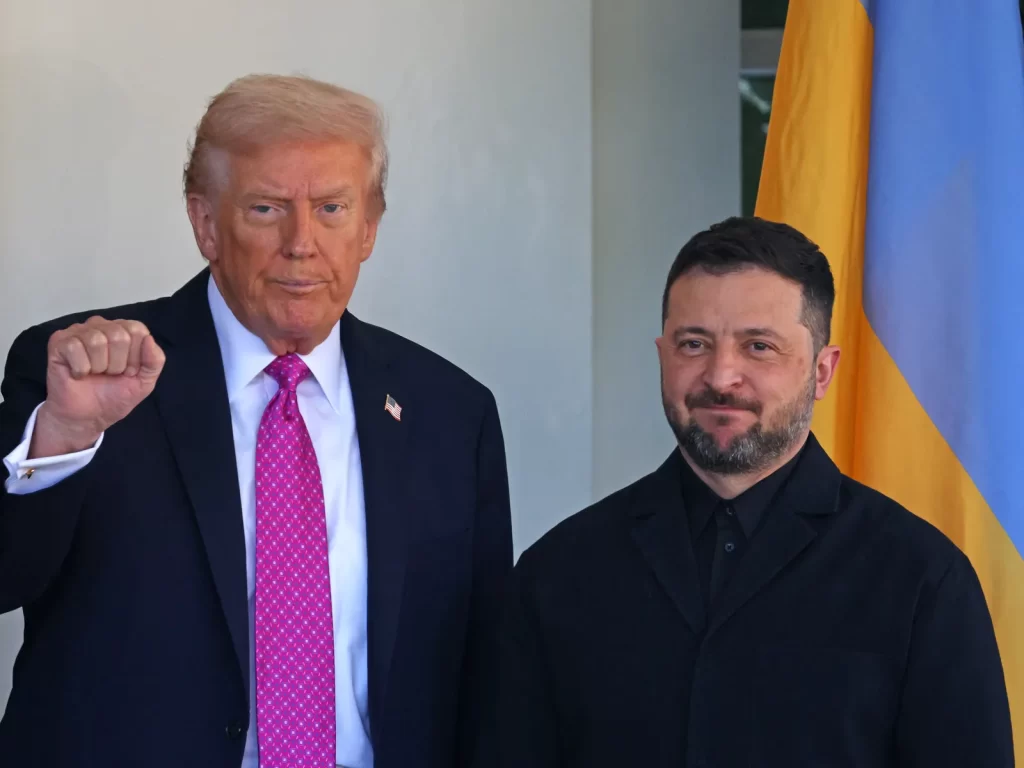
- Ukrainian President Zelensky signals a “90% ready” framework for a ceasefire.
- The proposed Trump Ukraine Peace Plan includes the establishment of demilitarized zones (DMZs) in the Donbas.
- European leaders, including Friedrich Merz, have signaled pragmatic support for the negotiated settlement.
- High-stakes talks seek to address the $524 billion in economic damages and global food insecurity.
In a dramatic turn that underscores the power of persistent diplomacy, President Donald Trump’s long-standing efforts to broker an end to the Russia-Ukraine war appear poised to bear fruit. Just as sports fans were transfixed by the holiday spectacle of the Rockets vs Lakers, where Houston dominated the court, the geopolitical arena is witnessing a similarly decisive shift in momentum. A
fter years of advocating for negotiated settlements and emphasizing “peace through strength,” Trump’s administration has facilitated a breakthrough. Ukrainian President Volodymyr Zelensky, alongside key European leaders, has signaled acceptance of core Russian demands—including territorial concessions and security guarantees—paving the way for a potential ceasefire.
Trump’s Bold Push to Broker a Ukraine Peace Deal: Can Witkoff Secure Face-Saving for All?
Zelensky’s recent statements mark a seismic shift. In a press address on December 24, he unveiled details of a 20-point peace plan, co-crafted with U.S. negotiators, which includes withdrawing Ukrainian troops from parts of the Donbas region to establish demilitarized zones (DMZs).
This concession addresses Moscow’s longstanding insistence on buffer areas to prevent NATO encroachment, a red line for President Vladimir Putin since February 2022. Zelensky described the DMZ proposal as a “realistic step toward de-escalation,” noting it would create a free economic zone in remaining Ukrainian-held territories to foster reconstruction.
READ MORE: Ukraine War Peace Talks in Florida: U.S. and Russian Officials Meet Amid High Demands
Much like the high-stakes intensity of the Timberwolves vs Nuggets Christmas thriller, where Nikola Jokic’s record-breaking performance redefined the game, this diplomatic “overtime” effort is pushing both sides toward a definitive conclusion.
Adding urgency, Zelensky announced on December 26 that a “big statement” could precede his impending meeting with Trump, slated for this Sunday at Mar-a-Lago. He indicated the plan is “90% ready,” with the summit aimed at finalizing unresolved issues like territorial swaps in Luhansk and Zaporizhzhia. This high-stakes rendezvous echoes Trump’s deal-making style and could culminate in a tripartite agreement involving Putin—potentially ending Europe’s deadliest conflict since World War World II.
ALSO READ: Zelensky moves towards demilitarised zones in latest peace plan for Ukraine
Militarily, the DMZ establishment represents a savvy compromise. By demilitarizing contested frontiers, it reduces the risk of artillery duels and drone strikes that have defined the war’s attritional phase. Strategically, it allows Ukraine to consolidate defenses along a shorter line, preserving manpower depleted by relentless Russian offensives.
For Russia, it secures gains in annexed regions without further overextension, enabling a pivot to internal economic recovery. Yet, implementation poses challenges: Monitoring would require international observers, possibly under UN auspices, to prevent violations.
However, this resolution arrives alarmingly late. It has taken nearly four years for diplomacy to prevail over deadlock. The delay is inexcusable given the war’s toll on global peace and food security. What began as a regional dispute escalated into a proxy confrontation, drawing in NATO arms, North Korean troops, and Iranian drones.
The conflict disrupted Black Sea shipping lanes, spiking global food prices by up to 30% in 2022-2023. By 2025, the UN estimates 50 million more people face acute food insecurity worldwide, with fertilizer shortages compounding agricultural woes.
Ukraine’s sacrifices have been staggering. Militarily, Kyiv reports over 46,000 soldiers killed and 380,000 wounded as of February 2025, with total casualties likely exceeding 500,000. Russian advances in Pokrovsk and the Kursk salient inflicted heavy losses, with Ukrainian forces losing key equipment like Western-supplied Leopard tanks and HIMARS systems.
Economically, the devastation is profound: direct damages surpass $524 billion, per World Bank assessments. Agriculture, Ukraine’s backbone, suffered $40.9 billion in losses, slashing GDP by 30% since 2022. Infrastructure hits have displaced 6 million refugees, while hyperinflation has eroded living standards.
As Trump’s meeting with Zelensky looms, the world watches for a strategic masterstroke. Yet, the alarming procrastination serves as a cautionary tale: in an era of hybrid warfare, delays amplify human and global costs. If this deal holds, it could redefine great-power negotiations; if not, the cycle of attrition risks resuming, with even graver implications for an already fragile world order.