


-
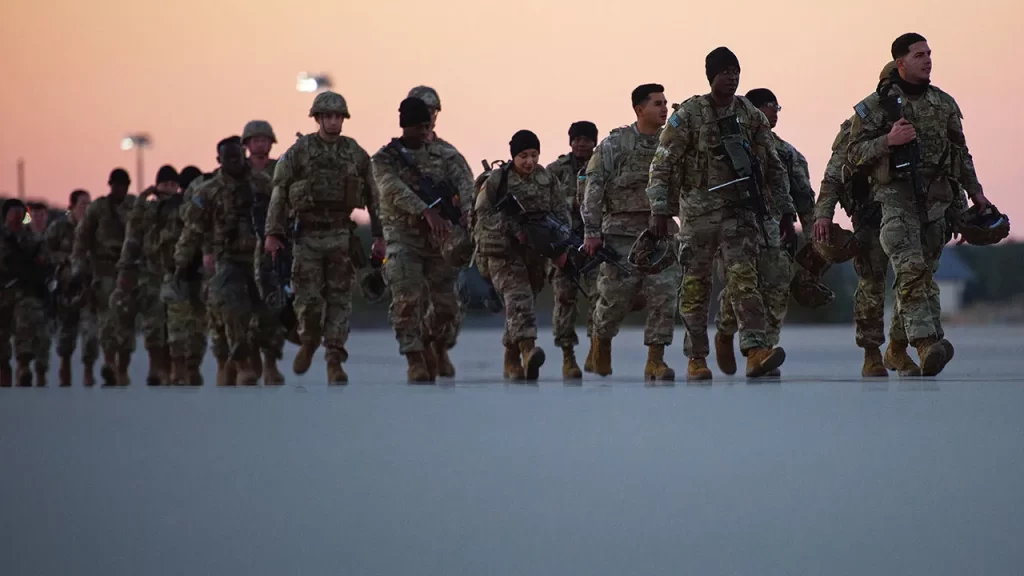
Trump’s European Troop WithdrawalDetails: Over 100,000 U.S. troops stationed in Europe, 45,000 slated for redeployment.
-
Impact: Weakens NATO deterrence; shakes U.S. credibility as a security guarantor.
-
Historical Parallels: Afghanistan, Iraq, and Vietnam show the dangers of abrupt U.S. exits.
-
EU Prospect: Push for independent European defense may finally accelerate.
In a move that has sent shockwaves through Western capitals, President Donald Trump has formally announced the withdrawal of a significant portion of U.S. forces stationed in Europe, calling it a long-overdue step toward “ending America’s decades-long babysitting of NATO.” The decision—framed by Trump as a realignment of U.S. priorities away from Europe and toward “domestic strength and Indo-Pacific vigilance”—marks one of the most consequential shifts in U.S. defense posture since the end of the Cold War.
America’s Military Footprint in Europe
As of 2024, the United States maintains roughly 100,000 troops across Europe, according to Pentagon data. The largest concentrations are in Germany (35,000 troops), Italy (12,000), the United Kingdom (9,000), Poland (10,000), and the Baltic states (about 6,000 combined). These troops form the backbone of NATO’s rapid deployment and deterrence missions against Russian aggression, especially since the outbreak of the Ukraine war in 2022.
But according to multiple officials who spoke to The Islamabad Telegraph on condition of anonymity, Trump’s plan envisions pulling out at least 45,000 troops within the next 18 months, reducing the U.S. presence to pre-2014 levels—before Russia’s annexation of Crimea. “It’s a bombshell,” said one senior EU defense diplomat. “For nations like Poland, Estonia, and Latvia, which have relied almost entirely on U.S. guarantees since 1940, this feels like the rug being pulled from under their feet.”
Germany Issues Stark Russia NATO Attack Warning: “A Strike Could Happen Tomorrow”
The timing could not be more precarious. Russia’s advances in Ukraine have accelerated in recent months, with Moscow capturing key eastern cities and expanding control along the Dnipro River. European militaries, already strained by ammunition shortages and political divisions, are now facing the terrifying prospect of standing alone against an emboldened Kremlin.
Trump’s Strategic Logic—or Political Gamble?
In his trademark populist tone, Trump announced the decision during a campaign-style rally in Ohio:
“We’ve protected Europe for 80 years. They can protect themselves now. America will not be Europe’s ATM or Europe’s army anymore.”
White House officials describe the move as part of Trump’s broader “America First Defense Doctrine.” The idea, they insist, is not isolationism but reorientation: shifting military priorities to counter China’s rise in the Indo-Pacific while cutting costs in Europe, a region “wealthy enough to pay its own bills.”
READ MORE: E.U. defense chief urges U.S. to coordinate troop drawdown with allies
But critics see something more dangerous—a calculated retreat that could dismantle the postwar security order. “It’s like Afghanistan all over again, but this time in Europe,” warned a senior NATO commander. “If the U.S. leaves abruptly, the Russians will test every weak link.”
Retired General Ben Hodges, former head of U.S. Army Europe, called the move “a Christmas gift to the Kremlin.” Moscow, for its part, welcomed what it described as “America’s recognition of multipolar realities” while discreetly reinforcing troops in Kaliningrad and Belarus.
The European Reaction: Panic, Defiance, and Disunity
European leaders were quick to respond with alarm. German Chancellor Annalena Baerbock described Trump’s decision as a “strategic earthquake,” while French officials called it “a wake-up call for European sovereignty.” Eastern European capitals—Warsaw, Riga, Vilnius—were reportedly blindsided.
ALSO READ: Ukraine War Pokrovsk: Zelenskiy’s Bleakest Hour as Western Support Falters
Privately, EU diplomats admit that the decision has created a political panic behind closed doors in Brussels. “This isn’t about troop numbers,” one senior official told The Islamabad Telegraph. “It’s about trust. For 80 years, Europe relied on the U.S. security umbrella. Now, that umbrella is folding.”
Trump’s refusal to consult NATO partners before making the announcement has further alienated European allies. “He didn’t even take us into confidence,” an EU defense minister lamented. “At a time when Russian tanks are rolling into Ukraine faster than expected, this looks less like a strategy—and more like surrender.”
The Impact on European Security and U.S. Credibility
The withdrawal of U.S. troops could cripple NATO’s forward deterrence capabilities in Eastern Europe. The U.S. currently provides 70 percent of NATO’s heavy lift, surveillance, and missile defense capacity. Without that backbone, Europe faces an immediate and severe vulnerability.
Military analysts warn that a U.S. drawdown could shorten NATO’s response time from weeks to days—or even hours—if Russia pushes further west. Moreover, the move could erode confidence among Asian allies like Japan, South Korea, and the Philippines, who depend on U.S. commitments to counter China.
“The world’s perception of America as a reliable partner is collapsing,” said Dr. Andrea Kendall-Taylor of the Center for New American Security. “This is not a policy shift; it’s a reputational crisis.”
Europe’s Defense Future: Autonomy or Fragmentation?
Faced with uncertainty, European policymakers are rallying around calls for an independent EU defense capability. France and Germany are pushing to accelerate the long-stalled European Defense Union, which could see the creation of a joint rapid-reaction force by 2030. The EU already spends nearly $300 billion annually on defense, but coordination remains weak and fragmented.
“Trump’s withdrawal might ironically unite Europe,” says Professor Ulrike Franke of the European Council on Foreign Relations. “For the first time, the EU must act like a geopolitical actor—or perish.”
Still, skeptics note that Europe’s military industry, despite its sophistication, lacks the unified command, logistics, and political will to replace the U.S. presence anytime soon.
Lessons from Afghanistan, Iraq, and Vietnam
This isn’t the first time America has pulled back from a long-term commitment. The pattern is eerily familiar: withdrawal, chaos, and collapse.
-
In Vietnam (1975), U.S. withdrawal left behind a humanitarian catastrophe.
-
In Iraq (2011), the vacuum paved the way for ISIS.
-
In Afghanistan (2021), the hasty exit handed Kabul to the Taliban within days.
Europe could now face its own version of abandonment. “If Washington disengages before Ukraine stabilizes, we might see the Russian flag flying in Kyiv before 2027,” warns a senior Polish intelligence official.
Deliberate Surrender—or Cold Strategy?
Is this a deliberate act of giving up before Putin? Some analysts believe Trump’s move is part of a transactional understanding with Moscow—less confrontation, more negotiation. His previous statements praising Putin’s “strength” and “strategic genius” have only deepened such suspicions.
Others argue that Trump genuinely believes the U.S. must retreat from “global policing” to rebuild its economy and focus on China. But even in that case, the message to the world is unmistakable: America is stepping back, and its enemies are stepping forward.
The End of an Era
Trump’s European troop withdrawal could be remembered as a moment when the American century truly ended. For decades, U.S. troops in Europe were not just soldiers—they were symbols of deterrence, confidence, and leadership. Pulling them back in the middle of a European war sends a chilling signal: the transatlantic bond is breaking.
Whether this is genius-level strategy or premature capitulation, one truth stands out—the vacuum America leaves will not stay empty for long. And the power most ready to fill it wears a Kremlin star.