


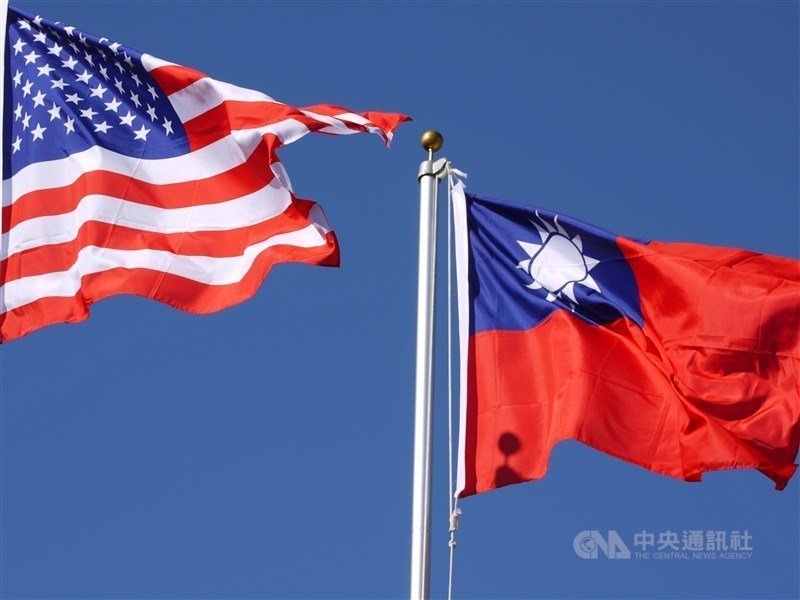
- U.S. arms sale to Taiwan marks the largest weapons package in history, including HIMARS, drones, and Javelin missiles.
- China condemns the deal, warning it undermines peace and stability in the Taiwan Strait.
- Taiwan strengthens its defense strategy with asymmetric warfare and a $40 billion supplementary budget.
- The sale signals the Trump administration’s commitment to deterring Chinese military aggression in East Asia.
The United States’ announcement of an $11.1 billion arms sale to Taiwan has injected fresh volatility into already strained U.S.–China relations, underscoring how Taiwan remains the most dangerous geopolitical flashpoint between the world’s two largest powers.
The package, the largest-ever U.S. weapons deal with the island, arrives at a moment when Beijing has intensified military pressure around Taiwan and repeatedly warned Washington against crossing what it calls its “red lines.”
China Fujian Aircraft Carrier Transit: Strategic Naval Power in the Taiwan Strait
The deal, unveiled by the Trump administration on Wednesday, includes HIMARS rocket systems, advanced howitzers, Javelin anti-tank missiles, loitering munition drones, and spare parts for existing platforms. Together, they represent a decisive push toward enhancing Taiwan’s ability to wage asymmetric warfare—a strategy designed to blunt a far larger Chinese military through mobility, precision strikes, and survivability rather than conventional force-on-force combat.
READ MORE: US announces $11 billion arms package for Taiwan, largest ever
For Beijing, the sale is deeply provocative. China considers Taiwan an inseparable part of its territory, a position backed diplomatically by the majority of United Nations member states under the “One China” policy. While many countries maintain unofficial ties with Taipei, Beijing views any military support to Taiwan as interference in its internal affairs. China’s foreign ministry responded angrily, accusing Washington of undermining peace in the Taiwan Strait and warning that “using Taiwan to contain China is absolutely doomed to fail.”
ALSO READ: China-Japan Taiwan Standoff: The Geopolitical ‘Inter vs Liverpool’ Clash Heating Up
The reaction was predictable. China has long criticized U.S. naval and military presence in the South China Sea, and years ago significantly increased the number of Chinese warships, aircraft, and coast guard vessels operating around Taiwan. Large-scale drills, gray-zone tactics, and near-daily military flights have become routine. Against this backdrop, the new arms package is certain to fuel Beijing’s perception that Washington is hardening Taiwan into a de facto military outpost.
From Washington’s perspective, the sale fits squarely within U.S. law and long-standing policy. The United States does not recognize Taiwan as a sovereign state, but it is legally bound to provide the island with the means to defend itself. Pentagon statements framed the deal as serving U.S. national and economic security interests by supporting Taiwan’s modernization and maintaining a “credible defensive capability.” Congressional approval is still required, but bipartisan backing for Taiwan makes passage highly likely.
The political symbolism is as important as the hardware. This is the second Taiwan arms announcement under Trump’s current administration and signals continuity rather than retreat, despite speculation that Trump’s dealmaking instincts—and his planned meeting with Chinese President Xi Jinping next year—might soften U.S. support for Taipei. U.S. officials have instead indicated that weapons sales could exceed levels seen during Trump’s first term, reinforcing deterrence rather than bargaining leverage.
Taipei has welcomed the move. President Lai Ching-te recently announced a $40 billion supplementary defence budget stretching from 2026 to 2033, declaring that there is “no room for compromise on national security.” Taiwanese officials argue that systems like HIMARS—widely used by Ukraine—could play a decisive role in disrupting any amphibious invasion attempt.
Yet the broader regional implications remain troubling. Every major arms sale deepens mistrust and raises the risk of miscalculation. China is likely to respond with further military exercises or economic pressure, keeping tensions on a simmer. For Southeast and Northeast Asia, Taiwan’s strategic location—splitting the region into two operational theaters—means any conflict would reverberate far beyond the island.
The irony is that while the stakes are existential, global attention often feels fragmented. On the same digital platforms where Roblox dominates youth culture, sports fans track Seahawks standings, and entertainment headlines focus on the Kings, a far more consequential contest is unfolding in East Asia—one with implications for global trade, technology supply chains, and military stability.
In that sense, the Taiwan arms sale is not just a bilateral dispute. It is a signal that strategic competition between Washington and Beijing is hardening into a long-term reality. Whether deterrence holds or slips into confrontation will depend less on rhetoric and more on how each side interprets the other’s next move. For now, the $11.1 billion package has made one thing clear: Taiwan remains at the center of a global power struggle with no easy off-ramp.