


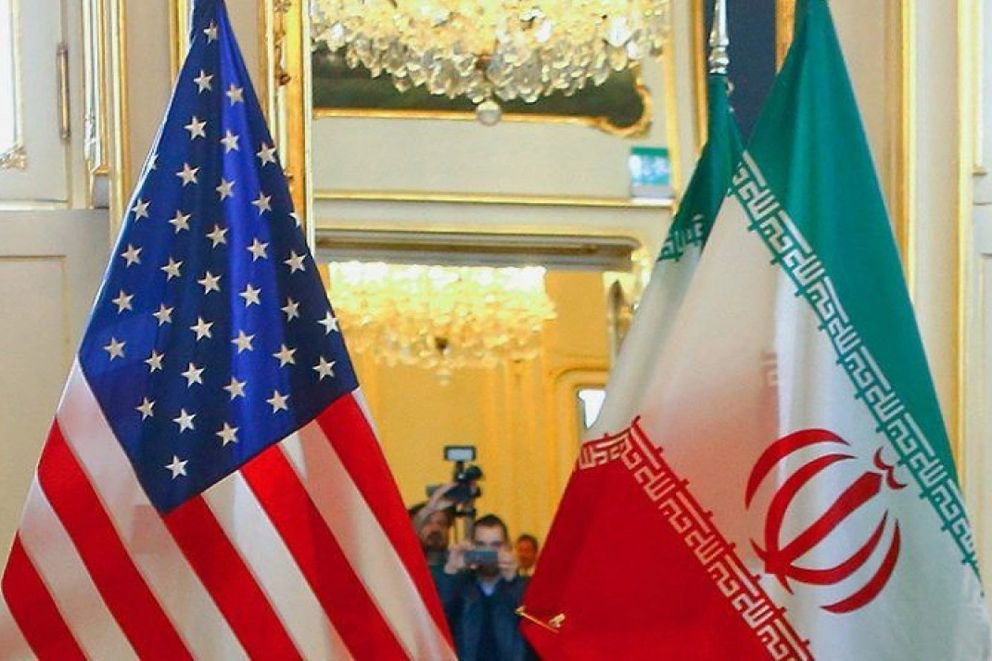
- U.S Iran Nuclear Deal: Backchannel negotiations have successfully averted a U.S. strike.
- Geneva talks are set to formalize the historic agreement after a few rounds.
- Iran strengthens defense capabilities, including supersonic missiles from China.
- Regional actors, including Israel and Hezbollah, closely monitor the de-escalation.
Sources close to the latest U.S.-Iran nuclear negotiations have told The Islamabad Telegraph that the two countries are on the verge of a historic agreement. According to three officials familiar with the discussions, a backchannel between Washington and Tehran has worked effectively to prevent a U.S. military strike, laying the groundwork for a diplomatic settlement.
The two sides are expected to meet officially and formally announce the deal after a few more rounds of talks. While provocative rhetoric may continue, a full-scale war appears increasingly unlikely.
The breakthrough comes as U.S. President Donald Trump addressed Congress in his State of the Union speech, reiterating that the United States would not allow Iran, “the world’s biggest sponsor of terrorism,” to acquire a nuclear weapon.
Speaking before a joint session of the Senate and House of Representatives, Trump cited Tehran’s support for militant groups, suppression of protests, and ongoing missile and nuclear programs as threats to U.S. interests and regional stability.
“The (Iranian) regime and its murderous proxies have spread nothing but terrorism, death, and hate,” Trump said, accusing Iran of restarting its nuclear program, developing long-range missiles, and orchestrating attacks that have killed U.S. service members and civilians.
Despite deploying a significant military presence in the Middle East, Trump has offered few specifics to the American public on why a strike might be necessary. Advisers had urged him to focus on domestic priorities, including the economy and immigration, which dominated most of his nearly two-hour address.
Congressional reactions were cautious. Senate Democratic Leader Chuck Schumer criticized the secrecy surrounding potential military actions, warning that covert operations often lead to prolonged conflicts and higher costs. Public opinion mirrors this caution: a January Reuters/Ipsos survey found that 69% of Americans believe the U.S. should only use force when facing a direct and imminent threat.
Meanwhile, Iran continues to strengthen its defensive capabilities. Reports indicate Tehran is finalizing a deal with China to acquire supersonic CM‑302 anti-ship cruise missiles. Capable of evading shipborne defenses and striking targets up to 290 kilometers away, these missiles would significantly enhance Iran’s naval capabilities. Officials from both countries have not confirmed the delivery timeline or scope of the agreement.
White House says Trump’s first option on Iran is diplomacy
Iranian Foreign Minister Abbas Araqchi emphasized that a deal with the U.S. is “within reach, but only if diplomacy is given priority,” ahead of the scheduled talks in Geneva. Deputy Foreign Minister Majid Takht-Ravanchi affirmed Iran’s readiness to take all necessary steps to reach an agreement, including sending half of its highly enriched uranium abroad, diluting the remainder, and participating in a regional enrichment consortium in exchange for sanctions relief.
U.S. officials, including White House Press Secretary Karoline Leavitt, reiterated that diplomacy remains the primary path. “President Trump’s first option is always diplomacy. But as he has shown, he is willing to use the lethal force of the United States military if necessary,” Leavitt told reporters.
The Geneva talks, set to begin Thursday, represent a critical opportunity to formalize the deal that has already been effectively secured through backchannel negotiations. While U.S. forces remain stationed near Iran’s coast, both sides are signaling a preference for negotiation over confrontation.
Regional actors are watching closely. Lebanese Prime Minister Nawaf Salam warned Hezbollah against engaging in another conflict, citing the heavy costs of prior wars with Israel. Meanwhile, Israel has reinforced its threat posture, signaling potential action against Hezbollah if provoked.
Analysts underscore the delicate balance in the region: Iran seeks to maintain its nuclear capabilities for peaceful purposes, while the U.S. and its allies aim to prevent weaponization. The successful conclusion of these talks, with a formal announcement expected soon, could redefine Middle East security dynamics and avert a conflict with far-reaching global consequences.